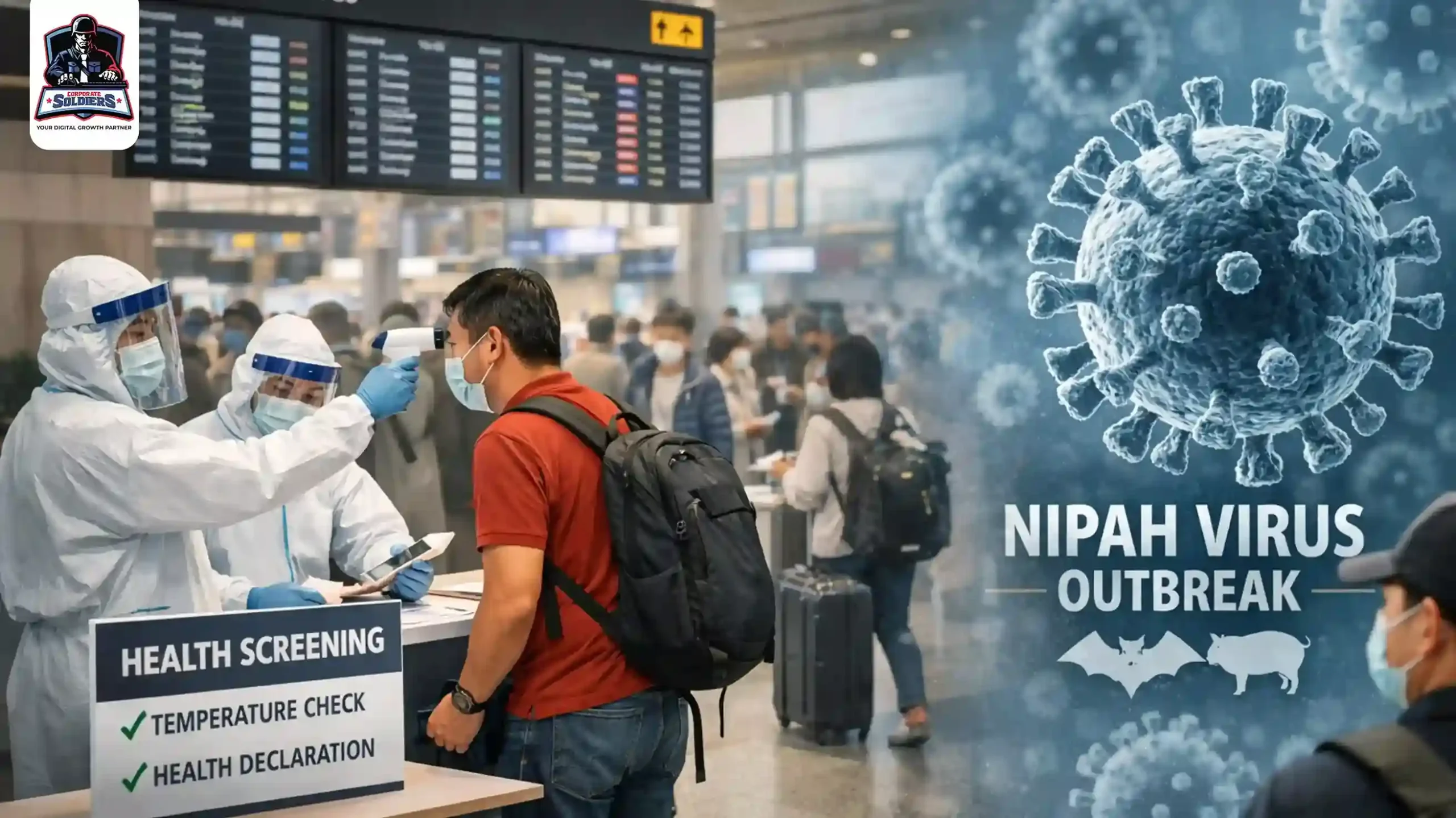
After several countries have stepped up health screenings at international airports and at the land border crossings, the outbreak of the fatal Nipah virus in the eastern state of West Bengal of India has sparked concern across parts of Asia. The reaction is indicative of regional anxiety about a disease that has had a high fatality rate and has no approved treatment or vaccine although its spread has been limited and confirmed in a few cases so far.
India Outbreak and Response
Since December, two cases of Nipah virus have been confirmed in West Bengal in two individuals who were reported to be healthcare workers. This was confirmed after initial media news reports that preliminarily indicated a bigger outbreak but were later clarified by officials as unverified speculation.
The confirmations were followed by the Union Health Ministry which stated that it initiated immediate public health responses with the West Bengal government. These were some measures of increased surveillance, laboratory tests and on-site investigations. A total of 196 individuals in contact with the infected individuals were traced, monitored and tested with all the contacts being found to be asymptomatic and negative to the virus so far. Officials said these measures are aimed at containing the outbreak quickly and that the situation is under constant check.
Although the number of confirmed cases is low, the government stressed on the significance of official and verified information. The government stressed the importance of relying only on verified updates, warning against the circulation of inaccurate figures and confirming that only two cases have been officially recorded so far.
Why Asia Is on Alert
The Nipah virus (NiV) is a priority pathogen, according to the World Health Organization (WHO) due to its capacity to cause epidemics and a high death rate ranging from 40% to 75%. No approved vaccine or antiviral therapy is licensed and early detection and containment is important. The virus is a zoonotic one; that is, it is transmitted by infected animals, especially fruit bats and pigs to humans, and can also be transmitted between humans in close contact.
The symptoms may appear in the beginning as a common infection, like fever, headache and muscle pains, but in the severe cases, it might result in respiratory distress and encephalitis or inflammation of the brain, which is lethal.
Despite the fact that Nipah is not as easy to transmit between humans as such diseases as influenza or COVID-19, its mortality rate is high, and there is no cure, which necessitates proactive surveillance, particularly in a region with high volume of regional travel.
Airport Security and Travel Safety
This is in reaction to the confirmed cases in West Bengal whereby some of the Asian countries began additional screening on the travellers arriving from West Bengal.
Thailand
Thai officials have begun screening passengers arriving from West Bengal at three major airports, including those in Bangkok and Phuket. The health practices involve health declaration and temperature tests to incoming passengers. Jurai Wongswasdi, a spokesperson on the Thailand Department of Disease Control told local media that the authorities were reasonably optimistic about their capability to stave off an outbreak in the country.
Nepal
The same health control measures have been put in place in Nepal by Tribhuvan international Airport in Kathmandu and important land border points with India. Any traveler to high-risk zones or one passing through them is also being evaluated based on the symptoms that are related to a Nipah infection.
Taiwan
The Nipah virus classification has been suggested as a Category 5 disease by Taiwanese health officials, which under local statutes is imposed on emerging or infrequent infections with high risk to the overall health of the population that must be reported and containment efforts made at the earliest opportunity.
Although these screenings are precautionary, it represents an early use of pandemic-era, public health interventions used on a new threat, one that has not established itself as spreading outside of India yet.
Looking Back: Nipah Virus in the Region History
The Nipah virus was initially reported as a result of an outbreak in 1998 in pig farmers in Malaysia and Singapore which caused a great number of deaths and economic consequences in the livestock industry.
The virus has already manifested itself sporadically in South Asia:
Bangladesh has already indicated frequent epidemics since 2001 which has mostly been associated with food contamination sources and direct animal contact.
In India outbursts have been documented on a couple of occasions like in West Bengal in 2001 and 2007. Recent years have also had outbreaks in the state of Kerala of southern India.
These examples of the past show that even minor instances of Nipah may lead to widespread public health alerts because of the seriousness of the illness and the possibility of it spreading between people in close environments like hospitals.
Public Health Measures and Precautions
The health authorities worldwide explain that Nipah outbreaks should be detected promptly, infection control measures taken, and clear communication of the outbreak to reduce the risk should be provided. This increased surveillance in travel hubs is one of the overall measures taken to ensure the virus does not penetrate new geographies or people.
Since the incubation period of the virus may range between four and 14 days, health experts advise that people who have been abroad in the high-risk countries should watch themselves with the manifestations and consult a doctor immediately in case they have any of the following symptoms: fever, headache, or any breathing problems.
The containment measures of India imply that just a few confirmed cases will be treated with the help of the coordinated surveillance and contact tracing. Nevertheless, even today when the main concern revolves around global health and diseases rapidly spread to countries, the fact that neighbouring countries continue to watch each other shows how global health is intertwined.
Conclusion: Prevention Over Cure
While the number of confirmed Nipah virus cases in West Bengal remains limited and contained, the regional response — especially airport screenings and enhanced monitoring in Asia — underscores the seriousness with which public health authorities treat pathogens with high fatality rates.
As ongoing surveillance continues and experts study the virus’s transmission dynamics, the focus remains on early detection, rapid response, and public awareness to prevent wider spread.