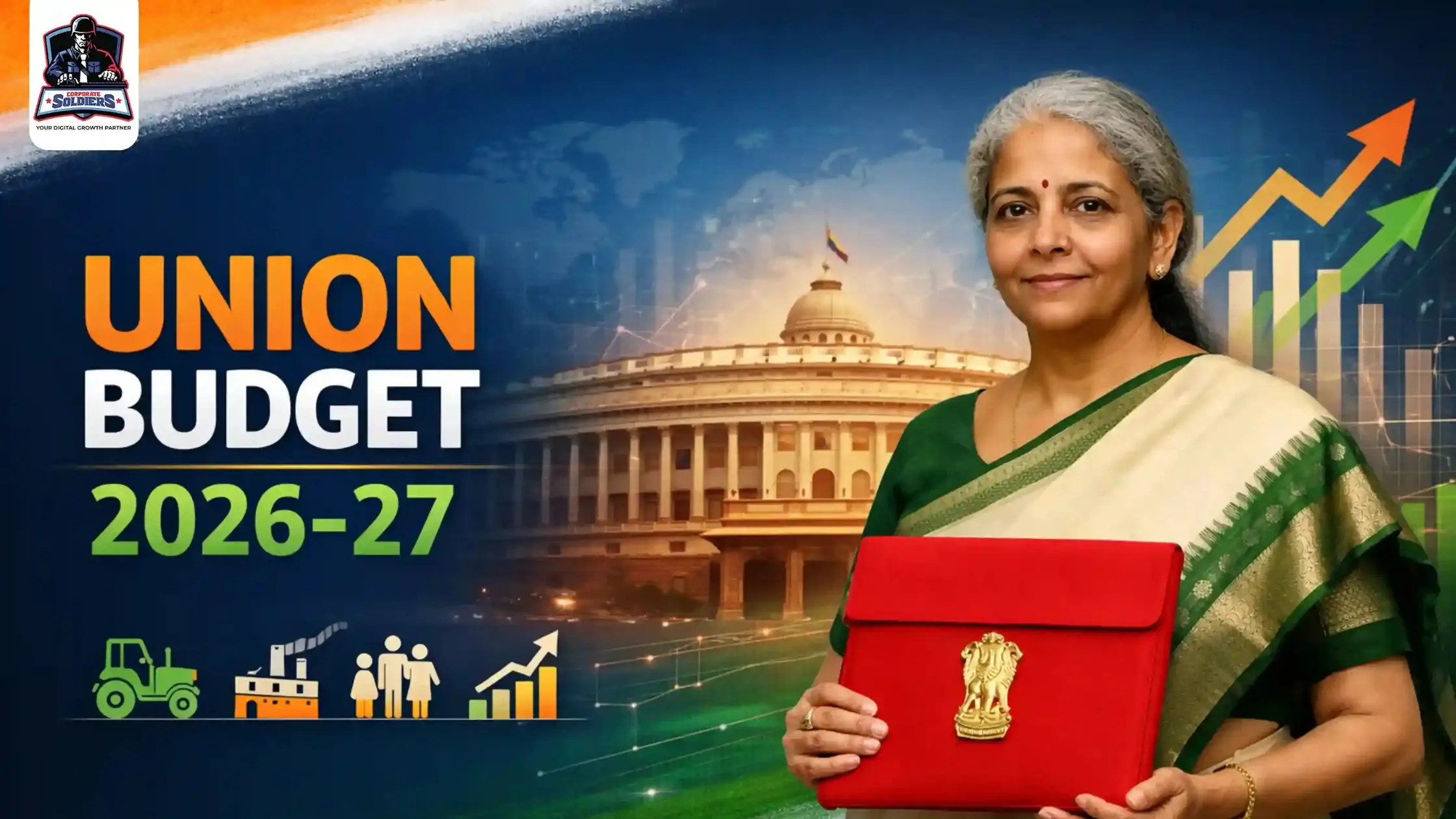
The Union Budget 2026-27 will be presented by Finance Minister Nirmala Sitharaman in the Lok Sabha on Sunday, 1 February 2026. The Union Budget is a key parliamentary exercise that outlines the government’s fiscal priorities, growth agenda, and policy roadmap in the following year.
The current situation is especially interesting not only because of the announced policies that must be made but also because of the context under which the Budget is being presented: in connection with the changing dynamics in the world economy, emerging demands of the major industries, and broader public engagement.
Budget Presentation by Nirmala Sitharaman, her Ninth Budget
This will be Finance Minister Nirmala Sitharaman’s ninth consecutive Union Budget presentation since assuming office in 2019. This highlights the continuity in fiscal management and the preference of the Government of India to have an experienced leadership even during the economic difficulties.
It will also be the third full Budget of the third term of the Narendra Modi led government, which was elected during the general elections in 2024. Analysts expect the Budget to reflect long-term structural reforms along with responses to emerging economic challenges.
When and how the budget is going to be presented
The Budget presentation will take place in the Lok Sabha at Parliament House in New Delhi. Once the Finance Minister, Sitharaman, finishes her speech, all the Budget documents such as expenditure statements, revenue estimates, taxation proposals, priorities of the policies will be tabled in both Lok Sabha and Rajya Sabha.
Immediately after the speech, the documents will be posted online on official websites and through mobile applications. This is in line with the increasing paperless, electronic distribution of official financial records, which is intended to improve on the level of transparency and accessibility.
A Rare Sunday Budget Day
This year’s Budget is being presented on a Sunday, which is relatively uncommon for major parliamentary proceedings. Typically, most legislative significant events are not held on weekends; however, in recent years, the Annual Budget is presented on 1 February each year so that the parliament could have enough time to debate and vote on the most important financial proposals before the start of the new financial year when 1 st April is reached.
This time slot demonstrates the desire of the government to have a rigor in legislation rather than convenience even at the expense of traditional norms concerning the weekend sessions.
Pre-Budget Preparations and Consultations
A key feature of this year’s Budget preparation are the high number of stakeholders involved in the activities of the Ministry of Finance before the day of presentation.
Broad Based Consultations with Experts and Stakeholders
The Finance Minister undertook pre-budget consultations with wide range of stakeholders before writing the Budget, which must include:
- Consultations were held with economists, trade unions, MSME leaders, industry bodies, and citizen groups
- Trade union and labour representatives.
- Health, education and MSME leaders.
- Representatives of the capital market and industry bodies.
- Youth and citizen groups via the digital platforms.
The purpose of these consultations is to make sure that the final Budget represents different points of view on economic development, employment, priorities in sectors and social welfare.
Agriculture and Rural Development Inputs
Simultaneously, Agriculture Minister Shivraj Singh Chouhan held wide-ranging consultations focused on agriculture and rural development and presented a detailed report to the Finance Ministry. This reflects the fact that the government plans to focus on the problems of farmer incomes and rural infrastructure, agri-technology, and livelihood improvement as the priorities in FY 2026-27.
The Youth Engagement Initiatives
Finance Minister Sitharaman will then hold an interactive session with roughly 30 college students nationwide, following the presentation of the Budget. This initiative aims to involve young voices in fiscal discussions and improve public understanding of economic policy among future generations.
Budgetary Expectations: Sectoral Expectancies and Economic Indicators
Although it will only be published during Budget Day, official information about the policy and figures, a number of areas and challenges are anticipated to be prioritized:
1. Macroeconomic Stability and Economic Growth
As the world economy gets through turbulence and political instability in the world economies, it is expected that policy makers will focus on growth-friendly taxation, incentives to investment and enablement of employment creation.
Economists who participated in the pre-Budget consultations have emphasized the need to sustain India’s growth momentum while managing inflation and fiscal priorities.
2. MSME & Industry Support
MSME stakeholders are hopeful that the Budget will address concerns related to taxation, credit access, and competitiveness.
3. Agriculture and Rural Priorities
Given the consultations led by the Agriculture Ministry, expectations are high for renewed focus on farm incomes, digital agriculture, procurement efficiency, and rural infrastructure support.
4. Social Welfare and Human Development
Education, health and skill development, among others, will probably remain a dominating factor as the government doubles its efforts to improve human capital and social safety nets.
Public Access and Coverage
The Budget speech will be broadcast live across major news networks, Sansad TV, and digital platforms, enabling real-time public access.
After the speech, detailed media analysis is expected on how the announcements may impact citizens, businesses, and markets.
Conclusion: A Critical Fiscal Moment for India
Union Budget 2026- 27 is not just a statement of finances annually. It is a long term plan which will map out the economic path of India in the upcoming fiscal year balancing between the growth, equity, competitiveness and fiscal prudence.
With extensive consultations and increased digital transparency, the Budget is expected to be closely watched by international investors and businesses, as well as millions of Indian citizens.
The Union Budget 2026-27 will be closely followed as it shapes India’s fiscal direction for the coming year.