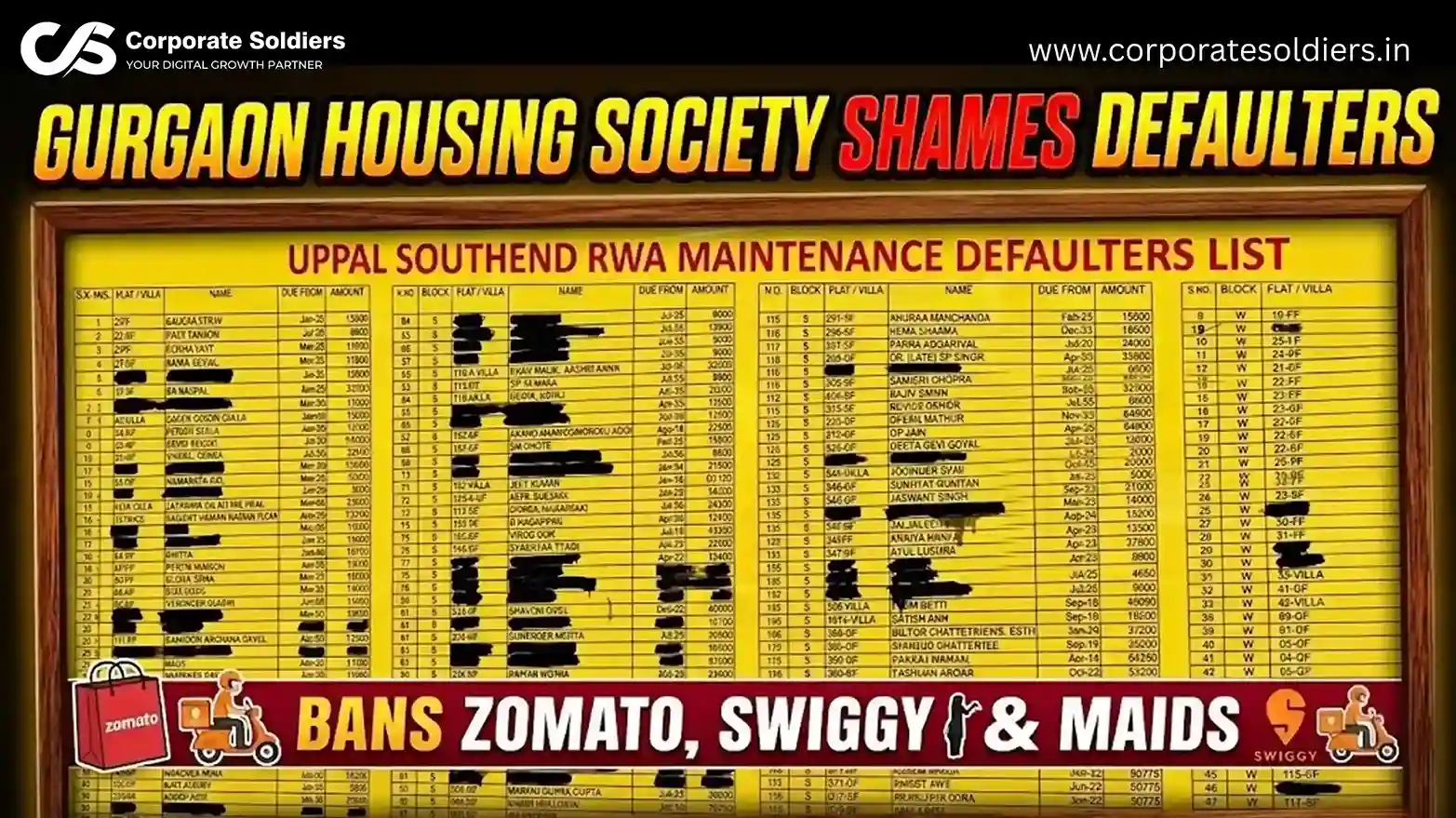
Gurgaon RWA controversy has brought a sharp spotlight on how far Resident Welfare Associations can go while dealing with maintenance defaulters. In early 2026, residents of Uppal Southend in Gurgaon woke up to a situation that quickly turned into a larger legal and social debate. The RWA publicly displayed a detailed list of residents who had not cleared their maintenance dues, mentioning names, flat numbers, and pending amounts. The dues largely belonged to the year 2025 and ranged from around nine thousand rupees to over sixty thousand rupees. What could have remained a routine recovery exercise escalated when the society decided to go beyond notices and impose lifestyle restrictions on those listed.
Restrictions Imposed on Residents
The actions taken were not limited to reminders or penalties. Residents who had pending dues reportedly faced restrictions on food deliveries from platforms like Zomato and Swiggy. Entry of domestic help such as maids was restricted. Car washing services were stopped. In some cases, access to day to day conveniences within the society was also affected. This turned a financial dispute into a question of rights, dignity, and legality, raising a fundamental concern across urban India about whether RWAs are overstepping their authority.
Why Maintenance Dues Are Important
To understand the issue, it is important to look at why maintenance dues matter in the first place. Housing societies depend on these payments for basic functioning. Security staff, electricity and water for common areas, lift maintenance, housekeeping, landscaping, and infrastructure repairs are all funded through these charges. When a section of residents does not pay, the burden shifts to others and the quality of services can deteriorate. This gives RWAs a legitimate reason to enforce payment discipline. However, the method of enforcement becomes critical, especially when it starts affecting basic living conditions.
Legal Perspective on Public Naming
From a legal standpoint, the situation is not entirely straightforward. Publicly naming defaulters is not clearly illegal, but it falls into a grey area. It can be challenged under the right to privacy and dignity, which is protected under Article 21 of the Constitution. If a resident claims reputational damage, it could also open the door to defamation claims. Courts in India have increasingly taken a strong view on protecting individual dignity, which means such public disclosures can be questioned even if they are not outright banned.
Legality of Service Restrictions
The more serious concern arises from restricting services like food delivery, domestic help, or personal arrangements such as car cleaning. RWAs are administrative bodies created to manage common areas and enforce bylaws. They do not have the authority to interfere in private contracts between residents and third party service providers. Blocking a delivery agent or preventing a maid from entering can be interpreted as a violation of personal liberty and an act of coercion. Without a court order or legal backing, such restrictions are likely to be viewed as unlawful if challenged.
The powers of RWAs are clearly defined in principle. They can issue notices, charge late payment penalties, and restrict access to non essential amenities like clubhouses or recreational facilities. They can also initiate civil proceedings to recover dues. However, they cannot impose actions that impact essential services or daily life. Any such step crosses from enforcement into coercion, which is where the legal vulnerability begins.
This incident also reflects a broader shift in urban residential governance. As cities expand and societies become more structured, RWAs are adopting stricter measures to maintain financial discipline. At the same time, residents today are far more aware of their rights and are willing to question actions that appear excessive. The balance between maintaining order and respecting individual rights is becoming more delicate with each such case.
Legal Remedies Available to Residents
For residents facing similar situations, there are clear legal remedies available. They can approach the Registrar of Societies, send a legal notice to the RWA, or move to civil court seeking relief. Courts can grant injunctions against unlawful restrictions, especially when they interfere with basic living conditions. Complaints can also be filed with local authorities or consumer forums depending on the nature of the restriction.
A Broader Signal Across India
The Uppal Southend case is not just about one society in Gurgaon. It is a signal of a larger conversation that is unfolding across India’s gated communities. It highlights the need for clearer guidelines on what RWAs can and cannot do, and it underlines the importance of following due legal process rather than resorting to informal pressure tactics.
At its core, the issue is simple. RWAs have every right to recover maintenance dues and ensure fairness among residents. But that right does not extend to controlling how someone lives their daily life. The moment enforcement starts interfering with personal liberty, it risks becoming overreach. And in a legal system that increasingly prioritizes dignity and due process, that is a line that cannot be crossed.