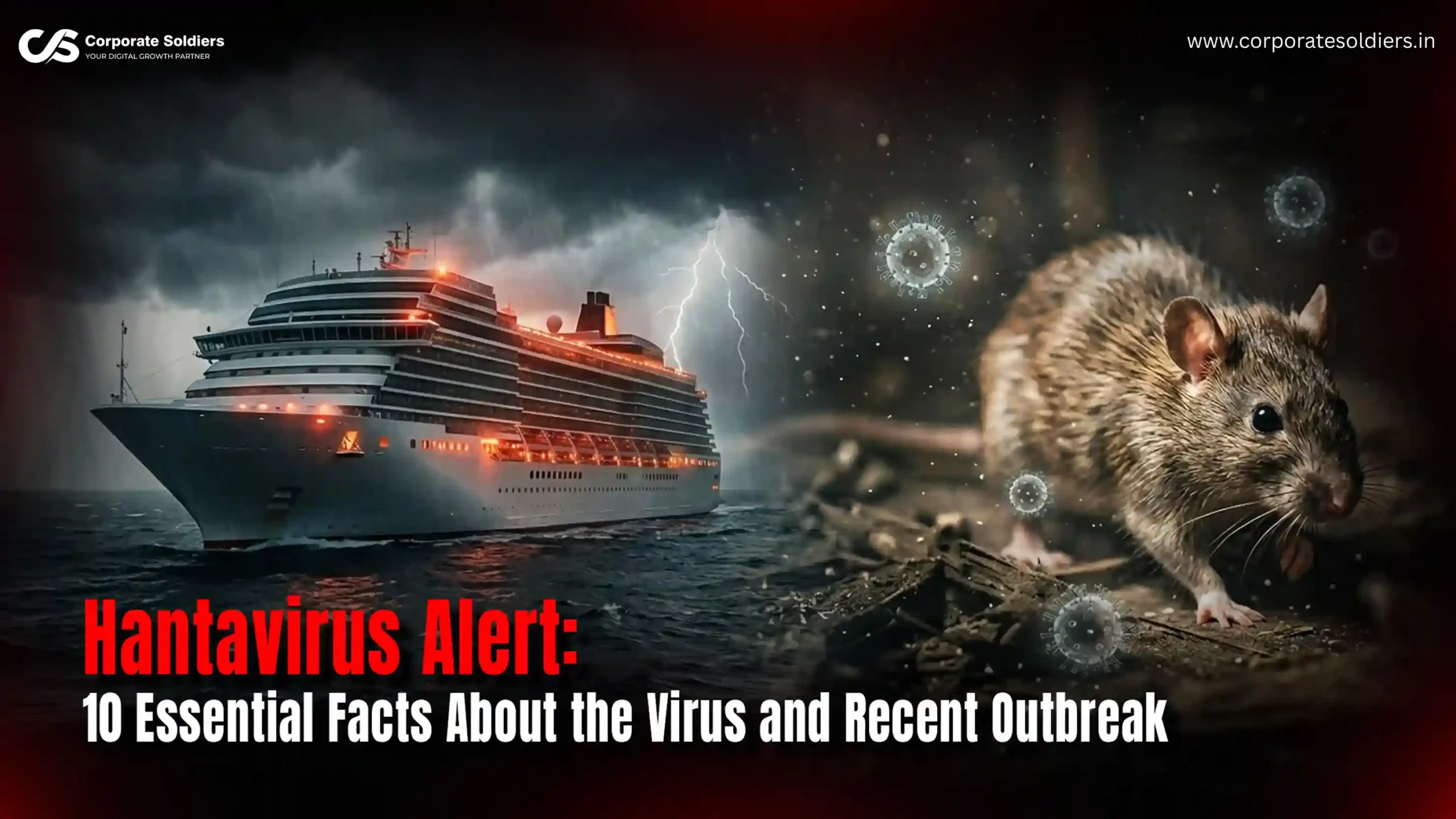
The recent outbreak of hantavirus aboard a cruise ship that was travelling between Argentina and the Atlantic, near Cape Verde has drawn attention of health authorities across the world including the World Health Organization (WHO). Based on the official updates, several passengers were affected with severe illness during the voyage with confirmed and suspected cases reported and deaths under investigation.
Although the WHO has pointed out that the risk to the general population is low, the situation indicates the significance of awareness about rare yet potentially severe zoonotic infections like hantavirus, especially in closed spaces and during international travel.
Recent Developments: Cruise ship cases
The health authorities have confirmed the cluster of seven cases (confirmed and suspected) on a cruise ship with about 147-150 passengers and crew.
- The reported outcomes are several fatalities, one severely ill patient, and others with the symptoms.
- The ship left Argentina and was subsequently anchored near Cape Verde where the investigation is still in progress.
- The WHO is organizing international response activities, such as medical evacuation, testing, and isolation of cases.
- Although the outbreak is serious, the WHO has stated that the risk to the general public remains low according to the existing evidence.
Research is still in progress to identify the precise source and the dynamics of transmission of the infection in this environment.
What is Hantavirus?
Hantavirus refers to a family of viruses, which are majorly spread by rodents. In humans, infection may give rise to severe diseases like:
- Hantavirus Pulmonary Syndrome (HPS).
- Other serious respiratory and systemic diseases that vary with strain.
It is believed to be a rare, yet potentially life-threatening, zoonotic disease.
How Does It Spread?
Hantavirus is mainly spread via contact with infected rodents. Key routes include:
- Exposure to dust contaminated with rodent urine, droppings or saliva.
- Direct contact with contaminated surfaces.
- Working with rodent-contaminated materials without any protection.
Transmission between humans is uncommon, but there have been rare cases of transmission between humans under close-contact conditions with specific strains.
Early Symptoms and Detection Challenges
First symptoms are frequently non-specific and flu-like including:
- Fever
- Fatigue
- Muscle aches
- Chills
- Headache
- Gastrointestinal discomfort
Since the symptoms are similar to those of common viral infections, these symptoms are often hard to diagnose and therefore do not receive targeted treatment.
Disease Progression and Severity
In extreme situations, hantavirus infection may rapidly progress from the initial stage to critical illness, which includes:
- Severe respiratory distress
- Presence of fluid in the lungs.
- Shock and heart complications.
This development may take place rather fast, and it will be necessary to provide such a patient with urgent medical care and intensive care support.
Mortality Rate and Risk Factors
Some strains of the hantavirus can be characterized by a case fatality rate up to 30–40% depending on the area and type of virus.
The exposure environments with higher risk levels are:
- Woodland and country regions.
- Farming and agricultural environments.
- Inadequately ventilated buildings or buildings infested with rodents.
- Sealed spaces that are exposed to contaminated dust.
Treatment Limitations
No particular antiviral treatment of hantavirus infections currently exists.
Treatment is primarily:
- Supportive hospital care
- Oxygen therapy
- When needed, intensive care unit (ICU) care.
- Careful fluid and respiratory management.
Hospitalization at an early stage can greatly enhance patient outcomes.
Prevention Strategies
Prevention aims at minimizing exposure to rodents and contaminated environments:
- Do not touch rodents and their habitats.
- Cover holes in the houses and storage facilities in order to exclude rodents.
- Keep it clean and dispose of waste.
- Do not sweep dry areas with rodents (lessens the risk of aerosolization).
- Make sure that enclosed spaces are well ventilated.
- Use protective equipment when cleaning potentially contaminated areas
Why Awareness Matters
Hantavirus infections are uncommon, but due to their rarity, awareness is of the essence because:
The initial symptoms are easily confused with the typical flu-like diseases.
The late diagnosis may cause serious complications.
Quick access to medical care enhances survival.
Enclosed spaces (like a ship or rural facility) may experience outbreaks that rapidly increase.
Public health awareness will aid in minimizing exposure risks as well as aid in prompt reporting of symptoms.
Final Thoughts
Hantavirus is a relatively uncommon, yet severe infectious disease with a potentially high mortality rate in severe cases. The recent outbreak of cruise ships highlights the rate at which such infections can be a public health concern in closed travel environments.
Health authorities say that the most important priorities are still:
- Early detection
- Strict infection control
- Supportive clinical care
- Preventive hygiene measures
Finally, the most effective weapon against hantavirus infection is that of awareness and prevention, which makes it even more important to be cautious in terms of both traveling and environmental safety.