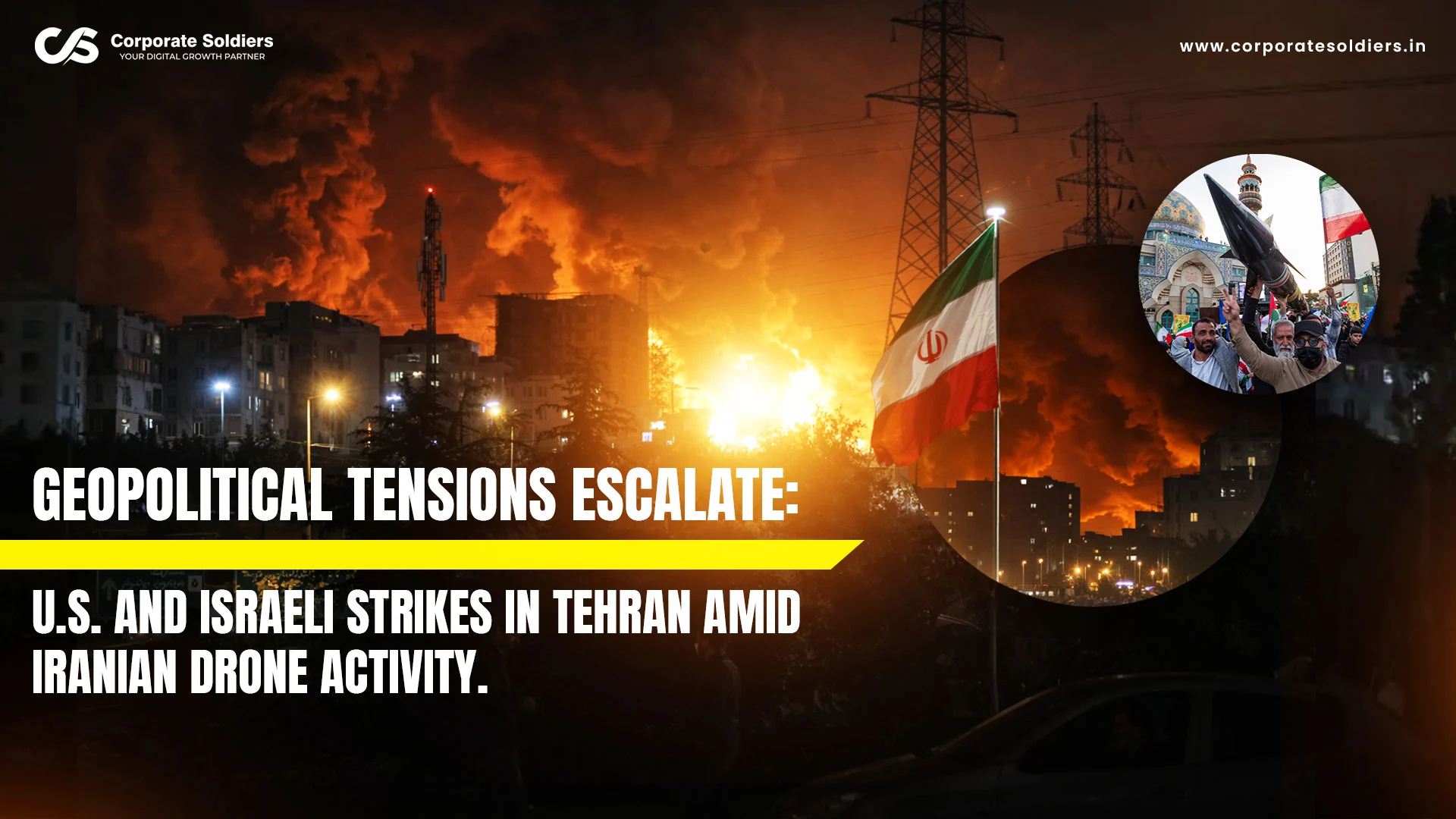
The Middle East faces heightened geopolitical tension as military operations by Iran, Israel, and the United States target key infrastructure and strategic locations. The situation poses significant challenges to Gulf security and international trade routes, including the Strait of Hormuz, which remains under alert due to missile and drone activity.
There has been a great spiral of conflict due to the direct attacks on key energy facilities, especially the South Pars gas field which is the largest natural gas reserve globally in Iran. Iranian authorities have threatened that any additional attack on energy infrastructure will result in step-up and unlimited retaliation and what they term as a new stage of the war that is about economic and energy warfare.
Live Developments (Chronological)
- 06:52 AM IST – Explosions in Tehran: There were explosions in the Iranian capital. Active combat against incoming U.S and Israeli drones was being put into operation by air defense systems.
- 06:58 AM IST -Multi-Front U.S. Base Attack: The Iraqi militia Saraya Awliya al-Dam said it had made three independent attacks on U.S. military bases in Iraq in the past 24 hours.
- 06:59 AM IST -IDF Operations in Tehran: The Israeli army has confirmed a new round of attacks on the infrastructure of the Iranian terror organization in Tehran. This was after the Iranian fire of missiles at Israel overnight.
- 07:20 AM IST Strategic Attrition: U.S. Central Command (CENTCOM) revealed that it had destroyed an Iranian missile production and assembly plant in the operation named Epic Fury.
- 07.37 AM IST Pentagon Funding Surge: U.S. Defense Secretary Pete Hegseth is asking Congress to approve an extra 200 billion dollars to fund the anti-Iran campaign claiming that military activities are beyond schedule.
- 07: 53 AM IST- Dubai Aerial Interceptions: Dubai authorities confirmed that Iran has launched missiles in the air and this has been intercepted by the Dubai authorities. None reported injuries, but heavy explosions were reported all over the city.
- 08:24 AM IST -Attack on Saudi Hubs: The ministry of defense in Saudi intercepted and shot down five drones in the Eastern Province, the main economic and oil producing center of the country.
- 08:50 AM IST Regional Alert Status: the UAE, Kuwait, Saudi Arabia, and Bahrain have announced that they continue to face threats of missiles and drones. Officials of Bahrain confirmed that a fire at a commercial warehouse was caused by Iranian aggression and dropping shrapnel.
- 09:15AM KWT (12.45 PM IST): Kuwait has also affirmed that it was struck again by Iranian forces on its Mina Al-Ahmadi oil refinery, which underscores its continued attempts to cause disturbances to the Gulf energy infrastructure.
- 10:10am Irst (12:40pm IST) assassination of the IRGC spokesman: the Islamic Revolutionary Guard Corps of Iran reported that its spokesman Gen Ali Mohammad Naeini was killed by a U.S. Israeli missile.
- 10:45AM IST- Haifa Oil Complex Attack: Iran is reported to have attacked the oil refinery and petrochemical complex in Haifa in Israel and has caused damage to the infrastructure.
Key Stakeholders
- Donald Trump: The U.S. President has warned Iran that further attacks on neighboring countries may provoke military retaliation against Iranian gas fields.
- Benjamin Netanyahu: The Israeli Prime Minister announced a temporary pause on additional strikes on certain offshore gas fields at the request of President Trump.
- Iranian Leadership: The foreign minister of Tehran has made stern threats of zero restraint reprisals in case of any additional attacks on its energy installations and this might bring the crisis to a whole new level.
- International Condemnation: United Kingdom, France, Germany, Japan and Italy have explicitly denounced the efforts by Iran to attack civilian infrastructure and disrupt the Strait of Hormuz.
- Stance of India: Prime Minister Narendra Modi urged to de-escalate, denouncing any attack on energy facilities and encouraging diplomatic talks with the other partners in the region, such as Qatar, Oman and France.
Economic and Strategic Impact
- Oil Market Volatility: Brent crude has just leveled at $106 a barrel after the assurances of U.S and Israeli politicians, yet the prices have stayed 60 per cent above the point at which hostilities had started.
- Energy Projections: Saudi oil authorities threatened that the cost of the energy would soar over $180 per barrel should the energy shock as well as the disturbances continue up to the end of April.
- Global Supply Chains: China has also started reducing its exports of fertilisers so that it can preserve its domestic market, a move that is likely to further put pressure on the agricultural sectors of the world that are already affected by the conflict.
Regional Sensitivity
- Security alerts continue to be issued in major cities of the Middle East such as Tehran, Tel Aviv, Bahrain and Dubai.
- The persistence of strikes and counteractions means that there is volatility that persists and it has implications for regional and global energy security.
The military operations, as well as aerial exchanges, are going on across various borders since the situation is not fixed. More information can be anticipated as the operation Epic Fury continues and regional air defenses are on maximum alert.