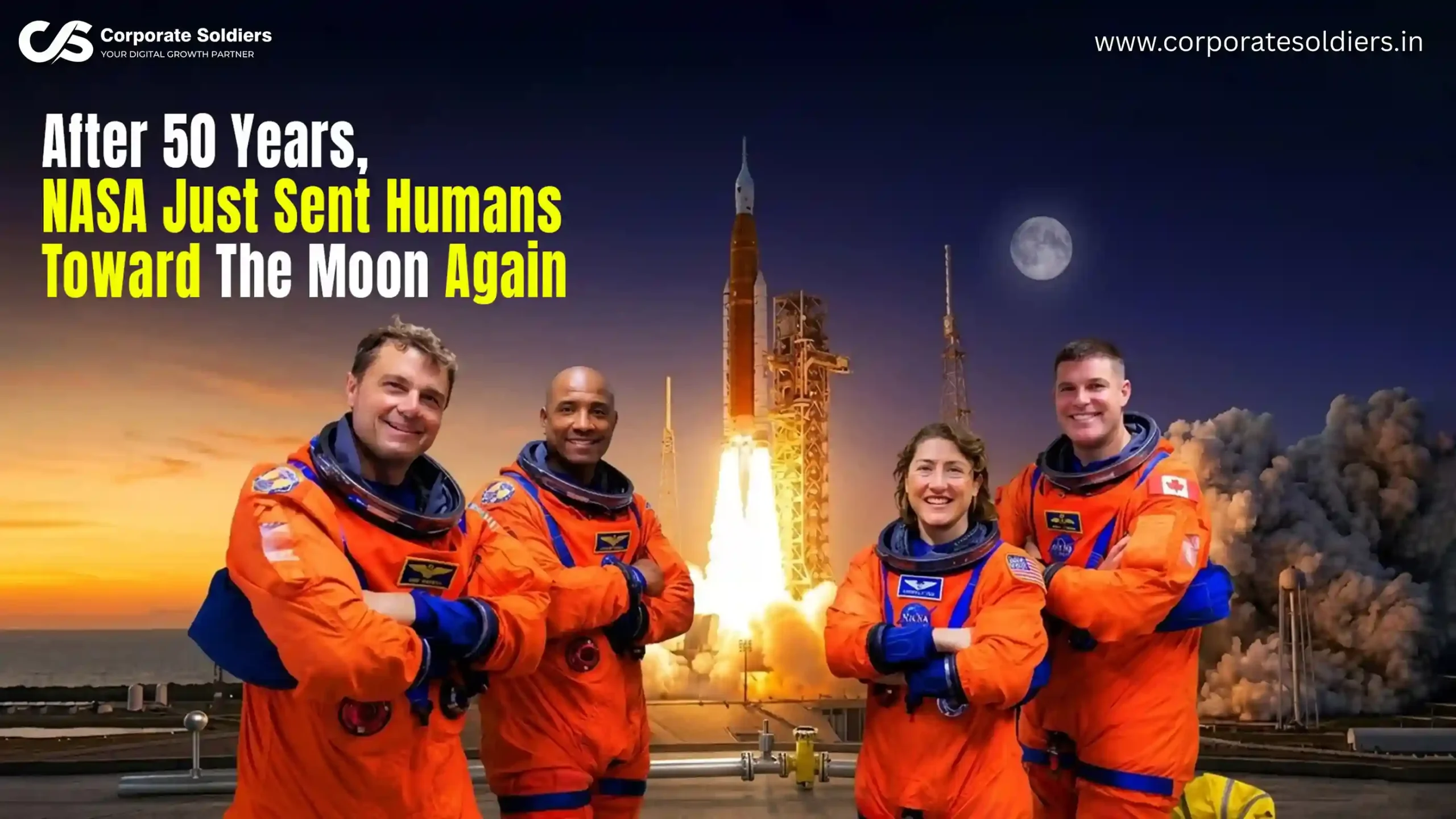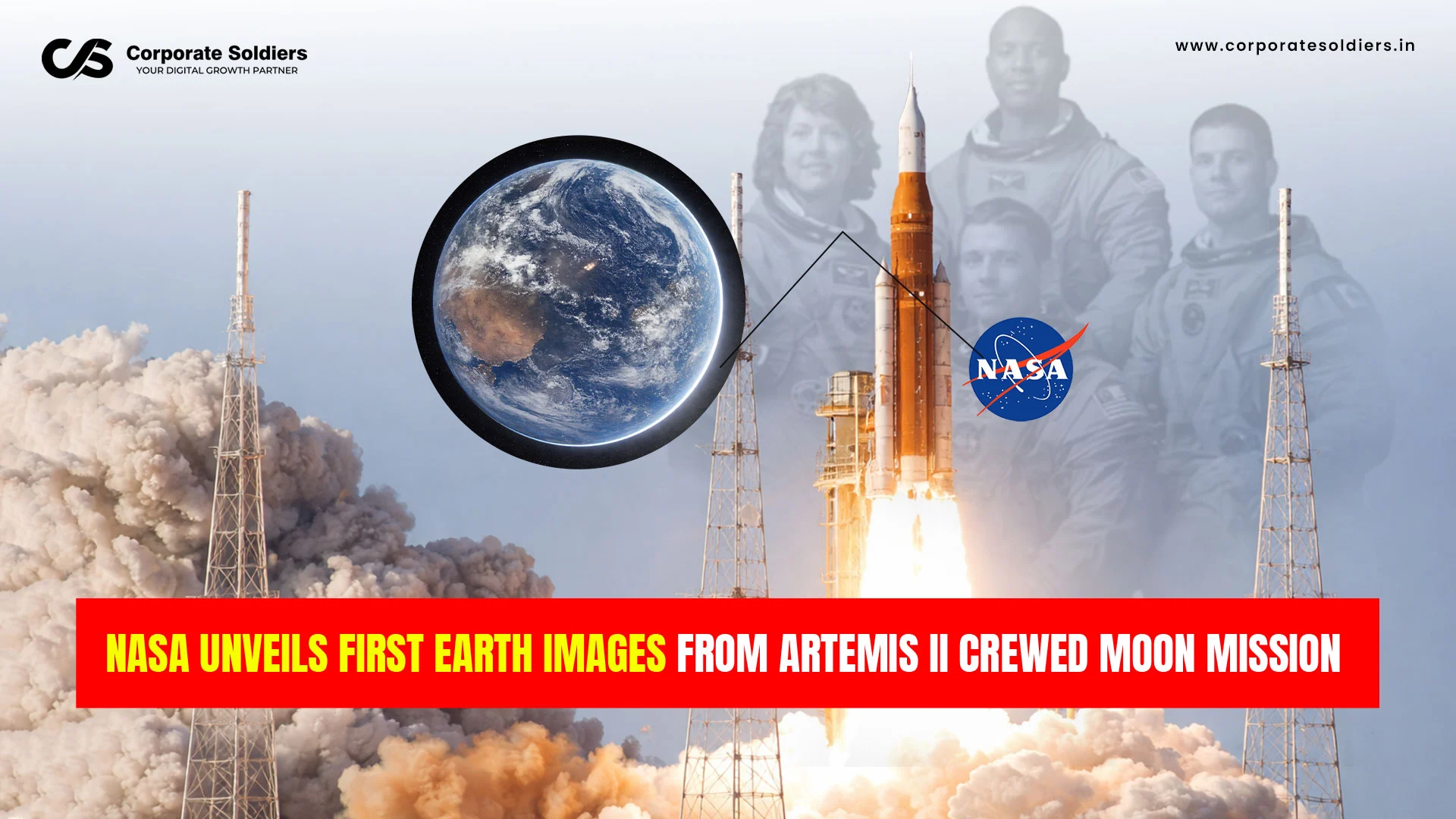
NASA has published the first images of the Earth taken from inside a crewed Orion spacecraft carrying four astronauts on the Artemis II mission. The photos were captured by the mission commander, Reid Wiseman, and they provide a human crew perspective of Earth from beyond low-Earth orbit. These images represent a tremendous breakthrough in the development of modern human spaceflight.
First Crewed Lunar Mission in Over 50 Years
The Artemis II is the first crewed mission toward the Moon in over 50 years. This mission is unlike other missions done in the Artemis programme since astronauts are aboard the Orion capsule on a deep-space flight around the Moon without landing. The latest pictures that have been released are the first images of Earth taken from inside a crewed Orion spacecraft, adding to the technological and operational advancements of the mission.
The mission is part of NASA’s phased plan to re-establish a permanent human presence on and around the Moon. Through successful completion of a crewed lunar fly-by, Artemis II prepares for future missions which will involve a landing on the Moon.
Details of the Released Images
The images are downlinked photographs transmitted during flight. One image captured by Wiseman shows Earth veiled in dense cloud formations, appearing to rise beyond the spacecraft as seen through the Orion capsule window. The other is the one that takes the entire globe in which there are clear oceanic features and the green aurora light enveloping the globe.
The pictures have scientific and symbolic implications as they offer a clear picture of the dynamics of the atmosphere on Earth besides showing the change in perspective to the astronauts as they head to deep space.
Current Mission Status
By midmorning Friday, the Artemis II crew were about 100,000 miles (160,000 km) from Earth. The spacecraft had another 160,000 miles (258,000 km) remaining as they continued closing in on the Moon. The crew are expected to reach the lunar vicinity on Monday.
In order to have the right path, the crew fired the Orion spacecraft’s main engine on Thursday night to set the spacecraft on its lunar trajectory. This is one of the most important maneuvers in the navigation of the mission.
Crew Composition and Historic Milestones
The Artemis II team is made up of three American astronauts and a Canadian astronaut. Christina Koch is the first woman to travel around the Moon and Victor Glover is the first Black astronaut to journey beyond low-Earth orbit.
Koch gave a description of the visual image of seeing the Earth by reflected moonlight and sunset glow and underlined the quality and brightness of the view. Glover reflected on how Earth appeared unified from deep space, reinforcing a broader perspective on human identity.
Mission Timeline and Lunar Flyby
The ship is already in its third day in a scheduled 10 days. The moon flyby will be on the sixth day where the spacecraft will fly close to the moon, 4,000 to 6,000 miles (6,450 to 9,650 km) above the surface.
This is because at this stage, the crew will be going around the far side of the moon which is the farthest distance that humans have traveled from Earth in more than 50 years.
Scientific Preparations and Flight Mechanics
The astronauts are also engaged in practising scientific observation processes that will be done during the flyby. These are preparations that will be necessary in the future missions that will be using long operations on the moon.
A flyby manoeuvre is a procedure of taking advantage of the gravitational field of the moon to change the paths of the spacecraft. The method will allow Orion to loop around the Moon to begin its return journey to Earth without the need to have a lot of extra propulsion.
Return Timeline
After the lunar flyby, Orion will use the lunar gravity to return to Earth. The spacecraft will splash down in the Pacific Ocean off San Diego at 00:06 GMT on April 11 which is 8:06 pm Eastern Time on April 10.
Broader Significance
The Artemis II mission is an important move towards the re-establishment of human presence in deep space. It shows how the NASA Artemis programme is operationally ready in the future to land on the moon and other long-term exploration projects. Also, the mission has brought back renewed global interest in human spaceflight, highlighting both the strategic and scientific significance of going back to the Moon.