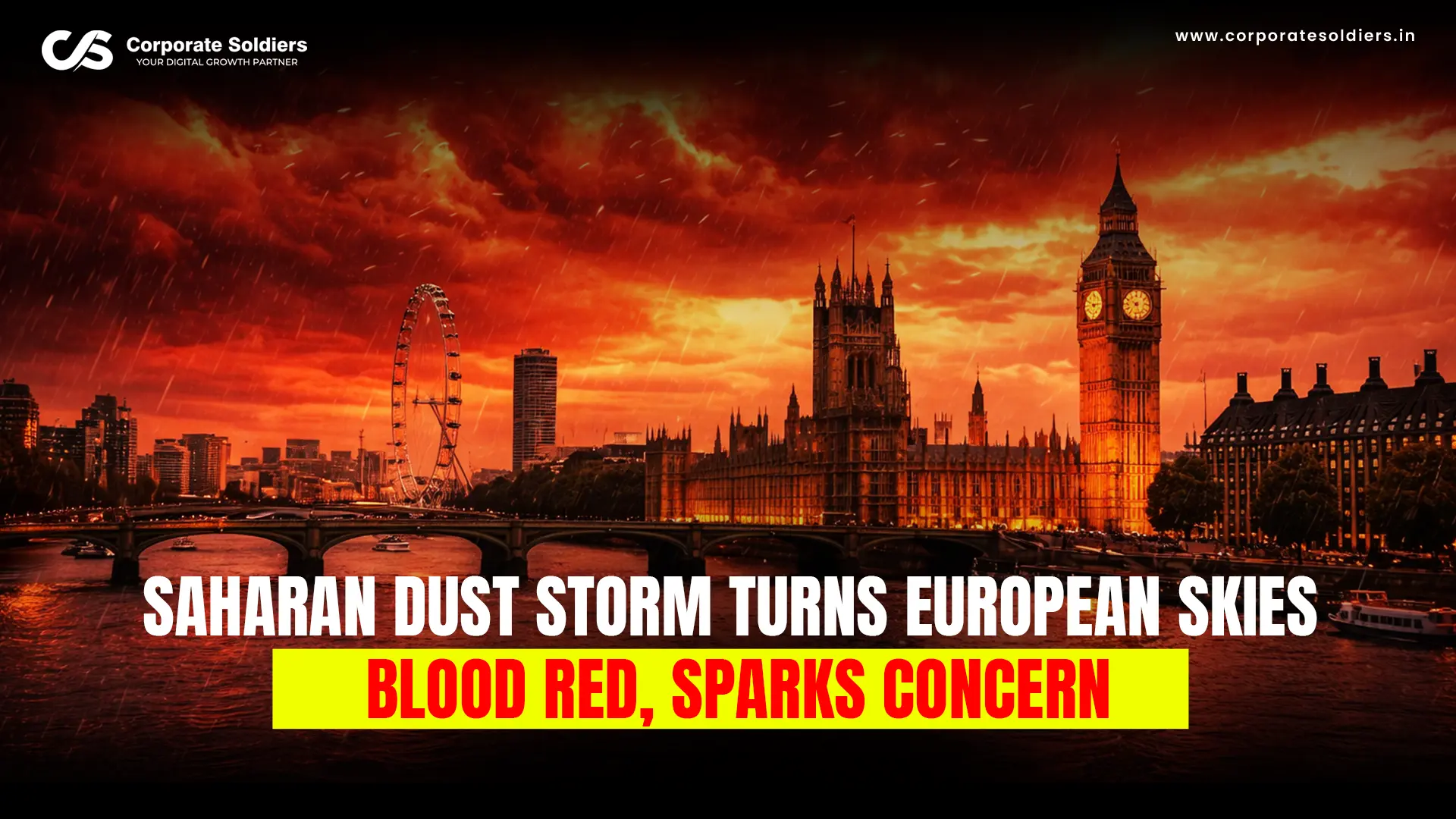
Saharan Dust Storm Reaches Greece and Turns Skies Red
A huge Saharan dust cloud has swept across the Mediterranean into mainland Greece and its surrounding islands. This transcontinental phenomenon, driven by wind patterns transporting desert sand, has significantly altered atmospheric conditions.
The sky in Crete changed to yellow then became orange and then turned to deep blood-red. The aesthetic effect spanned mainland Greece and various islands including key tourist attraction sites like Crete and Santorini. Other regions on Santorini were also severely affected as the skies were red and orange throughout the island.
Crete Covered by Saharan Dust, Visibility Drops Sharply
The dust cloud has covered Crete mostly leading to extreme reduction of visibility and a significant change in the atmospheric conditions. The local residents described the surroundings as apocalyptic with one resident stating they had “never seen this bad”.
Schools were shut, and the residents reported symptoms such as itchy eyes and the sensation of inhaling dust. The huge dust in the air was disturbing normal life and gave an element of discomfort to the locals and tourists alike.
How Saharan Dust Reached Greece and Altered Sky Colour
Atmospheric circulation and wind patterns cause the movement of Saharan dust into Europe. The desert sand of northern and central Africa was carried across the Mediterranean to mainland Greece and its islands.
High concentration of dust particles in the atmosphere made the sky red and orange as it distorted the normal light conditions and visibility.
Health Warnings Issued as Dust Levels Rise in Crete
The movement of the Saharan dust has caused the deterioration of the air quality because of the high levels of particles suspended in the air. These circumstances are health hazards, especially to the vulnerable groups.
Health authorities warned that high concentrations of dust particles could cause breathing difficulties particularly among young children, the elderly, and people with respiratory diseases like asthma.
Flights Disrupted and Ferry Services Affected in Greece
Being one of the main global tourist spots, Greece suffered transport systems disruptions.
- Aviation: Reduced visibility caused flight delays and diversions at Heraklion airport.
- Maritime: The extreme weather conditions saw the ferry services in the port of Piraeus restricted due to which there was a transportation problem between the mainland and the islands.
- Tourist Experience: The rare weather patterns and low visibility were a source of concern to the tourists and had an impact on the travelling experiences.
Storm Erminio Triggers Severe Weather Alerts Across Greece
The Hellenic National Meteorological Service warned against the severe weather such as extended and heavy rainfall, thunderstorms and potential localized hailstorms.
Storm Erminio also affected the area leaving the area in flood, damage to infrastructure, and widespread disruption of the areas of Athens and a number of Aegean islands. The emergency services were involved in various cases such as clearing of debris and helping victims of flood waters.
Greek authorities recovered the body of a man in Nea Makri, northeast of Athens, who was believed to have been swept away by floodwaters during the storm. In a different incident, at least 18 individuals died after an inflatable boat carrying migrants sank in the coast of the Mugla province of Turkey, under unfavorable weather conditions and rescue efforts were still underway.
Environmental and Public Health Implications of Dust Events
This event points out to the overall effects of transcontinental atmospheric occurrences on the environment, human health, and infrastructure.
Although Saharan dust events may produce some spectacular scenes, they also impair the transportation systems, decrease the quality of the air, and endanger susceptible populations. The case highlights the significance of constant observation of large-scale weather patterns and the necessity to be prepared to respond to them in a manner that would cause the least damage to the population and vital services.