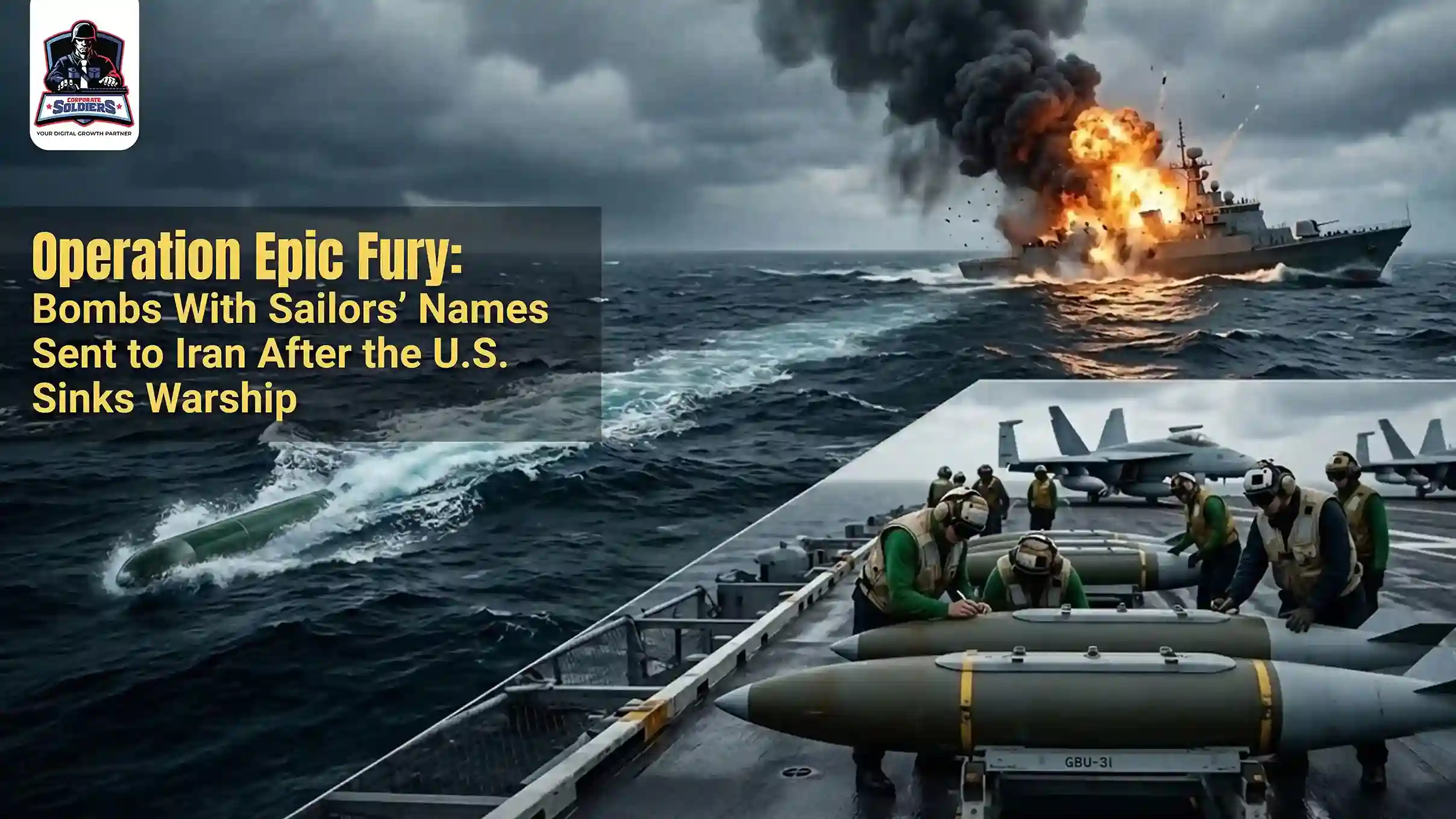
Recent images released during Operation Epic Fury have attracted significant attention in defense and geopolitical circles. The images, reportedly distributed by the U.S. Central Command and featured in a Times Now report titled “Did U.S. Bombs Bound for Iran Carry Sailors’ Names? Inside Operation Epic Fury Photos,” show ordnance prepared before missions against Iranian targets with handwritten inscriptions.
The photos soon spread online, raising questions about whether U.S. sailors had written their names on bombs intended for attacks linked to the operation. The images emerged amid increased military activity in the region connected to missions targeting Iranian assets.
It is important to know what is actually represented in the photos and what they prove to be true in order to distinguish between credible information and speculation.
Key Facts
- Operation Epic Fury is a U.S. military operation targeting Iranian maritime and naval infrastructure.
- There are photos on the Internet that depict bombs with written names and messages.
- Strike missions were prepared with weapons loaded aboard the aircraft carrier USS Abraham Lincoln..
- Some of the munitions visible appear to be GBU-31 JDAM precision-guided bombs.
Timeline of Operation Epic Fury
- Military tensions escalate in the Persian Gulf as confrontations between U.S. and Iranian forces increase in the region.
- The United States launches Operation Epic Fury, targeting Iranian naval assets and infrastructure.
- Strike missions are prepared aboard the USS Abraham Lincoln, with ordnance loaded onto aircraft for operations.
- Photos of bombs carrying handwritten names appear online, drawing widespread attention and debate.
- Reports emerge of an Iranian warship sinking during the course of the military operation.
Details From the Photos
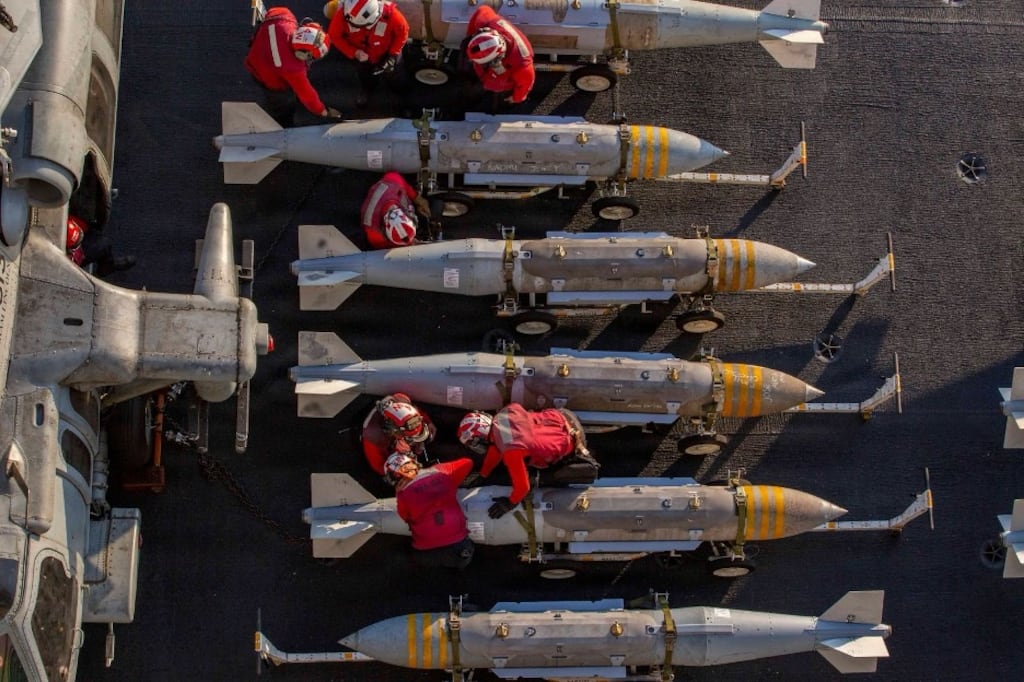
The report described that the pictures were on the deck of an aircraft carrier USS Abraham Lincoln where bombs were before they were loaded on strike aircrafts in aid of Operation Epic Fury. It seems that the ordnance contains GBU-31 Joint Direct Attack Munition (JDAM) bombs which are precision-guided munitions weighing 2,000 pounds.
In the images they published when the operation was underway, the pictures were captured on the flight deck of the USS Abraham Lincoln as the ordnance crews were loading weapons with preparations to go on strike missions. The bombs are seen as being on the carrier deck as a continuation of the normal preparation that occurs prior to aircrafts being loaded with bombs to fly sorties.
There are several bombs in the photos with handwritten writings. The munitions may be marked with chalk or pen on their sides, noses or the tail section with some names.
These markings have different sizes and visibility, which implies that they could be written casually by the staff who handled the preparation of the weapons. The aircrafts that are used to carry-out precision strike missions usually drop GBU-31 JDAM bombs, the ordnance that can be seen in the pictures.
According to the report, there is no proof that the identical individuals whose names were affixed on the bombs were the same individuals that were seen on the photographs. Still, it is evident through the photographs of ordnance personnel preparing the munitions and then loading them on aircraft. Their writings are not formal and are not identical in size or even the degree of visibility, with some of them being more evident than the rest.
Operational Background
Operation Epic Fury is part of a broader U.S. military campaign targeting Iranian naval forces and infrastructure. According to the U.S. Central Command, Iranian warships and facilities along the Persian Gulf have been targeted in the operation.
According to officials, U.S. forces conducted strike missions targeting Iranian naval infrastructure and assets as part of the operation. The targets reportedly included a Soleimani-class warship, which U.S. defense officials described as one of the key vessels in Iran’s naval fleet.
High capabilities of strikes and various military platforms have also been incorporated in the campaign. U.S. aircraft carrier aviation units launched strike missions against specific targets, while long-range precision weapons were deployed to extend the operational reach of U.S. forces in the region.
In this context, the photographs of marked bombs show a preparation stage before air operations were launched.
Weapons Used in the Operation
The Operation Epic Fury is also said to have used various sophisticated U.S. military systems to strike littering naval and infrastructure. Some of the weapons that could be seen in the photos included GBU-31 Joint Direct Attack Munition (JDAM) bombs which are precision-guided ammunition of 2000 pounds that can be used to hit the target right on target.
They were packed on the flight deck of an aircraft carrier USS Abraham Lincoln and were to be deployed by carrier-based strike aircraft that were a part of the operation. Carrier aviation departments are essential in the projection of naval air power when using long range strike activities.
Precision-guided munitions have enabled military units to attack individual infrastructure or vessels without affecting the operation quality. Within the framework of the Operation Epic Fury, these weapons constituted a central element of the marine strike package applied in a counter to Iranian maritime resources and other supporting facilities.
Role of USS Abraham Lincoln
The USS Abraham Lincoln is a key figure in the navy aviation mission in Operation Epic Fury. It is an aircraft carrier of the United States Navy that is nuclear-powered and can be used as a mobile base by a variety of military aircraft.
Carrier-based strike aircrafts are used on aircraft carriers like the USS Abraham Lincoln to enable military forces to undertake long-range air operations without the use of land bases. Such vessels carry fighter jet planes, reconnaissance planes, and logistics that are necessary during the protracted naval operations.
During the regional military operations, aircraft carriers are usually deployed to express air power and ensure operational capability in the strategic maritime areas. The USS Abraham Lincoln was a major platform during Operation Epic Fury whereby the US attacked Iranian naval assets and infrastructure on the front.
Casualties Information
The military tensions in the course of Operation Epic Fury were aggravated as a result of a military incident at sea involving U.S troops in the Indian Ocean off the coast of Sri Lanka. A U.S. navy ship that was engaged in operations in the region was reportedly attacked in the growing confrontation.
Initial news shows that about 87 sailors were killed during the incident, and it was among the deadliest naval casualties associated with the ongoing stage of the U.S.Iran conflicts. Emergency recovery operations were undertaken by the rescue teams and the nearby naval units and some of the surviving crew members on the damaged vessel were saved.
The episode has been generally seen to be in the wider context of the United States and Iran tension in the region. Analysts argue that the naval assault and the number of fatalities have helped in escalating U.S military actions against Iranian naval bases and assets.
Clarification and Verification
The Times Now report notes that writing messages or names on military ordnance is not a new practice. Military members from different services in the past have sometimes written bombs, missiles, or artillery shells prior to being deployed.
The practice has appeared in multiple conflicts, including World War II, the Gulf War, and later operations in Iraq and Afghanistan, where ordnance crews sometimes wrote short messages or names on munitions before deployment.
These pictures of Operation Epic Fury are indicative of this tradition. As per available facts, sailors aboard the USS Abraham Lincoln wrote certain names and brief messages on some of the ordnance before the weapons were loaded onto aircraft for the mission.
The photos available, however, do not verify who left the inscription and under what circumstances each of the marks was left. The markings themselves appear to be symbolic rather than operational.
Strategic and Diplomatic Context
The photos have appeared at the time when a high-level military conflict between Iran and U.S. troops had taken place in the region. Operation Epic Fury has placed much emphasis on the Iranian naval capabilities such as the warships, naval bases, and the maritime infrastructure.
Even the Persian Gulf region is of significant geopolitical significance in the world. It includes one of the largest shipping sea routes in the world that are employed in the transportation of oil and natural gas to the global markets. These waters facilitate the supply of a huge percentage of global energy thus the region is of great importance to international trade and the stability of the economy.
Due to this significance, the area enjoys a great naval presence of some key powers, such as the United States and local powers. The shipping routes within the Gulf are regularly viewed as strategic bottlenecks in world trade, in that a hindrance in the shipping paths might have extensive economical impacts.
Analysts note that operations such as Operation Epic Fury may further intensify tensions between the United States and Iran. Increased naval activity in the Persian Gulf could raise concerns about regional escalation and draw diplomatic attention from international stakeholders monitoring security in the Middle East.
Conclusion
The images circulating from Operation Epic Fury highlight a moment behind the scenes of a major military campaign. The photos confirm that some bombs prepared aboard the USS Abraham Lincoln carried handwritten names or messages added by sailors during the preparation process.
While the inscriptions have generated public interest and debate, the available reporting clarifies that the practice itself reflects a longstanding military tradition rather than a formal operational element.
As discussions about the operation continue, the episode underscores the importance of relying on verified reporting and confirmed information when interpreting images or claims related to active military operations and international security developments.
Frequently Asked Questions(FAQs)
- What is Operation Epic Fury?
- Operation Epic Fury is a U.S. military campaign targeting Iranian naval infrastructure and maritime assets.
- Why were names written on bombs?
- Writing names or messages on bombs has sometimes been a symbolic tradition among military ordnance crews before deployment.
- Where were the Operation Epic Fury photos taken?
- The photos were reportedly taken on the flight deck of the aircraft carrier USS Abraham Lincoln during preparations for strike missions.