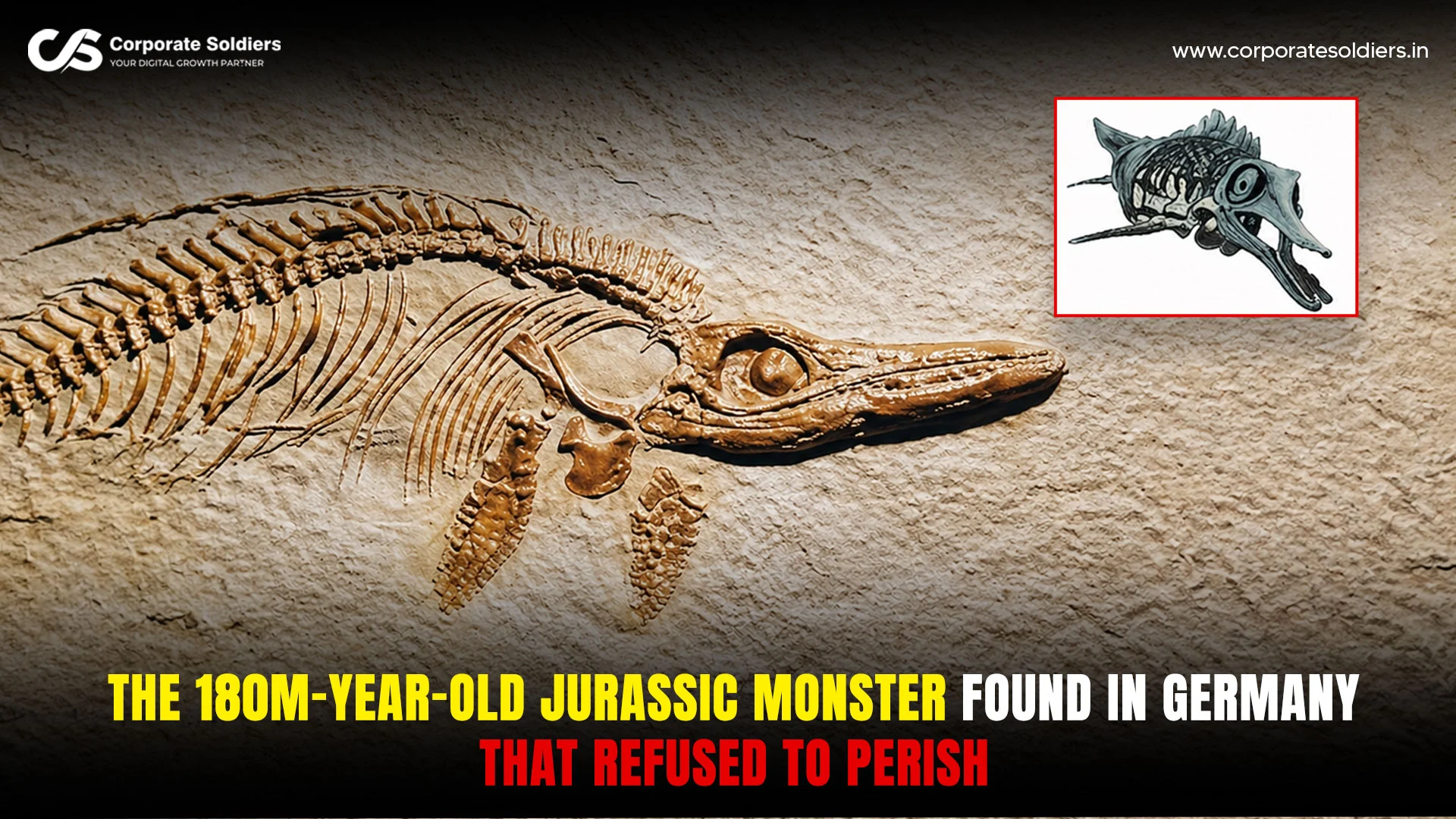
Introduction: A Tale of Resilience in the Jurassic Seas
A great survival story has science writers scrambling to capture a new chapter in the record of life in the Mistelgau clay pit in Northern Bavaria. The recent discovery of an 180-million-year-old Temnodontosaurus fossil in Germany not only provides information on the anatomy of a dead giant, it also offers a snapshot in time of the behaviour of a survivor/predator.
The fearsome dolphin-like predator of the Early Jurassic, or giant ichthyosaur, did not just live, it endured. Judging by the fossil, it lived through injuries that usually proved fatal. The find is significant for scientists, who are studying how animals of the sea in the Jurassic lived together, turning what should have been a fairly dry dig into a gold mine of paleobiology.
Meet the Predator: What Was Temnodontosaurus?
The Temnodontosaurus was the dominant apex predator of the Early Jurassic oceans.
While smaller marine reptiles dodged through the reefs, the Temnodontosaurus ruled the open water. This 21-foot giant was the Jurassic’s answer to the modern Orca.
- Top Predator: It was larger than 6 meters (about 21 feet) and was an apex predator.
- Specialized Anatomy: It had huge eyes to allow it to catch prey even in dim light. Its torpedo and fluke-shaped tail were able to propel it to catch prey.
- Ecological Role: With its large, conical teeth and powerful jaws, this animal was an opportunist predator, eating a variety of prey such as squid, fish and small reptiles.
Temnodontosaurus occupied a role comparable to modern apex marine predators, exerting top-down control over its ecosystem.
The Injuries That Should Have Killed It
However, what makes this specimen from Germany so special are signs of severe trauma. This fossil has signs of a severely injured state that would have doomed most living animals.
Evidence of Trauma and Healing
The authors discovered multiple injuries to the creature’s shoulder girdle and pectoral (shoulder) fins. The injuries show clear signs of healing and the researchers conclude the animal survived for some considerable time – likely years – following damage.
Altered Behavior
This individual also has severe irregular wear on its teeth. This suggests that, as a result of disability, it needed to modify its feeding habits. It was unable to perform the quick maneuverability needed in order to prey on such fast prey and thus had to either scavenge or prey on slow prey. The ability of an apex predator to survive with such a significant impairment gives us a new perspective of lifestyle and death of ancient marine ecosystems.
Stomach Stones & Coping Mechanisms
But the discovery that DML0 is an ichthyosaur that contains stomach stones (gastroliths) is very exciting.
Temnodontosaurus contained a cluster of stomach stones in its rib cage. Stomach stones are not uncommon in some dinosaurs and plesiosaurs, but very rare in ichthyosaurs. This discovery raises two hypotheses:
- Digestive Aid: Stones may have helped the predator’s digestion in the breakdown of mollusk shells or bone from scavenged prey, making up for its lack of hunting ability.
- Buoyancy Control: The stones may have been used to maintain buoyancy. An animal with a damaged fin may have been in trouble remaining upright in the water. The stones may have made the “survivor” heavier to maintain middle position in the water column without having to do too much additional swimming.
The injuries and gastroliths make the Mistelgau animal game-changing in the field of behavioural palaeontology.
Why This Rewrites Prehistoric History
This is not only a life story, but a new time line for the Southwest German Basin.
- Longer Lifespan: Well, it means that Temnodontosaurus lived longer in this part of the world than before: into the late Toarcian.
- A Rich Ecosystem: A severely injured predator indicates a rich ecosystem. The Jurassic oceans had to offer a severely injured large-sized Temnodontosaurus enough easy prey to survive.
- Rethinking Darwin: It makes palaeontologists rethink the idiom “survival of the fittest”; it shows us that even on the competitive Jurassic seas there was room for mistakes and adjustments.
The Legacy of Survivorship
The work on this “survivor” was by Dr Ulrike Albert and her team and it was published in the journal Zitteliana earlier this month. It now lives in theUrwelt-Museum Oberfranken, and is a survivor.
The Mistelgau Temnodontosaurus tells us that it is not only death that overarches Earth’s history, but survival. 180 million years ago there was a powerful example of survival against extreme biological odds.