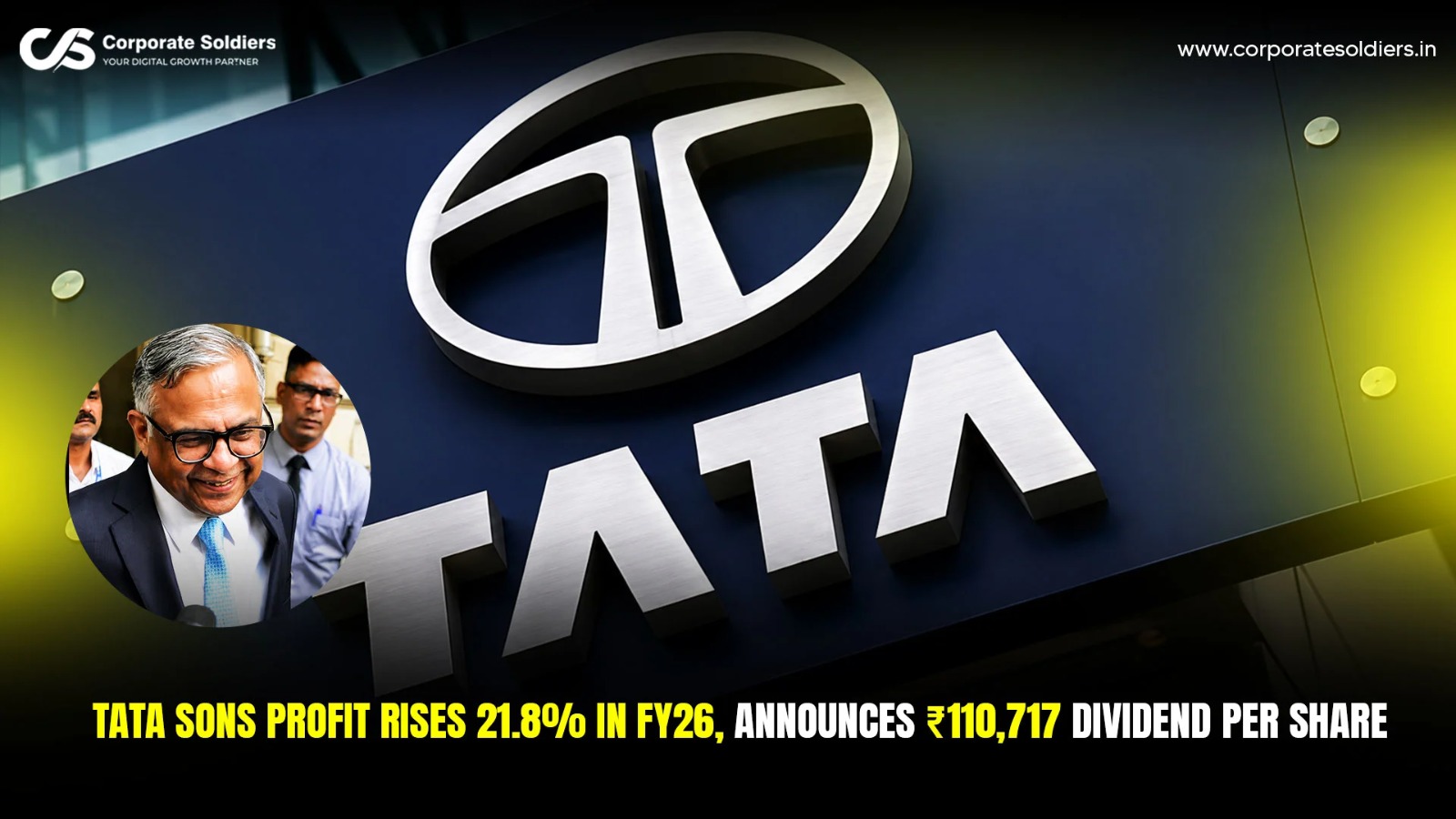
The leading holding company of the Tata Group, Tata Sons has shown solid financial performance which is witnessed in the financial year ended on March 31, 2026 with a standalone profit after tax increasing by 21.8 per cent on an annual basis to 31,961 crore. The growth is a big improvement on the last fiscal year and indicates better performance of the investments in the investment portfolio and the core businesses of the group.
Together with its announcement of earnings, Tata Sons suggested a dividend of ₹110,717 per share. The dividend proposal highlights the group’s strong cash generation and financial position despite continued investments in several new businesses.
Tata Sons Posts Good Growth in Profits
Profit Climbs to ₹31,961 Crore
As per the financial performance of Tata Sons, FY26, the standalone net profit of this company stood at ₹31,961.11 crore, which is higher by 21.8 percent compared to FY25 or 26,231.74 crore. The earnings growth reflects the strength of Tata Sons’ diversified portfolio and improved performance across its investments and core businesses.
The performance on earnings depicts the strength of the diversified portfolio of Tata Sons that comprise investments in some of the biggest listed firms in India that include information technology, automobiles, steel, consumer goods, power, hospitality, aviation, financial services, and digital ventures.
Earnings Growth Reflects Business Strength
Chairman N. Chandrasekaran highlighted the company’s strong financial performance, reflecting the resilience of the Tata Group’s businesses and investment portfolio despite continued investments in emerging sectors.
Dividend Announcement
₹110,717 Dividend Per Share Recommended
The Tata Sons board has suggested a ₹110,717 dividend per share of ordinary stockholders. The proposed dividend reflects the company’s strong profitability and cash position during FY26.
Like any other proposal of corporate dividends, payment is subject to approval by the shareholders in the annual general meeting of a company. The source report failed to mention when the shares would be eligible as per date.
Why Dividend Announcements Matter
Dividend announcements are a significant pointer of the financial well-being of a company. An increased payout is usually an indicator of optimism by the management towards the cash flows and the stability of the business in the long run. To Tata Sons shareholders, the increased dividend is a direct pay-off on ownership as well as an indication of the good earnings performance in FY26.
Key Drivers Behind the Growth
Investment Gains Played a Major Role
Investment sales gains also increased dramatically, which was one of the main factors that increased the profitability of Tata Sons. The publicly reported profit on the sale of investments escalated greatly in FY26 and this was partly through the value-unlocking initiatives, including developments related to the Tata Capital listing.
Strength Across Portfolio Companies
Tata Sons generates significant revenues out of its shares in key companies in the Tata Group. The earnings profile of the holding company was pegged on the performance of listed entities in the various sectors and helped to enhance growth in overall revenues.
Continued Investments in New Businesses
Earnings showed improvement, but Tata Sons was continuing to make aggressive investments in strategic growth sectors such as aviation, digital commerce, electronics manufacturing, batteries and semiconductors. Some of these companies are still in an investment phase, and posted a loss in FY26, which takes the long-term expansion plan of the group.
Air India remained the most loss making enterprise in the portfolio with their losses amounting to 22,238 crore in the year. Tata Digital, Tata Electronics and battery venture Agratas also ran at a loss in its attempts to explore long-term growth opportunities.
Tata Sons and the Tata Group
Strategic Importance of Tata Sons
Tata Sons is the key investment holding company and promoter of Tata Group, the largest conglomerate of business by revenue in India and one of the most powerful corporate institutions in the country. Tata Sons shareholdings provide strategic control in the various businesses of the group.
Tata Group portfolio comprises large businesses like Tata Consultancy Services, Tata Motors, Tata Steel, Titan Company, Tata Consumer Products and a number of other organizations that have business presence both in local and global markets.
Long-Term Transformation Strategy
The group has increased its investments in aviation, electronics manufacturing, semiconductor production, renewable energy, digital platforms, and electric mobility under the leadership of Chairman N. Chandrasekaran. These projects will help position the conglomerate to exploit growth opportunities in new areas in the future.
Impact on Shareholders and Investors
Strong Earnings and Higher Returns
The improvement in profit of Tata Sons and the large dividend paid out strengthens the fact that the company is capable of making significant returns to its shareholders. The findings suggest the holding company to remain enjoying the scale and diversification of the larger Tata Group.
Reflection of Financial Strength
For investors and market observers, the dividend recommendation highlights Tata Sons’ strong balance sheet and cash generation capabilities. It is also an indication that the company will be in a position to reward shareholders at the same time investing massively in strategic investments in various domains.
Industry Perspective
Positive Signal Amid Evolving Corporate Earnings Trends
The performance of Tata Sons in FY26 arrives when Indian companies are sailing through an uncertain global economic climate, shifting consumption trends, and industry-related issues.
The achievements of the company in providing more or less double digit growth in profit and revenue growth exemplify the power of scale, diversification of portfolio and disciplined capital deployment. It is also an indication of resilience of the major business groups in India even as it is investing in capital-intensive growth strategies.
Balancing Growth Investments and Profitability
One of the most significant implications of the findings is the ability of Tata Sons to retain its profitability despite the ability to finance huge investments in the business that are still in its initial years of development. This is a stability between present incomes and future development that has gained relevance in large conglomerates in India that are seeking to expand in the long term.
Final Thoughts
Tata Sons posted a strong FY26 financial performance, with standalone profit rising 21.8% to ₹31,961 crore. The company has additionally offered a dividend of ₹110,717 per share, which reflects strong financial strength and dedication towards dividend payments to the shareholders.
The outcome underscores the robustness of the diversified portfolio of the Tata Group, which is complemented by the gains and earnings on investments and core businesses. Meanwhile, Tata Sons remains a heavy investor in the key areas of the strategy like aviation, semiconductors, batteries, electronics and digital commerce, which places the group at the point of future expansion and ensures a strong base of earnings.