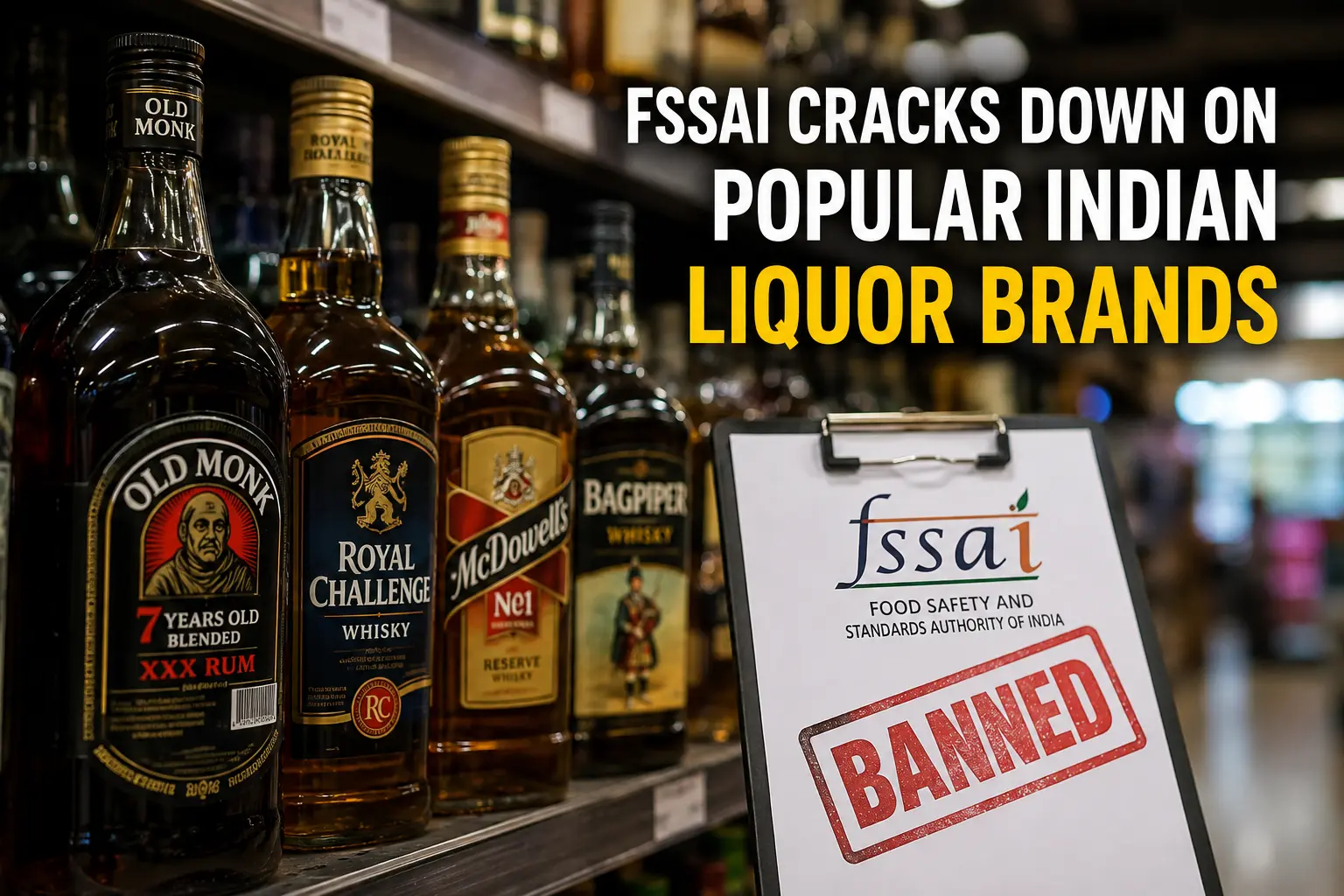
Millions of Indians grab at cheaper iconic brands such as Old Monk, Royal challenge and McDowell. However, the food safety controller of India the Food Safety and Standards Authority of India (FSSAI) has recently issued a bombshell stating that much of these mass-market hits may not be actual rum or whisky, in fact.
The FSSAI has prohibited the sale of certain types of liquor brands of big beverage firms in a massive crackdown that has generated ripples in the 40-billion dollar alcohol market in India, accusing it of systematically deceiving the consumers.
The following is a barebone explanation of what is going on, why the government is intervening and what it will mean to your weekend beverage.
The Secret Recipe: “Neutral Spirits” and Artificial Flavors
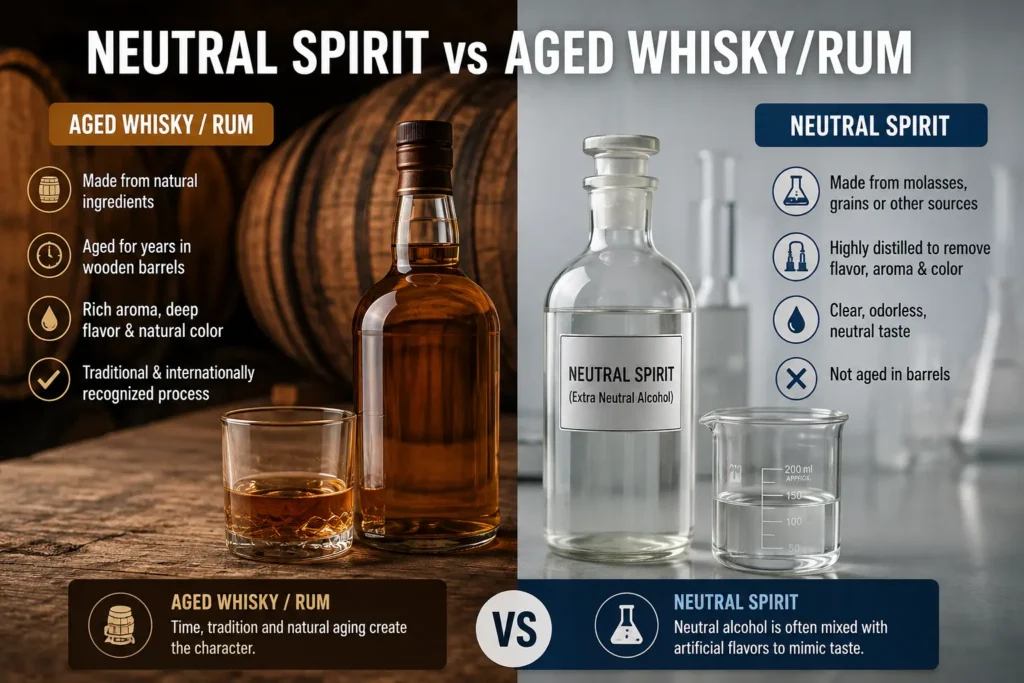
Rum or whisky making is a time-consuming process, traditionally. It begins with a base material (such as molasses to make rum or malted grains to make whisky) and then allows the liquid to mature under natural circumstances in wooden barrels. It is this maturation process that makes the alcohol very rich and deep in flavor as well as color.
Nevertheless, the laboratory tests by FSSAI have shown that a number of popular Indian brands are circumventing this costly, time-consuming procedure. Rather, they are supposedly consuming so-called neutral spirit (or extra-neutral alcohol) , a cheap, highly concentrated alcohol, which has virtually no natural flavor or odor. To give it a classic flavor the manufacturers just pump it with imitation or nature-identical flavors.
The FSSAI’s stance is clear: Adding “rum flavor to rum” or “whisky flavor to whisky” is not an internationally recognized manufacturing practice, and serves no legitimate technological purpose.
The “7-Year” Illusion
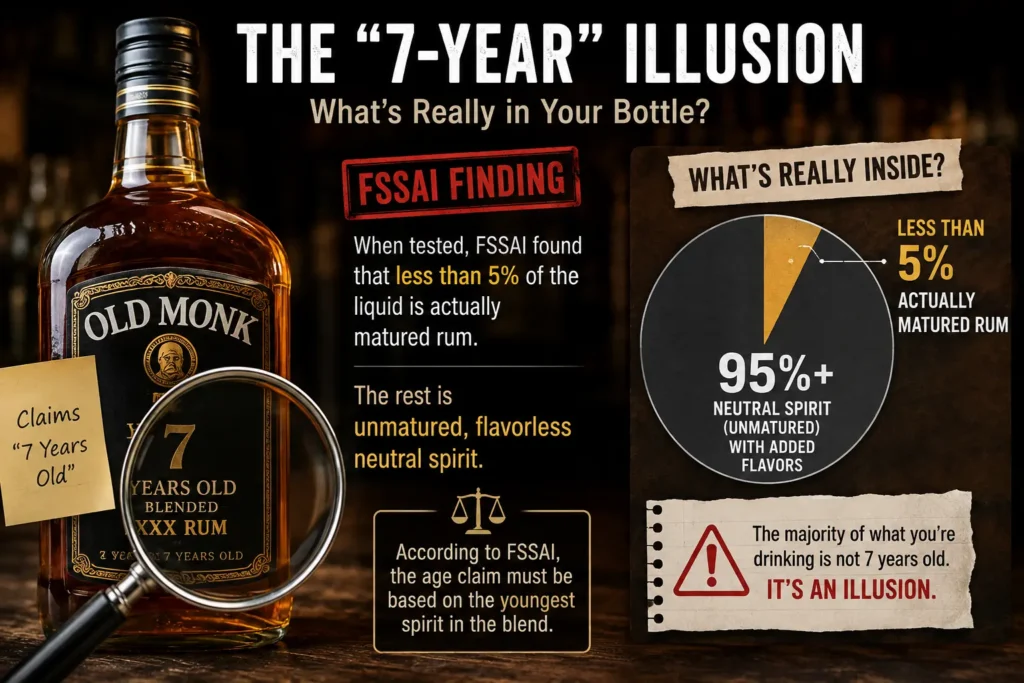
The most unexpected result of the research is associated with the famous brand Old Monk.
The food safety laws of India dictate that in case a bottle is labelled with the age (such as 7 Years Old), the claim should be grounded on the youngest spirit in the blend.
When the FSSAI tested an Old Monk 7 Years Old Blended FSSAI, they discovered that the liquid only contained less than 5 percent of matured rum. It was merely a huge amount of the bottle that was still raw and unflavored neutral.
“Whisky” vs. “Whisky-Flavored Spirit”
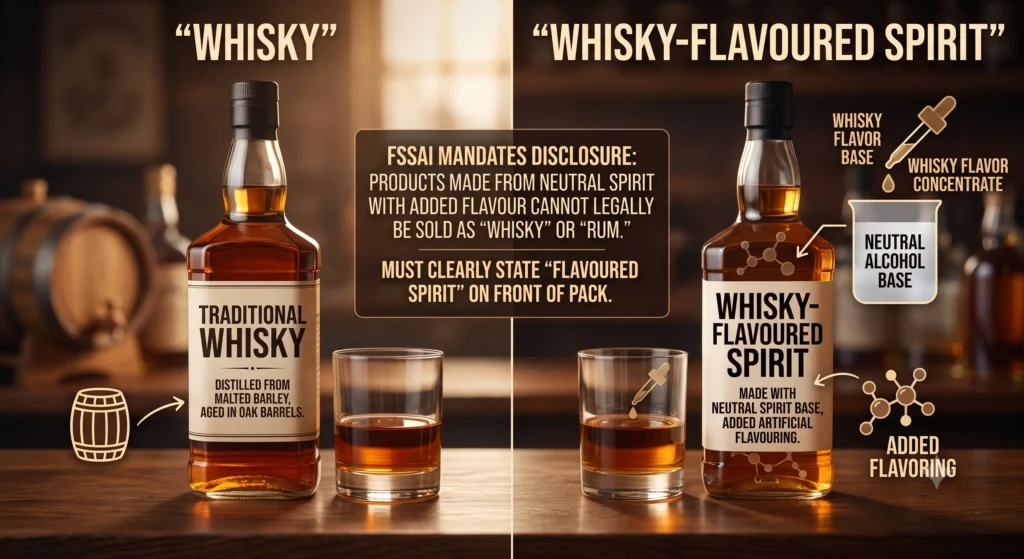
Because these drinks do not achieve their flavor naturally, the FSSAI argues they cannot legally be sold under the names “Rum” or “Whisky”.
If a company is just adding flavor to a neutral alcohol base, the government says the packaging must clearly state that it is a “Rum-flavoured Spirit” or a “Whisky-flavoured Spirit”. Currently, the labels on these popular bottles fail to disclose this on the front of the pack, which the regulator says actively misleads consumers into thinking they are buying traditional spirits.
Which Brands Are Affected?
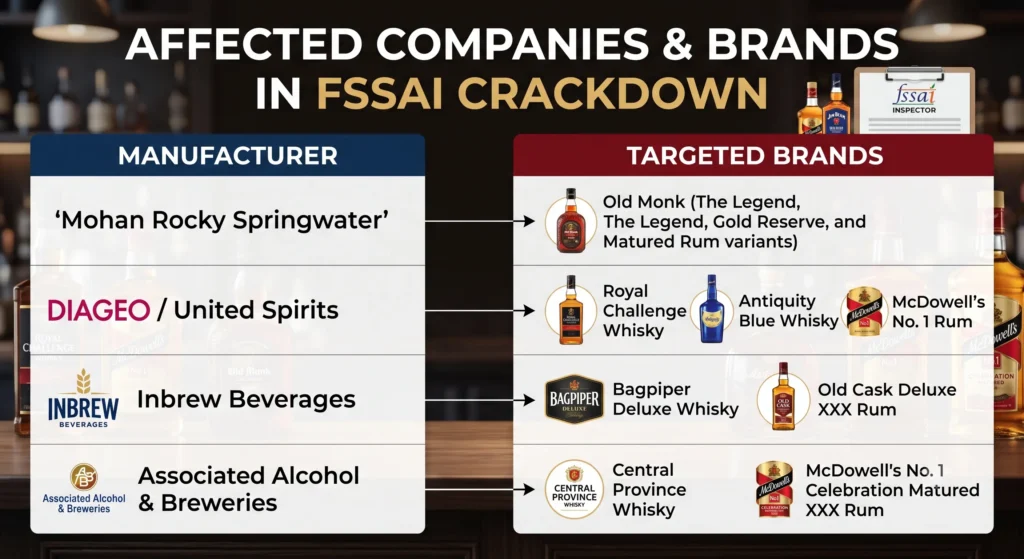
The crack has been on certain manufacturing plants in Maharashtra, Madhya Pradesh, and Goa. The following are the key companies and brands that have encountered sales and/or enforcement measures to date:
| Manufacturer | Targeted Brands |
| Mohan Rocky Springwater | Old Monk (The Legend, Gold Reserve, and XXX Matured Rum variants) |
| Diageo / United Spirits | Royal Challenge Whisky, Antiquity Blue Whisky, McDowell’s No. 1 Rum |
| Inbrew Beverages | Bagpiper Deluxe Whisky, Old Cask Deluxe XXX Rum |
| Associated Alcohol & Breweries | Central Province Whisky, McDowell’s No. 1 Celebration Matured XXX Rum |
Note: The FSSAI has also issued notices to six other unnamed manufacturers in Maharashtra and is conducting active inspections at Mandexi Distilleries & Breweries in Goa.
What Happens Next?
The alcohol companies are not taking a back seat. According to industry executives, using these flavorings is in line with Indian regulations. They think that they are acting within the existing legislation by putting nature-identical flavouring substances on their labels.
The bottom line for consumers: If the FSSAI wins this battle, the mass-market alcohol industry will face a tough choice. They will either have to start aging their alcohol properly (which would drastically increase the price of a bottle) or change their iconic labels to say “Flavored Spirit”—a move that could seriously hurt their brand image.
Until this is sorted out, you may wish to consult the fine print of your next bottle.