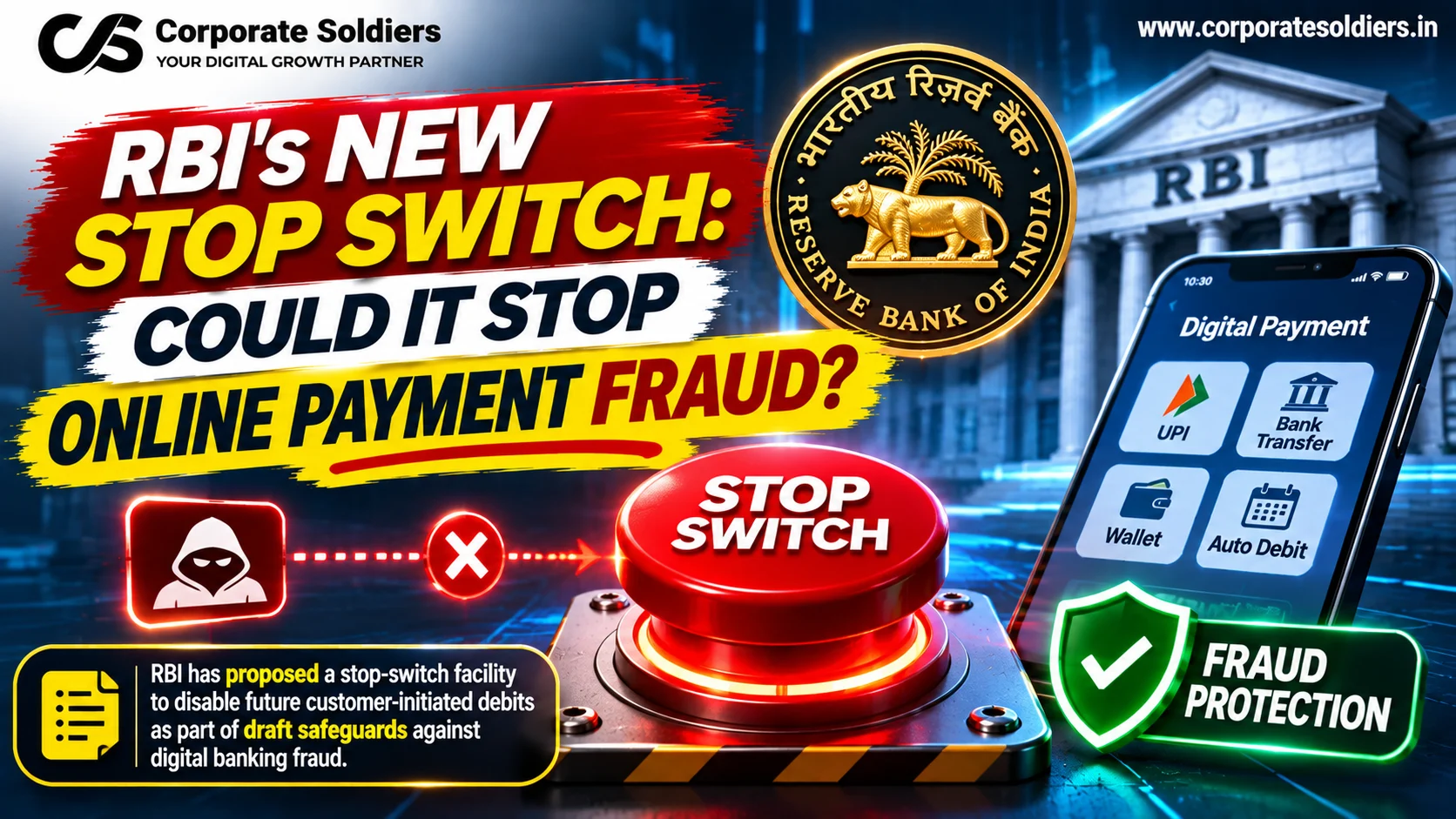
The Reserve Bank of India (RBI) has proposed a new set of digital payment safety measures to protect bank customers from fraudulent electronic banking transactions. The draft proposals include an emergency ‘Stop Switch’ to block outgoing payments, customer-controlled transaction limits, and an optional Trusted Person Mechanism for an additional layer of authentication on high-value transfers.
Announced on November 23, 2026, these proposed measures aim to give customers greater control over their digital payment channels while increasing banks’ accountability for security failures. The RBI has invited public comments on the draft directions until December 14, 2026.
Key Highlights
- Stop Switch will let customers immediately block future customer-initiated debits from their bank accounts.
- Customers could set limits per transaction, per beneficiary, and for daily transfers, including an overall limit across digital payment channels.
- Customers could nominate an adult to approve eligible transfers above a threshold the account holder sets.
- Banks would need explicit customer consent and applicable authentication before enabling digital payment channels for newly onboarded customers.
- Customers could switch domestic and international card transactions on or off and set spending limits across ATMs, point-of-sale terminals, and online payments.
- Failures involving mandatory authentication, transaction alerts, fraud reporting facilities and prompt action on complaints could fall under the expanded definition of bank negligence.
What Is ‘Stop Switch’ by RBI?
The proposed Stop Switch is an emergency facility that would allow customers to immediately disable future customer-initiated outgoing debits from their bank accounts.
For example, if a customer suspects that their banking credentials have been compromised, they could activate the facility to prevent further outgoing transactions.
Additionally, it can also prevent new payment mandates and registration on new third-party UPI apps.
However, incoming payments would continue uninterrupted. Existing recurring payment mandates and standing instructions, along with certain bank-initiated debits such as loan instalments and bank charges, would remain outside its scope.
Activating your Stop Switch can also restrict the creation of new payment mandates and registration of the account on new third-party UPI applications. This makes the explanation more complete.
The proposal also allows customers to disable individual digital payment channels and reactivate them when required.
About RBI’s Trusted Person Mechanism
What it is
- You can nominate a trusted person (aged 18 or above) linked to your account
- This person helps authenticate your electronic fund transfers
- Along with you, the nominated person receives transaction details and can approve or reject eligible transfers.
How approval works
- The trusted person receives the transaction details
- They have one hour from the notification to approve the transfer
- If they reject it or don’t respond in time, the payment is declined
Rules to know
- It is completely voluntary
- Both you and the trusted person must give consent
- A 24-hour cooling period applies before the arrangement is activated or certain changes take effect
What the trusted person cannot do
- They do not become a joint account holder
- They cannot see your bank balance
Where it does not apply
- UPI transfers
- Merchant payments
- Recurring payments
When Will RBI’s New Digital Payment Rules Be Applied?
New digital payment rules will come into effect in two phases:
- January 1, 2027: Exceeding the bank negligence definition, which means banks will be held accountable for carelessness in any work.
- July 1, 2027: All remaining safety measures will be implemented, such as new customer controls and a stop switch.
For now, these rules are sitting in draft and are not yet operational rules. The approval will depend on the RBI’s regulatory process and final directions.