Major sporting events create enormous marketing opportunities for global brands. However, not every company can afford multi-million-dollar sponsorship deals. Some brands find innovative ways to capture public attention without becoming official sponsors. One of the most discussed recent examples is Levi’s response to FIFA’s branding restrictions at Levi’s Stadium ahead of the FIFA World Cup 2026.
What could have been viewed as a branding setback quickly became a masterclass in modern marketing. The incident demonstrated how strong brand equity, strategic storytelling, and earned media can generate widespread visibility without purchasing official sponsorship rights.
This case provides valuable lessons for marketers, business owners, and brand managers seeking to maximize exposure while operating within constraints.
Understanding Ambush Marketing
Ambush marketing is a strategy where a brand associates itself with a major event without paying sponsorship fees. Instead of becoming an official sponsor, the company leverages public interest surrounding the event to gain visibility and consumer attention.
The objective is simple:
- Increase brand awareness
- Create public conversation
- Gain media coverage
- Benefit from event-related attention
Some ambush marketing campaigns are intentional and highly coordinated, while others emerge organically through unexpected circumstances.
Featured Snippet Answer
What is ambush marketing?
Ambush marketing is a promotional strategy where a company gains exposure from a major event without paying for official sponsorship rights, often by creating campaigns that capitalize on public attention surrounding the event.

The Levi’s Stadium and FIFA World Cup Situation
Levi’s Stadium in Santa Clara, California, is one of the selected venues for the FIFA World Cup 2026.
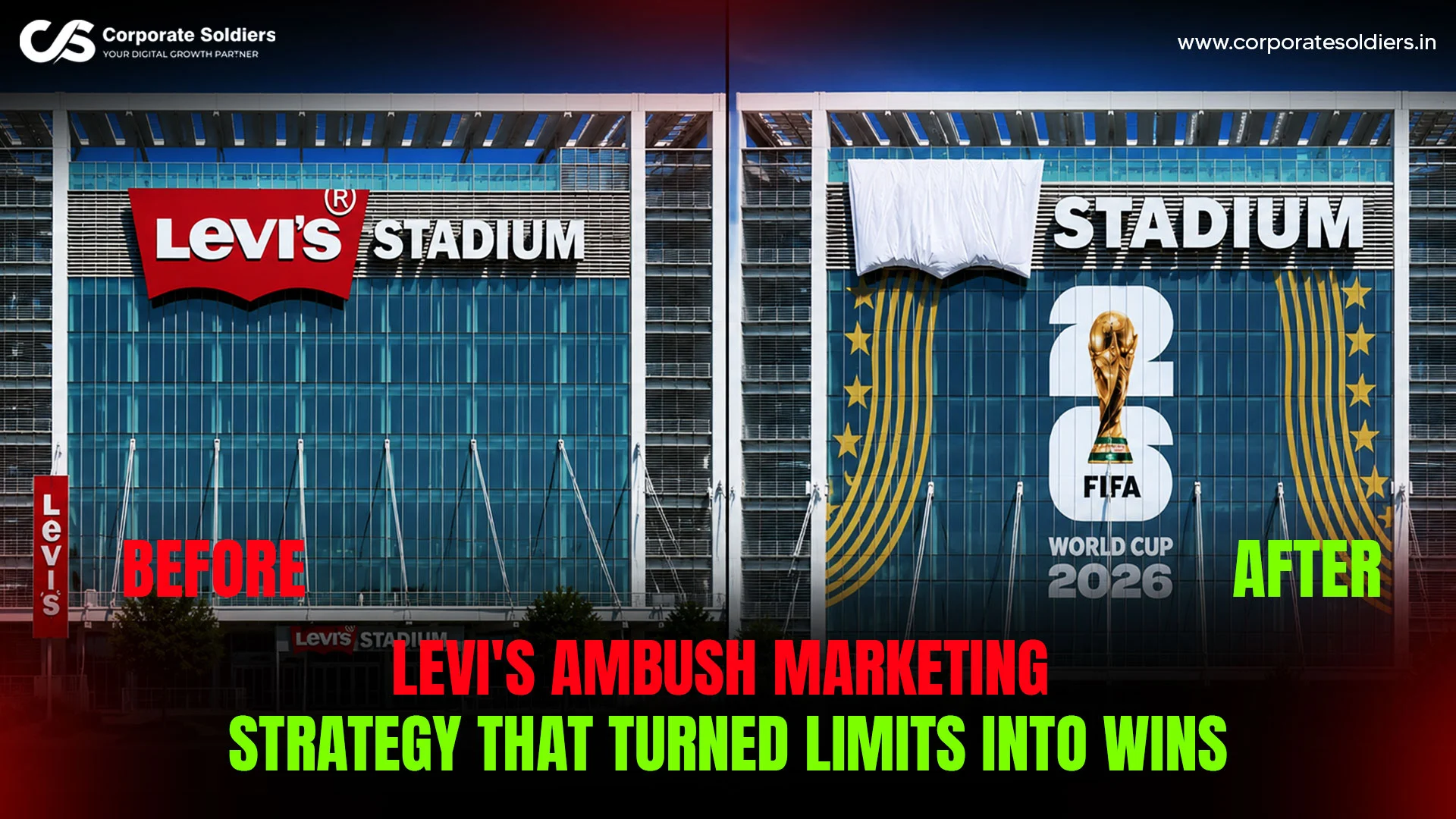
As part of FIFA’s sponsorship protection policies, non-sponsoring brands often have their logos covered or removed from visible event areas. Since Levi’s is not an official FIFA sponsor, portions of the stadium branding reportedly needed to be covered during FIFA-related activities.
Images showing the covered Levi’s logo quickly circulated across social media platforms, marketing blogs, and professional networks.
Instead of damaging the brand, the situation sparked curiosity and discussion.
People began asking:
- Why was the logo covered?
- Which brand was hidden?
- What rules required this action?
- How would Levi’s respond?
The conversation itself became a powerful marketing asset.
Why the Strategy Worked So Well
1. The Power of Curiosity Marketing
Humans naturally notice what is missing.
When a recognizable logo suddenly disappears, audiences become curious. This psychological principle is known as the “information gap.”
The covered Levi’s logo generated questions that encouraged people to engage with the story.
Brands spend millions trying to attract attention. In this case, attention emerged organically.
Real-World Application
Businesses can use curiosity marketing by:
- Teaser campaigns
- Limited information releases
- Mystery product launches
- Strategic visual changes
The goal is to encourage consumers to seek answers.
2. Strong Brand Recognition Did the Heavy Lifting
This strategy would not work for every company.
Levi’s has spent decades building one of the world’s most recognizable apparel brands.
According to Interbrand and multiple global brand studies, strong brand recognition significantly increases recall, trust, and consumer engagement.
Even with the logo partially hidden, audiences could still identify the brand.
This highlights an important marketing lesson:
Brand equity creates value long before a campaign begins.
3. Earned Media Generated Massive Exposure
Earned media refers to publicity gained through organic discussion rather than paid advertising.
Examples include:
- News coverage
- Social media shares
- Blog articles
- Industry discussions
- User-generated content
The Levi’s story quickly spread across LinkedIn, X, Instagram, Facebook, marketing communities, and business publications.
As a result, Levi’s gained visibility without launching a major advertising campaign.
Why Earned Media Matters
Research consistently shows consumers often trust earned media more than traditional advertising because it appears more authentic and unbiased.
Benefits include:
- Lower acquisition costs
- Higher trust levels
- Greater social proof
- Increased brand credibility
4. Turning a Limitation into an Opportunity
Exceptional marketers view constraints differently.
Instead of focusing on what they cannot do, they identify what they can leverage.
The restriction created:
- A compelling story
- A visual talking point
- Industry discussion
- Public engagement
Rather than fighting the situation, Levi’s benefited from the conversation surrounding it.
This approach reflects a broader marketing principle:
Narratives often generate more attention than advertisements.
5. Visual Storytelling Amplified the Impact
Marketing today is highly visual.
The side-by-side images showing:
- The original Levi’s logo
- The covered logo
- Public discussion around the change
created a simple yet powerful narrative.
Effective visual storytelling:
- Captures attention quickly
- Encourages social sharing
- Simplifies complex messages
- Increases audience retention
The images required little explanation, making them highly shareable.

The Psychology Behind the Campaign’s Success
Several consumer psychology principles contributed to the campaign’s effectiveness.
Curiosity Gap
People seek missing information.
When something familiar changes unexpectedly, audiences become motivated to investigate.
Social Proof
As more people discussed the images online, additional users joined the conversation.
Scarcity Effect
The removal of the logo increased its perceived importance.
Pattern Interruption
Consumers expect to see stadium branding.
When that expectation was disrupted, attention increased dramatically.
These psychological triggers are frequently used in successful marketing campaigns.
Lessons Businesses Can Learn from Levi’s
Focus on Brand Building First
Strong campaigns depend on strong brands.
Invest in:
- Consistent messaging
- Brand identity
- Customer experience
- Reputation management
Brand equity compounds over time.
Create Shareable Stories
People rarely share advertisements.
They frequently share stories.
Ask:
- Is this surprising?
- Is it emotional?
- Is it unique?
- Does it create discussion?
Leverage Earned Media Opportunities
Not every marketing win requires advertising spend.
Look for opportunities to:
- Participate in industry conversations
- Create newsworthy moments
- Encourage user-generated content
Embrace Constraints
Budget limitations, regulations, and competitive challenges can inspire creative solutions.
Many breakthrough marketing campaigns emerge from restrictions rather than unlimited resources.
Comparing Traditional Sponsorship vs Ambush Marketing
| Factor | Official Sponsorship | Ambush Marketing |
| Cost | Very High | Relatively Low |
| Official Rights | Yes | No |
| Brand Control | High | Moderate |
| Media Coverage | Expected | Often Viral |
| Risk Level | Low | Moderate |
| Creativity Required | Moderate | High |
While official sponsorship provides guaranteed exposure, ambush marketing often generates stronger public discussion when executed effectively.
Potential Risks of Ambush Marketing
Despite its benefits, ambush marketing carries risks.
Legal Concerns
Brands must avoid violating:
- Trademark laws
- Sponsorship agreements
- Event regulations
Public Backlash
If consumers perceive the tactic as deceptive, trust can decline.
Limited Control
Earned media conversations can evolve unpredictably.
Successful brands carefully balance creativity with compliance.
The Future of Ambush Marketing
As advertising costs continue rising, brands increasingly seek alternative methods for capturing attention.
Future ambush marketing trends may include:
- Social-first campaigns
- Influencer-led event associations
- Real-time marketing
- AI-powered trend participation
- User-generated content strategies
The Levi’s example demonstrates that attention is no longer solely purchased—it can be earned through strategic positioning and compelling narratives.
Key Takeaways
The Levi’s Stadium branding situation highlights several important marketing principles:
- Curiosity drives engagement.
- Strong brands benefit from unexpected attention.
- Earned media can outperform paid media.
- Visual storytelling increases shareability.
- Constraints often create opportunities for innovation.
Levi’s transformed what appeared to be a branding restriction into a global marketing conversation. The incident reinforces a timeless truth in marketing:
The brands that win are often the ones that turn obstacles into stories worth sharing.
Frequently Asked Questions
What is ambush marketing?
Ambush marketing is a strategy where a brand gains exposure from an event without paying for official sponsorship rights.
Why is the Levi’s Stadium example considered ambush marketing?
The public discussion surrounding the covered Levi’s branding generated significant visibility and brand awareness despite Levi’s not being an official FIFA sponsor.
What is earned media?
Earned media refers to publicity gained organically through news coverage, social sharing, recommendations, and public discussion rather than paid advertising.
Why was the covered logo effective?
The covered logo created curiosity, encouraged conversation, and generated widespread social media engagement.
Can small businesses use similar strategies?
Yes. Small businesses can leverage storytelling, curiosity marketing, and earned media to increase visibility without large advertising budgets.