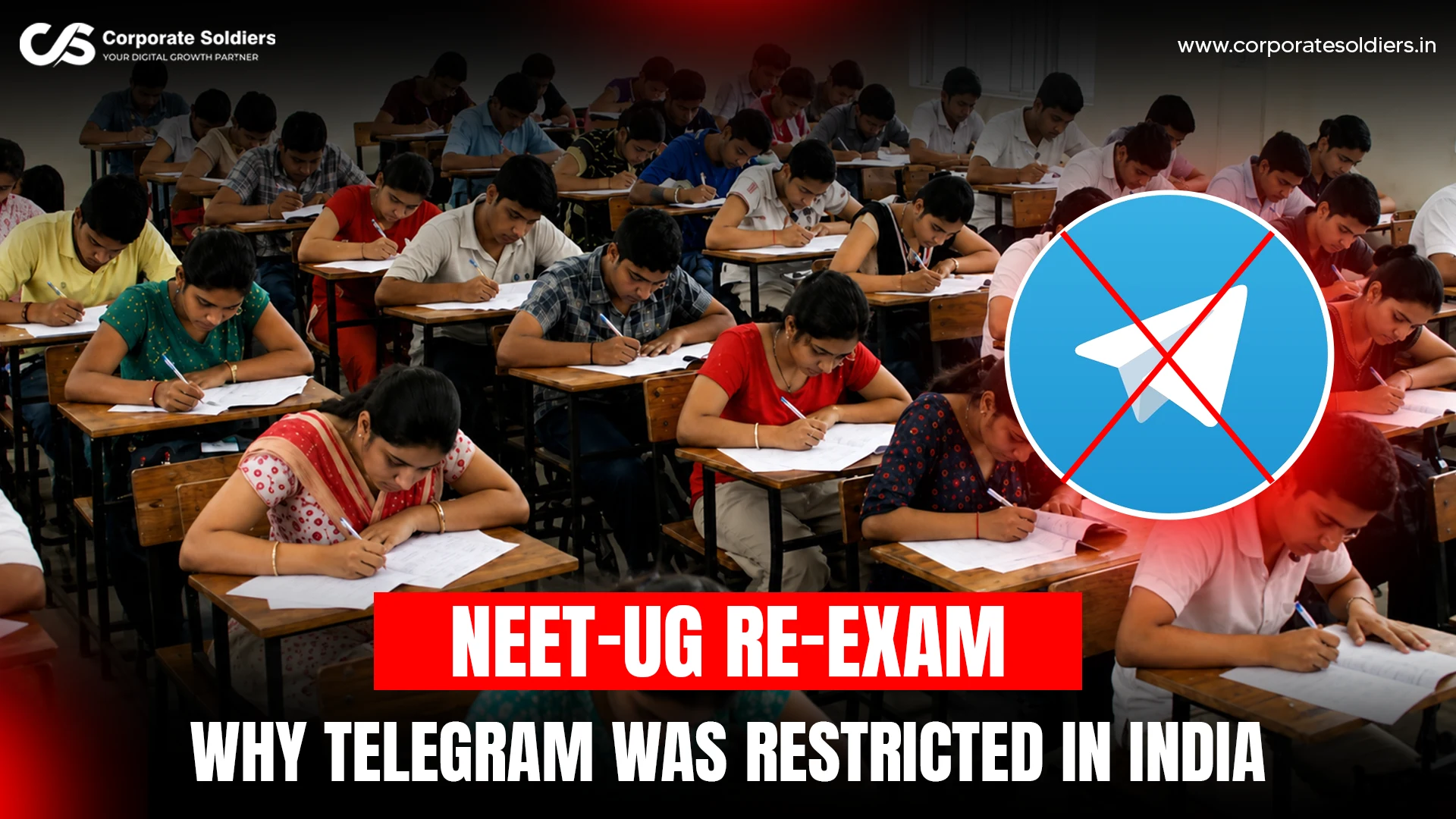
Telegram has been blocked temporarily in India on the request of the National Testing Agency (NTA) with regards to the NEET-UG re-examination process of 2026. The move was in response to the government attempts to combat the worries on the spread of examination related fraudulent materials and alleged abuse of the messaging service.
The prohibition follows the NEET -UG re-examination that is scheduled to occur June 21 with the authorities claiming that the move will serve to safeguard the integrity of one of the biggest competitive entrance exams in India.
Why the Restriction Was Imposed
The report cites the official inputs claiming that the decision to ban Telegram was based on the allegations that the NTA had that the platform was being used by organised cheating networks and alleged use of the platform for defrauding candidates through fake examination-related claims.
Certain Telegram channels, groups and bots were reportedly used to spread fake information, including false claims of paper leaks and access to question papers and other examination-related materials. These activities were considered a direct threat to the fairness of the examination process.
The NTA also expressed apprehension regarding the abuse of the Telegram message-editing feature which was supposedly being used to edit and reuse old messages and make false evidence of paper leakage post-exam.
Government and Regulatory Response
In response to the suggestion of NTA, the Ministry of Electronics and Information Technology (MeitY) published guidelines under Section 69A of the Information Technology Act, 2000, to temporarily block Telegram in India.
The restriction was implemented at the platform level under Section 69A of the Information Technology Act, meaning access to the messaging application was temporarily curtailed rather than targeting individual accounts or channels.
The ban has been time-limited, and can be accessed until June 22, the NEET-UG re-examination period and the time immediately following the re-examination.
Additionally, Telegram has been ordered to disable its message-editing feature in India in the long run, purportedly until June 30, as a broader aspect of the regulatory action in an effort to prevent it manipulating online information in respect of examinations.
Connection with NEET-UG Re-Examination
The NEET-UG re-test was held after the previous examinations leaks and irregularities in the first round of examination, which raised concerns on the validity and reliability of the results.
To solve these issues, the authorities made a decision to re-test in order to make the evaluation process of the candidates transparent and secure.
Before the re-examination which was to be carried out on June 21, the NTA and the government agencies began enhancing monitoring of online sources that were suspected to be utilized in the examination frauds, which resulted in the decision to block Telegram.
The objective as was outlined in the report was to ensure that no candidate is unfairly advantaged due to leaked/falsified examination materials and ensure that there is confidence in the examination system.
Impact on Students and Examination Security
The ban has been introduced by the authorities as a wider examination-security process to safeguard millions of candidates who will take NEET-UG.
Authorities underscored the importance of protecting integrity of competitive examinations at the national levels as a way of ensuring fairness, transparency, and equal opportunities to all students.
The government could minimize the risks of misinformation and shield students against being fooled by false developments of paper leaks or unauthorized access to exam content by blocking access to platforms that are supposedly used to distribute fraudulent content.
Broader Concerns Around Digital Platforms and Exam Leaks
The incident underscores the continuous predicament of examination authorities, in dealing with dissemination of sensitive information via encrypted and semi-privacy messaging applications.
The report indicated that Telegram had been known to be used by some organised networks to share false information regarding exams. Quickly developed and edited channels, groups and messages have complicated the regulation and enforcement by regulatory authorities.
Officials consider such sites as playing a growing role in the ecosystem of exam-fraud, especially in high-stakes national exams when the urge to cheat on a test or have insider access to the questions is strong.
Cybercrime monitoring agencies were also understood to be tracking the circulation of examination-related content across encrypted platforms.
Official Statements and Key Remarks
According to reports, the National Testing Agency had said that restrictions have been imposed after it had recommended the same to the Ministry of Electronics and Information Technology.
The NTA explained the measure to be taken in response to cheating through the organized activities and misinformation of NEET-UG applicants.
It also brought to the fore that some Telegram channels had been accused of engaging in fraudulent activities of claiming to make available examination materials and that this was risky to the fairness of the examination process.
The officials also suggested that the actions were meant to be short-term, focused, and only limited to the period of examination so as to cause minimal inconvenience without jeopardizing the security of the examinations.
The NTA also cautioned students against engaging with or relying on unverified Telegram channels claiming to provide examination-related materials.
Conclusion
The temporary ban of Telegram in India, on the basis of the demand of the National Testing Agency, is an important regulatory step, which is designed to defend the integrity of NEET-UG re-examination procedure.
By focusing on issues revolving around the distribution of fake examination material and abuse of the internet and digital resources, the authorities have attempted to provide a level playing field in the examination of candidates in a fair and transparent manner.
With the NEET-UG re-examination underway, the regulatory/enforcement agencies have been vigilant on the online platforms to curb the risks related to exam-related fraud, and to promote the integrity of national-level competitive examinations.