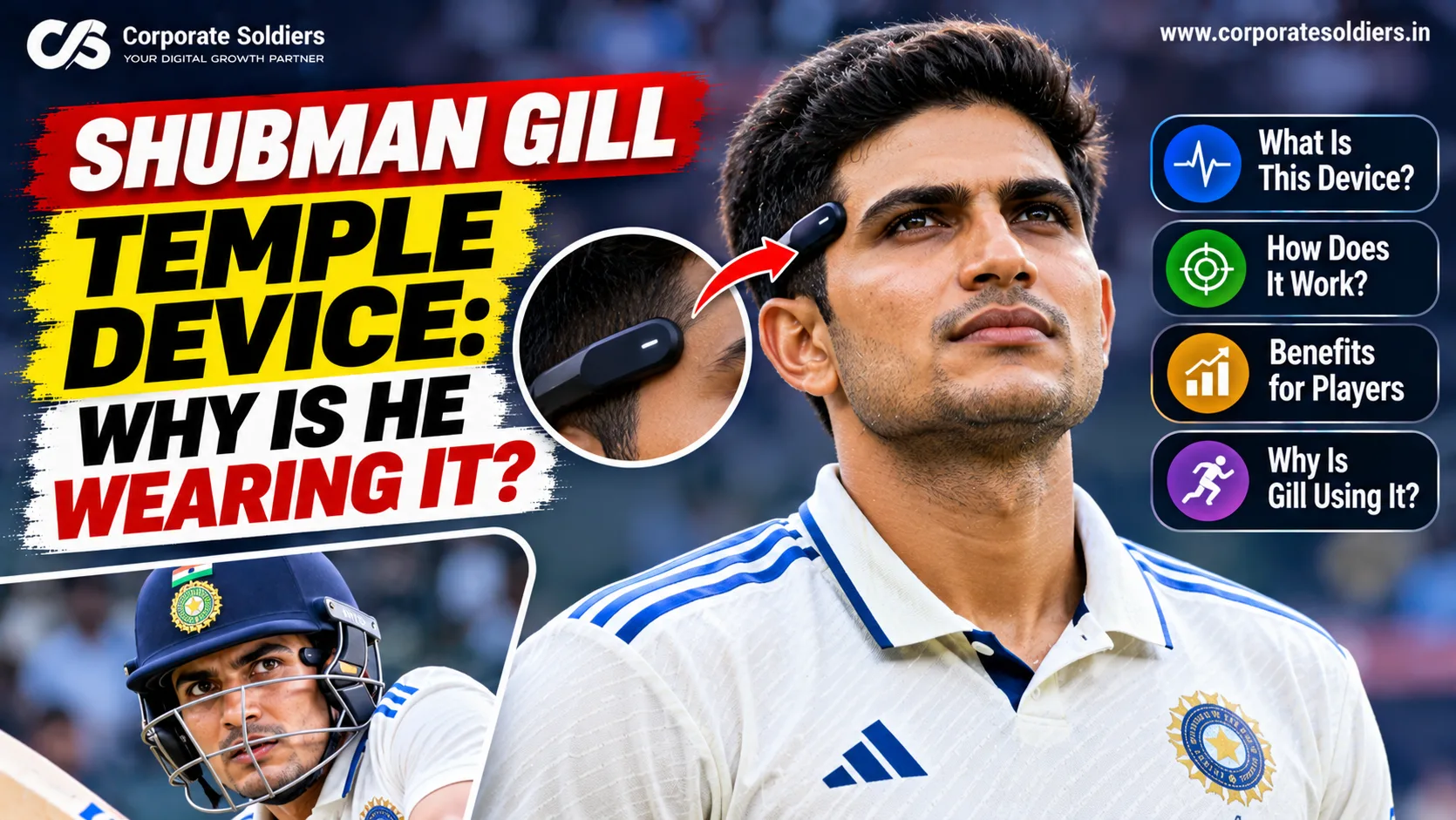
Indian cricketer Shubman Gill has caught attention after being spotted wearing an unusual forehead wearable during India’s practice session ahead of the New Zealand ODI series.
The device, called Temple, has been developed by Zomato co-founder Deepinder Goyal and is designed to monitor changes in cerebral blood flow and physiological responses.
Unlike conventional fitness trackers that primarily measure heart rate, steps, and sleep, the Temple device focuses on signals associated with brain blood flow, physical strain, and cognitive stress. Its use by an international cricketer has sparked curiosity about how emerging wearable technology could influence sports performance monitoring.
Key Highlights
- Shubman Gill was spotted wearing the Temple wearable during India’s practice session.
- The device was developed by Deepinder Goyal.
- It is designed to track changes in cerebral blood flow through its BrainFlow technology.
- It aims to provide insights into physiological responses associated with physical and cognitive stress.
- Badminton player PV Sindhu has also been spotted using the wearable.
- Gill’s brand ambassador status and ICC approval for match use remain unconfirmed.
What Is a Temple?
Temple is an experimental health and fitness wearable developed to monitor changes in cerebral blood flow, which refers to the circulation of blood through the brain. The device is worn near the temple area of the forehead and uses light-based sensing technology called BrainFlow to track related physiological signals.
It also features an indicator called Entropy, which its developer describes as a measure of physiological effort. The aim is to help users understand how activities, exercise, and recovery influence their body’s responses.
Unlike a smartwatch, Temple focuses on brain blood-flow-related signals rather than conventional fitness measurements.
Why Is Shubman Gill Using the Temple Wearable?
Gill has been spotted testing the device during cricket practice. Although he has not publicly confirmed his specific reason for using it, the technology could offer interesting applications for professional athletes.
Here are three potential areas where it could be useful:
1. Monitoring Cerebral Blood Flow: Track changes in cerebral blood flow during intense training and physical activity.
2. Understanding Cognitive Stress: Study physiological signals linked to concentration, decision-making, and mental workload.
3. Studying Physical Strain and Recovery: Help sports scientists analyse the body’s response to exercise, rest, and recovery.
How Is Temple Different from a Smartwatch?
Traditional smartwatches focus on heart rate, steps, movement, and sleep tracking. Temple takes a different approach by focusing on signals associated with cerebral blood flow.
This makes it a different category of wearable rather than a direct replacement for conventional fitness trackers.
Will ICC Allow Shubman Gill to Wear Temple During Matches?
One question following Gill’s appearance with the device is whether he can wear it during official international matches.
Cricket equipment and wearable technology are subject to applicable ICC playing conditions and regulations. Permission cannot be assumed based on its use during practice.
As of November 4, 2026, specific ICC approval for Gill to wear Temple during official matches has not been independently confirmed.
Similarly, speculation that Gill could become the brand ambassador for Temple has not been supported by a confirmed public announcement.
What Does Temple Mean for the Future of Sports Technology?
Shubman Gill’s Temple wearable has highlighted how sports technology is evolving beyond traditional fitness tracking.
As athletes and sports scientists explore new ways to understand physical demands, cognitive stress, and recovery, devices like Temple could become an interesting part of performance research.
However, their long-term value will depend on scientific validation, measurement accuracy, and practical benefits for athletes.