The Cockroach Janta Party (CJP) has demanded the resignation of Chief Election Commissioner Gyanesh Kumar and announced a nationwide protest campaign from October 2 if he does not resign by September 26. The campaign is linked to the ongoing dispute over electoral-roll revisions and reported objections by two Election Commissioners.
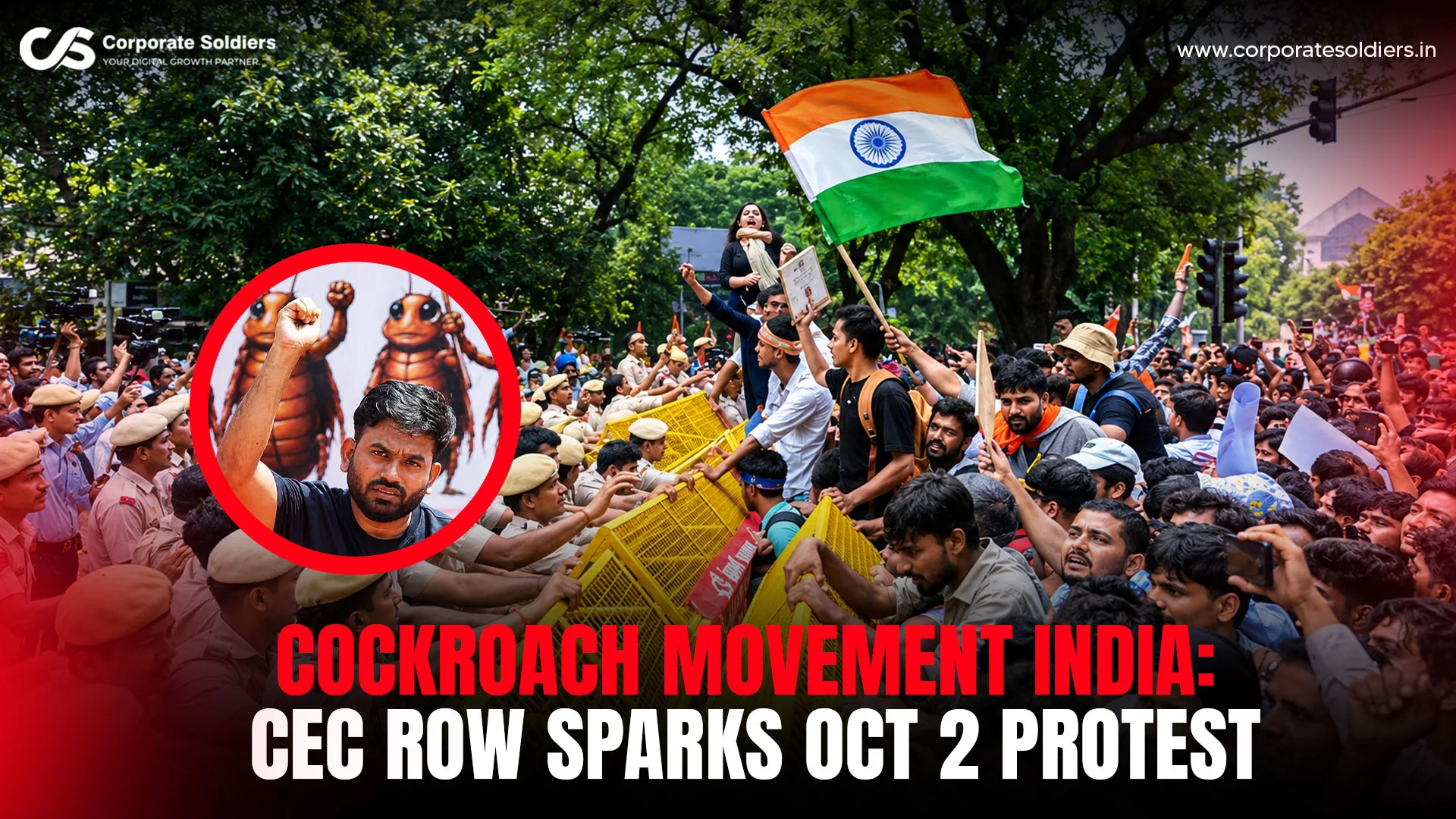
On September 25, demonstrations demanding Kumar’s resignation were reported in several locations, with police using tear gas and water cannons in some instances. Reports say that police used tear gas and water cannons to disperse some protesters.
Election Commission officials have rejected claims of internal disquiet, saying that decisions, including those related to SIR, had the approval of all three commissioners.
What Is the Cockroach Movement India Protest About?
The latest Cockroach Movement India controversy centres on the CJP’s demand that Kumar resign.
On September 24, CJP national convener Abhijeet Dipke demanded that Kumar resign within 48 hours. The group also announced an “Election Commission Thik Karo” campaign and threatened further agitation if the demand was not met.
On September 25, Dipke announced that the CJP would begin a nationwide protest from Mumbai on October 2, Gandhi Jayanti, if Kumar did not resign by September 26. The proposed campaign would then extend to other cities across India.
The October 2 protest is therefore an announced plan, not an event that has already taken place.
Why Is CJP Demanding Gyanesh Kumar’s Resignation?
The resignation demand follows a report by The Indian Express concerning internal objections within the Election Commission.
According to the newspaper’s investigation, Election Commissioners Sukhbir Singh Sandhu and Vivek Joshi raised objections at least 14 times over 10 months on matters connected with electoral-roll processes. The report discussed issues including the addition and deletion of voters and access to electoral-roll data.
The report has become a major point of political criticism directed at the Election Commission.
The CJP has used the reported objections to question the Commission’s handling of electoral-roll revisions and to demand Kumar’s resignation.
However, the reported internal objections do not by themselves establish that voter manipulation or an unlawful electoral process occurred.
That distinction is important.
What Has the Cockroach Janata Party Announced?
CJP founder and national convener Abhijeet Dipke announced the resignation demand on September 24.
The group gave Kumar 48 hours to step down. On September 25, Dipke said the CJP would launch its nationwide protest from Mumbai on October 2 if the demand was not met by September 26.
The CJP has also called for changes relating to the Election Commission and the electoral-roll revision process.
Its campaign follows earlier protests associated with the group over examination-related issues. The Indian Express reported earlier in September that the Supreme Court quashed FIRs against participants in protests led by the CJP after the Centre and several states sought the withdrawal of those cases.
Here are the key demands made by the Cockroach Janata Party (CJP):
- Demand for Resignation: Demanded the immediate resignation of Chief Election Commissioner (CEC) Gyanesh Kumar within 48 hours.
- Freeze Elections & Roll Back SIR: Demanded an immediate freeze on upcoming Assembly elections, a halt to the Special Intensive Revision (SIR) exercise, and the restoration of electoral rolls to their previous baseline position pending an independent investigation.
- Repeal Appointment Law: Demanded the repeal of the 2023 law governing the appointment of Election Commissioners and replacing it with a new framework that includes broader institutional and civil-society oversight.
What Is the Election Commission’s Response?
The Election Commission has firmly rejected claims that internal disagreements signal unlawful behavior, maintaining that varying opinions among officials are a standard part of institutional operations. Official records confirm that Gyanesh Kumar serves as India’s 26th Chief Election Commissioner alongside Election Commissioners Sukhbir Singh Sandhu and Vivek Joshi.
Consequently, while the ongoing row reflects conflicting views over the panel’s internal deliberations and voter-roll updating procedures, it does not substantiate assertions of actual voter list manipulation.
What Is the Voter-List Row?
At the heart of the broader controversy is the Election Commission’s Special Intensive Revision (SIR) of voter rolls. An investigation by The Indian Express revealed that Commissioners Sandhu and Joshi repeatedly raised concerns regarding voter additions, deletions, and access to registration data. While Opposition parties and the CJP allege these roll revisions have impacted electoral fairness, those claims remain heavily disputed. The Election Commission has defended its operations as entirely lawful, emphasizing that internal debate is a standard component of institutional decision-making. The reported objections and political allegations have not, by themselves, established that voter manipulation occurred.
Protests Spread as Resignation Demand Grows
The CJP’s announcement came as other groups also protested against Kumar.
Demonstrations took place across several state capitals on September 25, with police using tear gas and water cannons in some locations.
The Indian Express separately reported that more than 60 people, including activists and political figures, were detained near Jantar Mantar during a protest concerning the SIR and demanding Kumar’s resignation. Delhi Police said the gathering had not received permission and that restrictions on assemblies were in force in the New Delhi district.
These demonstrations are separate from the CJP’s announced October 2 nationwide protest plan.
Why October 2 Matters
The CJP has slated October 2, Gandhi Jayanti, as the kick-off date for its proposed nationwide campaign. As announced by Dipke, demonstrations are scheduled to begin in Mumbai and expand to other major cities if CEC Gyanesh Kumar does not resign by September 26. This makes October 2 a crucial key date in the unfolding row, though it remains a planned mobilization rather than an active, ongoing protest.
Who Is Behind the Cockroach Movement?
The Cockroach Janata Party, commonly referred to as CJP, is the group behind the current resignation campaign.
Abhijeet Dipke has emerged as its prominent national convenor and spokesperson in the latest campaign. The group previously became known for protests connected with examination and education-related issues.
The current campaign represents a new focus: the Election Commission, electoral-roll revisions and the role of Chief Election Commissioner Gyanesh Kumar.
Gyanesh Kumar and the Election Commission
Gyanesh Kumar assumed office as India’s 26th Chief Election Commissioner on February 19, 2025, leading the poll panel alongside Election Commissioners Sukhbir Singh Sandhu and Vivek Joshi. While reported internal friction involving Sandhu and Joshi has emerged as a focal point in the political row, these internal dissenting views should not be conflated with a formal finding of misconduct.
What Happens Next?
The immediate date in the CJP’s announcement is September 26.
The group has said that if Kumar does not resign by then, it will begin its nationwide protest campaign from Mumbai on October 2 and subsequently take the campaign to other cities.
Meanwhile, the Election Commission has maintained that institutional differences are part of normal deliberation and that its actions have been lawful.
The controversy therefore has three separate elements:
- A documented resignation demand by the CJP
- Reported internal objections within the Election Commission
- Contested political allegations concerning electoral-roll changes
Keeping these separate is essential when following the story.
The Bigger Question Behind the Cockroach Movement India Row
The Cockroach Movement India controversy in India goes beyond a single resignation demand, spotlighting serious questions about how voter rolls are revised and how internal decisions are made within the Election Commission. While reported objections from two Election Commissioners have raised public concerns, the Commission maintains these internal differences do not reflect any wrongdoing. The next steps now hang on critical dates, September 26 and October 2, which will determine whether the CJP’s campaign and planned protests gain momentum or fade in the coming days.