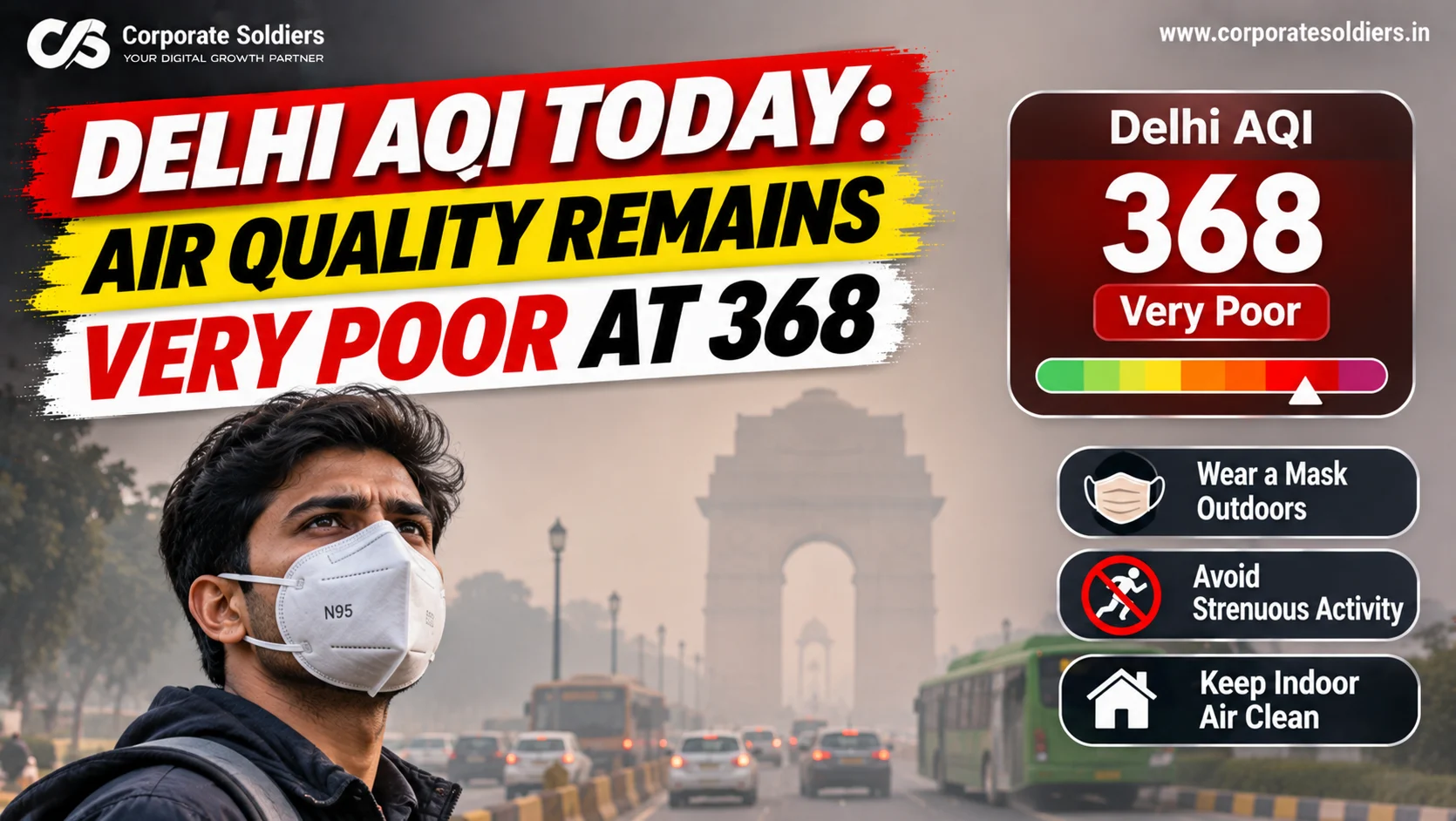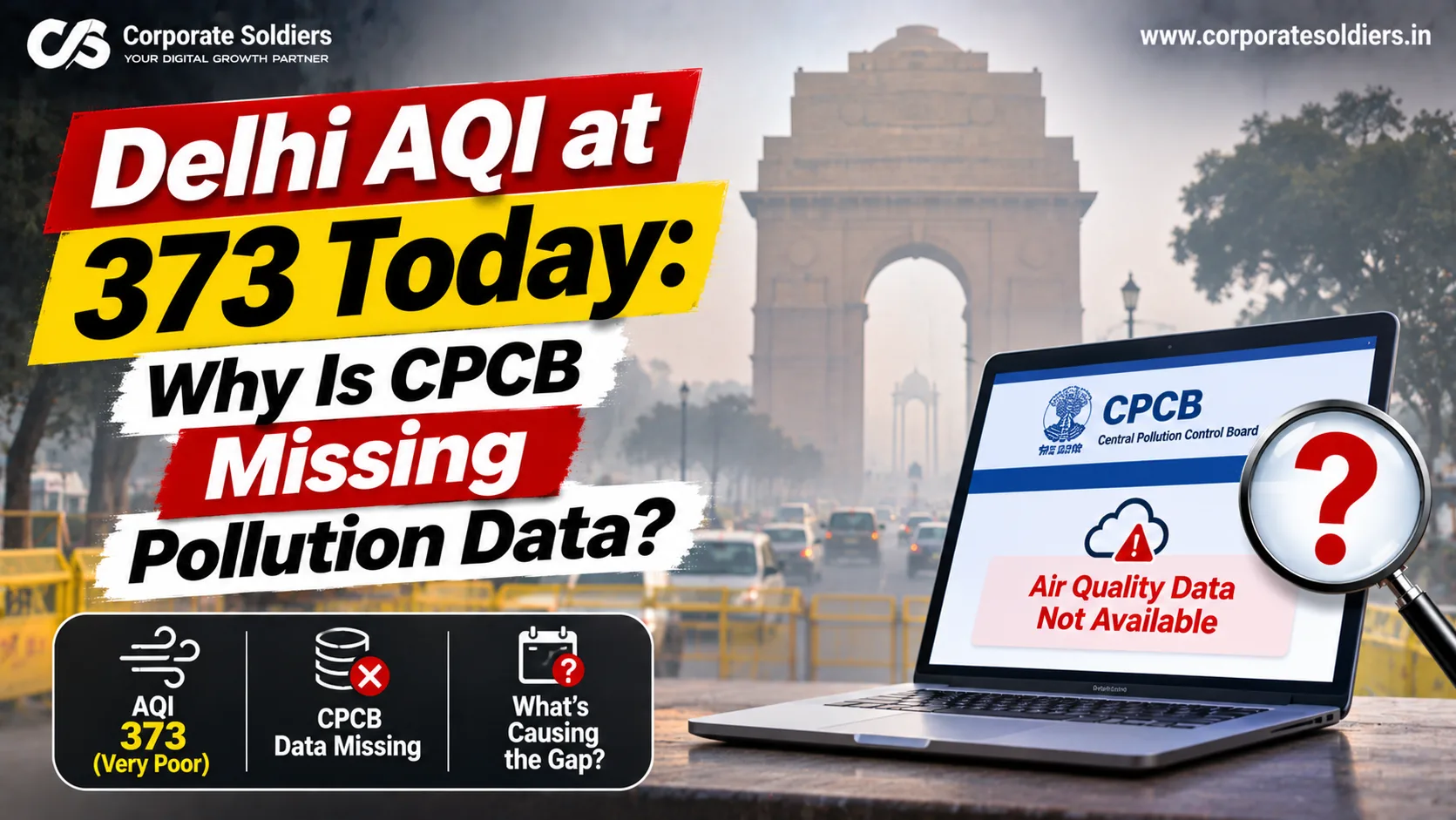
Delhi’s air pollution remains a major concern on November 11, 2026, as several monitoring stations continue to record very poor air quality. Alongside elevated AQI readings, questions have emerged over missing particulate matter data during peak pollution hours after Diwali.
The Central Pollution Control Board (CPCB) has clarified that its monitoring system excludes hourly particulate matter readings exceeding the analysers’ calibrated upper limit of 1,000 micrograms per cubic metre (µg/m³). The explanation has renewed debate over whether India’s existing air-quality monitoring framework adequately captures extreme pollution episodes.
Which Areas Record the Highest Pollution?
According to reports published by The Indian Express and Business Standard, Delhi’s monitoring stations recorded the following pollution levels on November 11, 2026.
Area-wise AQI Readings at 7 AM:
| Monitoring Station | AQI |
| Chhawla | 396 |
| Chandni Chowk | 379 |
| North Campus | 374 |
| ITO | 367 |
Delhi-Wide Pollution Data at 9:03 AM:
| Parameter | Recorded Data |
| Overall AQI | 301 |
| Total monitoring stations | 59 |
| Stations with valid data | 58 |
| Stations recording AQI above 200 | 56 |
| Stations recording AQI above 300 | 29 |
| Dominant pollutant | PM2.5 |
The readings indicate widespread pollution across the capital, with PM2.5 emerging as the dominant pollutant at most monitoring stations.
Why Is CPCB Facing Questions Over Missing AQI Data?
One of the biggest developments is CPCB’s clarification about gaps in pollution monitoring data.
According to the board, particulate matter analysers deployed when India’s National Air Quality Index (NAQI) was introduced in 2015 were calibrated to measure concentrations between 0 and 1,000 micrograms per cubic metre (µg/m³).
When hourly particulate matter readings exceed the analysers’ upper measurement limit of 1,000 µg/m³, the system flags them as out-of-range. These hours do not contribute to the relevant pollutant’s 24-hour average, potentially creating gaps in the monitoring data.
Data released by DPCC showed that pollution levels at several monitoring stations crossed 3,000 µg/m³ during Diwali night. Mundka recorded the highest concentration at 3,744 µg/m³, highlighting the scale of pollution that exceeded the existing monitoring framework’s measurement range.
This can create apparent gaps in monitoring data during extreme pollution episodes, particularly during periods of heavy firecracker use.
CPCB has maintained that the system operates automatically and that differences between official AQI figures and private applications are linked to variations in measurement and calculation methods.
The board has also indicated that it is reviewing how readings beyond the existing measurement range should be processed.
Akshardham Records PM2.5 Levels Over 760 µg/m³
The scale of post-Diwali pollution becomes clearer through readings recorded in East Delhi.
According to DPCC data cited by Business Standard, PM2.5 concentrations at Akshardham reached 760.99 µg/m³ at 11 PM on November 8.
This hourly PM2.5 concentration was approximately 50.7 times the WHO’s recommended 24-hour guideline of 15 µg/m³. However, the comparison involves different averaging periods: an hourly reading and a 24-hour average.
The reading highlights the intensity of the pollution spike following Diwali celebrations.
Supreme Court Seeks Action on Vehicular Pollution
Delhi’s pollution concerns have also drawn the Supreme Court’s attention.
In an order passed on November 6, the court called for urgent intervention to address rising vehicular emissions across the National Capital Region.
The Supreme Court’s November 6 order sought details from Delhi, Uttar Pradesh, Haryana and Rajasthan about:
- Enforcement of PUC certification.
- Action against over-age and non-compliant vehicles.
- Monitoring and regulation of vehicular emissions.
- Proposed short-term and long-term measures.
The court also sought information on controlling over-age vehicles and enforcing Pollution Under Control (PUC) certification requirements.
What Is Being Done to Control Delhi’s Air Pollution?
Restrictions under the Graded Response Action Plan (GRAP) remain in force as Delhi continues to experience poor air quality.
However, recent developments highlight two key challenges: controlling pollution sources and ensuring monitoring systems accurately capture extreme pollution levels.
CPCB’s review of its measurement framework and the Supreme Court’s directions on vehicular emissions could shape the next steps in Delhi-NCR’s pollution response.