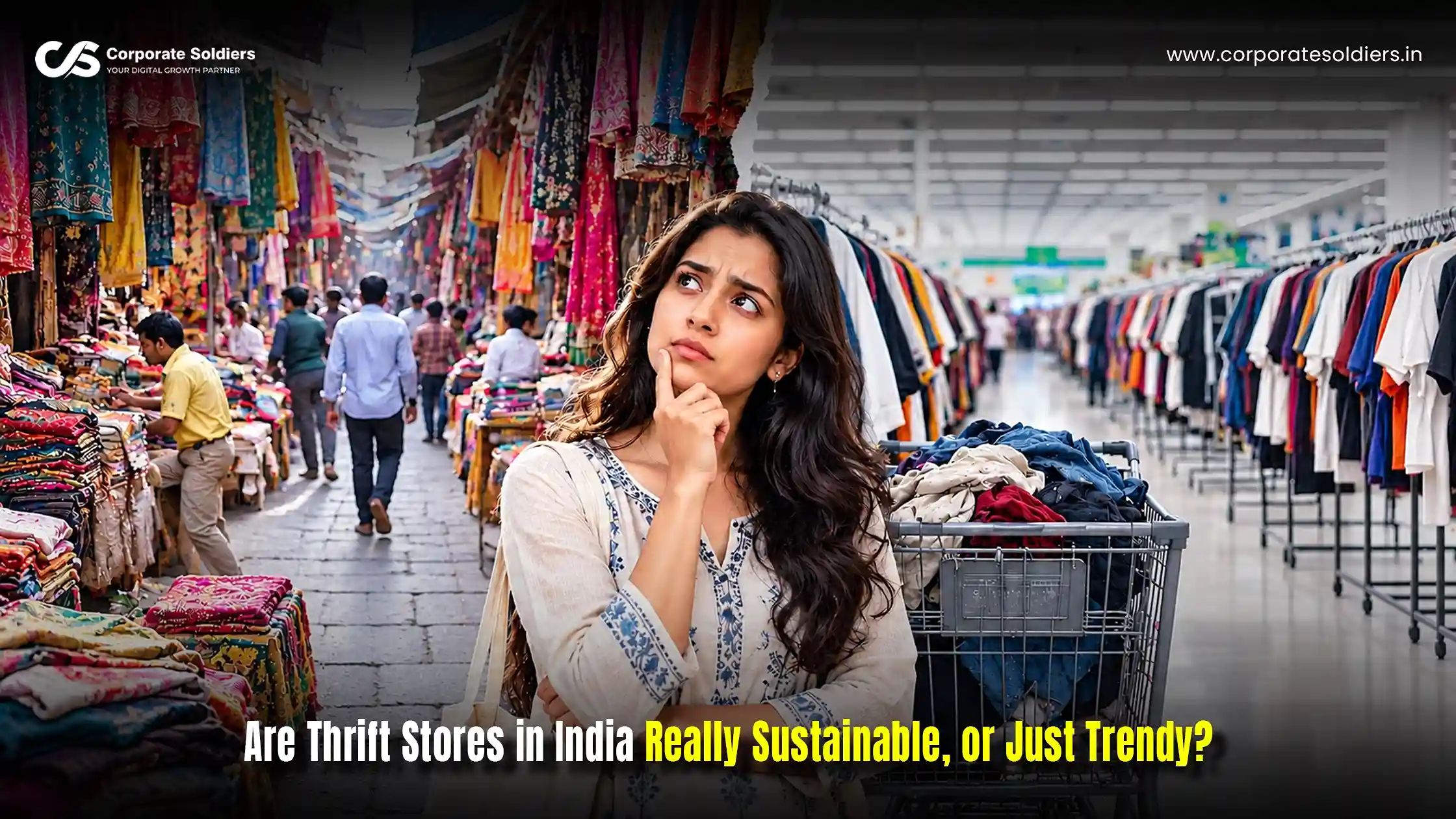
Thrift stores in India are gaining unprecedented attention, with Google search data showing a sharp rise in interest in thrifting, second-hand fashion and circular fashion. Searches for “how to thrift” rose 850%, while “thrift store near me” increased 600%.
The trend raises an obvious question: Is thrift shopping in India actually making fashion more sustainable, or has thrifting simply become another lifestyle trend? The answer is more complicated than either side suggests.
Why Are Thrift Stores Becoming So Popular in India?
The latest search data suggests that Indians are becoming increasingly curious about second-hand shopping. Google found rising interest across several Indian cities, including Delhi, Mumbai, Bengaluru, Hyderabad, and Chennai. Searches are also increasingly focused on specific products, with jackets, tops, shoes and jeans among the most searched thrift items.
There is also a strong fashion component. Searches around Y2K fashion, baggy jeans, jorts, vintage jerseys and other distinctive styles show that thrifting is not simply about finding cheaper clothes.
For younger shoppers in particular, second-hand fashion can offer something mainstream retail sometimes cannot: unique pieces at potentially lower prices.
Is Thrifting Really More Sustainable?
This is where the debate begins. Buying a second-hand garment can extend the product’s useful life and reduce the need for a new purchase. Reuse is also an important part of the broader circular-fashion model, which aims to keep products and materials in use for longer.
But that does not mean every thrift purchase is automatically sustainable.
If a consumer buys ten second-hand items they would never otherwise have purchased, the environmental benefit is harder to establish. The sustainability impact also depends on factors such as transportation, product lifespan, clothing care, and what happens to the garment after its second owner.
So, “second-hand” and “sustainable” should not automatically be treated as synonyms.
India’s Textile Waste Problem Adds Another Layer
The debate is particularly relevant in India because the country has a substantial textile-waste challenge.
According to India’s Ministry of Textiles, the country generates an estimated 70.73 lakh tonnes of textile waste every year. The ministry’s 2026 report also highlighted significant textile recovery and recycling activity in India.
Research from the Council on Energy, Environment and Water estimates India’s annual textile waste at around 7.07 million tonnes, with approximately 42% generated before products reach consumers, during manufacturing and related processes.
That distinction matters.
India’s textile-waste problem cannot simply be blamed on consumers throwing away unwanted clothes. A substantial amount of waste is generated during production itself.
Therefore, the growth of thrift shopping may contribute to a circular fashion system, but thrifting alone cannot solve India’s textile-waste problem.
Why Are Young Indians Turning to Thrifting?
Several factors appear to be driving the trend:
1 – Affordability
Second-hand products can provide access to certain brands, styles, and vintage pieces at prices that may be lower than comparable new products. However, savings vary by seller, brand, condition, and demand.
2 – Unique Fashion
Vintage and Y2K styles have helped make thrifting more attractive. Google’s data shows growing Indian interest in distinctive second-hand fashion categories and vintage products.
3 – Social Media
Instagram, short-form video, and creator recommendations have made it easier for consumers to discover individual thrift sellers and specific products. This has also opened opportunities for small businesses and young sellers operating through social platforms.
4 – Sustainability
Google reports that searches for “circular fashion” increased in India over the past year, while searches for “sustainable fashion” also escalated. These figures indicate growing interest in the sustainability conversation, although search growth alone cannot prove that consumers have completely changed their purchasing habits.
The Problem With Calling Thrifting “Sustainable”
Here is the uncomfortable part.
If thrifting encourages people to buy more clothes simply because they are cheaper, it can reproduce the same consumption cycle associated with fast fashion.
The problem is not necessarily where the garment was purchased. It is how much is purchased, how long it is used, and whether it replaces another purchase.
A genuinely circular approach would involve buying fewer unnecessary items, choosing durable products, repairing them, reusing them, and eventually passing them on when they are no longer needed. That makes the sustainability argument for thrifting more nuanced than social-media posts often suggest.
Is Thrifting Just a Trend?
Probably not entirely. India has a long history of reusing clothing, passing garments between family members and finding new uses for old textiles. What is changing is how this behaviour is being packaged and discovered.
Terms such as “thrifting,” “pre-loved fashion,” “vintage” and “circular fashion” are giving an older practice a newer identity.
The sharp rise in Google searches suggests that the cultural conversation around second-hand shopping is expanding. Whether that interest becomes a lasting shift, however, will depend on consumer behaviour beyond social-media trends.
So, Are Thrift Stores in India Really Sustainable?
They can be, but buying second-hand does not automatically make a purchase sustainable.
The latest search data confirms that interest in thrifting is rising rapidly in India, while the country’s large textile-waste challenge makes reuse and longer product lifespans increasingly relevant.
But the strongest sustainability case for thrift shops is not simply that they sell used products. It is that they can help keep existing products in circulation for longer and potentially reduce demand for unnecessary new purchases.
The real question, therefore, is not whether thrifting is trendy.
It is whether the trend can change the way people consume fashion. If thrifting means buying more, it is simply another shopping trend. If it means buying thoughtfully, reusing products and keeping clothes in circulation longer, it can become part of a more sustainable fashion system.