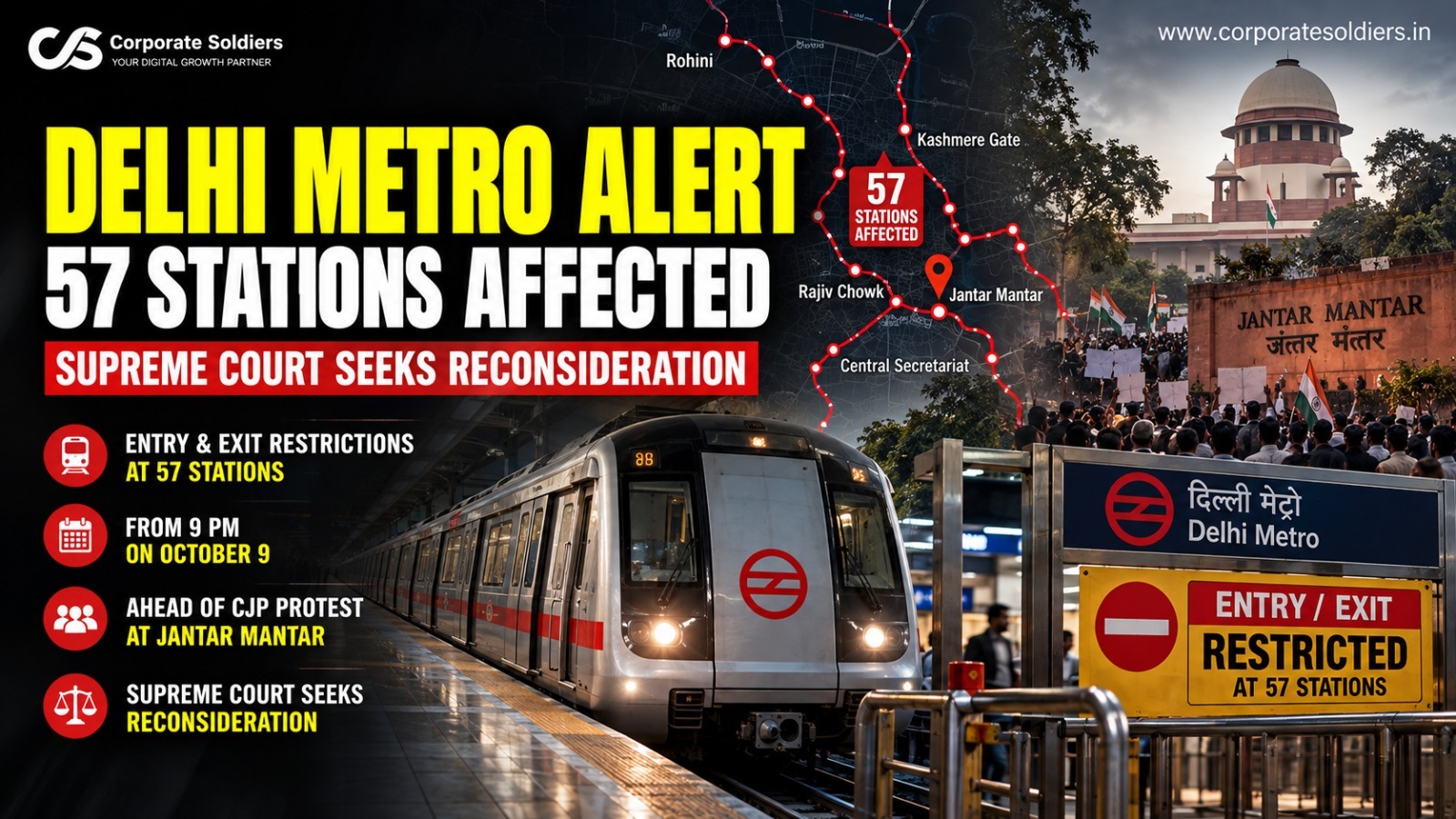
Delhi Metro commuters may face travel disruptions on October 10, 2026, ahead of the CJP protest at Jantar Mantar. DMRC announced entry and exit restrictions at 57 Delhi Metro stations from 9 pm on October 9.
The Supreme Court has since directed authorities to reconsider the restrictions and ensure metro services continue without a complete shutdown.
Why Are 57 Delhi Metro Stations Affected?
Delhi Police requested restrictions ahead of the planned CJP protest at Jantar Mantar, citing security and crowd-management concerns. Protesters are demanding Chief Election Commissioner Gyanesh Kumar’s resignation over alleged irregularities in the Special Intensive Revision (SIR) of electoral rolls.
Police denied permission for the protest, while CJP activist Abhijeet Dipke said the demonstration would proceed.
Full List of 57 Delhi Metro Stations
1. Central Delhi and interchange areas
- Janpath
- Patel Chowk
- Central Secretariat
- Lok Kalyan Marg
- Rajiv Chowk
- New Delhi
- Seva Teerth (Udyog Bhawan)
- Mandi House
- Barakhamba Road
- ITO
- Delhi Gate
- Khan Market
- R.K. Ashram Marg
- Jhandewalan
2. Other central and southern locations
- Supreme Court
- Indraprastha
- Shivaji Stadium
- INA (both metro lines)
- Hauz Khas
- Jor Bagh
- Arjangarh
- Sarai Kale Khan–Nizamuddin
- Lajpat Nagar
- Jangpura
- Ashram
- Kalindi Kunj
- Jasola
3. Eastern and central-eastern locations
- Jamia Millia Islamia
- Okhla Vihar
- Chawri Bazar
- Jama Masjid
- Karol Bagh
- Rajendra Place
- Vishwavidyalaya
- Vidhan Sabha
- Civil Lines
- Kashmere Gate
- Inderlok
- G.T.B. Nagar
- Kanhaiya Nagar
- Netaji Subhash Place
- Azadpur
4. Northern and northeastern locations
- Adarsh Nagar
- Jahangir Puri
- Haiderpur Badli Mor
- Majlis Park
- Shalimar Bagh
- Seelampur
- Maujpur
- Jafrabad
- Welcome
- Yamuna Vihar
- Khazuri Khas
- Shahdara
- Rithala
- Rohini East
- Rohini West
What Did the Supreme Court Say?
A bench comprising Chief Justice of India Surya Kant and Justices Joymalya Bagchi and V. Mohana heard concerns over the metro restrictions and railway cancellations.
The court said there should be no complete prohibition on metro train movement. Solicitor General Tushar Mehta assured the court that authorities would reconsider the restrictions and regulate services proportionately to minimise inconvenience to the public.
DMRC had also said interchange facilities would remain available at affected stations, except New Delhi Metro station. Commuters should check the latest official advisory before travelling.
What Should Delhi Metro Passengers Do?
Passengers travelling through central Delhi and other affected areas on October 10 should check DMRC service updates, allow extra travel time, and plan alternative routes if necessary.
The final operational arrangements will depend on the authorities’ revised decision and the prevailing security situation. The court has urged the authorities to reconsider the restrictions and minimise public inconvenience.