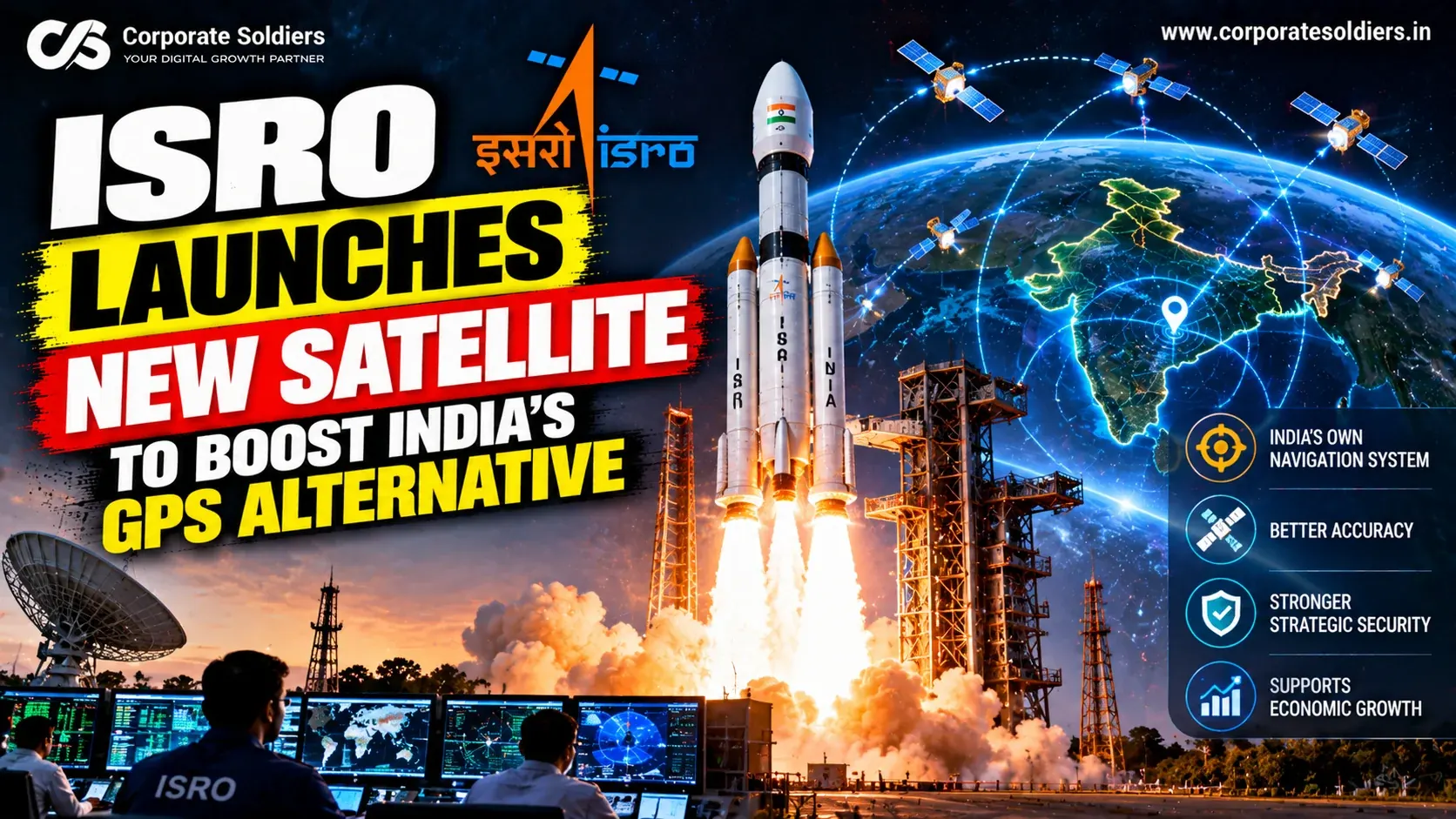
The Indian Space Research Organisation (ISRO) has successfully launched its new navigation satellite, NVS-03, aboard the GSLV-F18 rocket. The October 30 launch marks an important step in strengthening NavIC, India’s indigenous regional satellite navigation system, designed to provide independent positioning, navigation, and timing services.
The satellite carries an indigenous atomic clock and introduces a new L1 signal frequency, which could improve NavIC’s compatibility with civilian navigation devices.
Key Highlights
- Launch date: October 30, 2026
- Launch time: 11:51 PM IST
- Launch vehicle: GSLV-F18
- Satellite: NVS-03
- Launch location: Sriharikota, Andhra Pradesh
- Satellite weight: Approximately 2,232 kg
- Target orbit: Geosynchronous Transfer Orbit (GTO) – an intermediate orbit before reaching its final position.
- Mission significance: Strengthening India’s homegrown satellite navigation system, NavIC.
How Did ISRO Successfully Launch the NVS-03 Satellite?
The GSLV-F18 mission marked the 20th flight of India’s Geosynchronous Satellite Launch Vehicle (GSLV). Standing approximately 50 metres tall, the three-stage rocket carried the 2,232-kg NVS-03 navigation satellite into space after a 24-hour countdown.
Around 18 minutes and 40 seconds after liftoff, the satellite separated from the rocket and entered its designated Geosynchronous Transfer Orbit (GTO).
ISRO confirmed the launch mission was successful, placing the satellite in its intended orbit.
However, this is not its final operational position. NVS-03 will undergo further orbital manoeuvres using its onboard propulsion system to reach its designated geosynchronous slot before completing the necessary commissioning process.
What Makes the NVS-03 Satellite Important for India’s Navigation System?
NVS-03 is the third satellite in ISRO‘s next-generation navigation satellite series. It is designed to strengthen NavIC, India’s independent satellite navigation system, and help maintain navigation service availability.
Unlike GPS, which is operated by the United States, NavIC is designed primarily for regional coverage rather than worldwide navigation. Its services extend across India and approximately 1,500 kilometres beyond the country’s geographical boundaries.
These services can support several everyday and strategic applications, including:
- Road navigation: Helping vehicles and fleet operators determine their locations.
- Maritime navigation: Supporting ships and other vessels.
- Emergency services: Providing location information for emergency response.
- Transportation: Supporting navigation-related applications in aviation and other transport sectors.
- Strategic applications: Strengthening India’s independent positioning and navigation capabilities.
The addition of NVS-03 will help strengthen India’s own satellite navigation infrastructure.
How Will the Indigenous Atomic Clock and L1 Signal Improve NavIC?
Two important technological features distinguish NVS-03: its indigenous atomic clock and the addition of the L1 frequency band.
1. Indigenous Atomic Clock
NVS-03 carries an atomic clock developed in India, along with procured atomic clocks. These clocks help the satellite maintain extremely accurate time, which is essential for determining a user’s location through satellite navigation.
In simple terms, navigation satellites use precise timing signals to help receivers calculate their distance from satellites and identify their position.
This development also highlights India’s progress in building important space technologies domestically.
2. Addition of the L1 Signal
Another important feature of NVS-03 is the addition of the L1 frequency band alongside NavIC’s existing L5 and S-band signals.
The L1 frequency is widely used in satellite navigation systems, including GPS. Its introduction could make NavIC more compatible with civilian navigation receivers and devices that support this frequency.
This may help expand the potential use of India’s navigation system in consumer applications, although actual compatibility will depend on the device’s hardware and software support.
Together, the indigenous atomic clock and additional L1 signal represent important improvements to India’s satellite navigation capabilities.
What Happens Next After the NVS-03 Satellite Launch?
Following its successful injection into Geosynchronous Transfer Orbit, NVS-03 will undergo further orbital manoeuvres to reach its designated position. The satellite must also complete testing and commissioning before it can begin providing operational navigation services.
The mission marks another step in India’s efforts to strengthen NavIC and maintain an independent satellite navigation network.
With its new L1 signal and indigenous atomic clock, NVS-03 is expected to contribute to the system’s capabilities and support a wider range of navigation applications.
The successful GSLV-F18 mission also highlights ISRO’s continued progress in developing and launching advanced satellite technology.