Introduction: The Shockwave
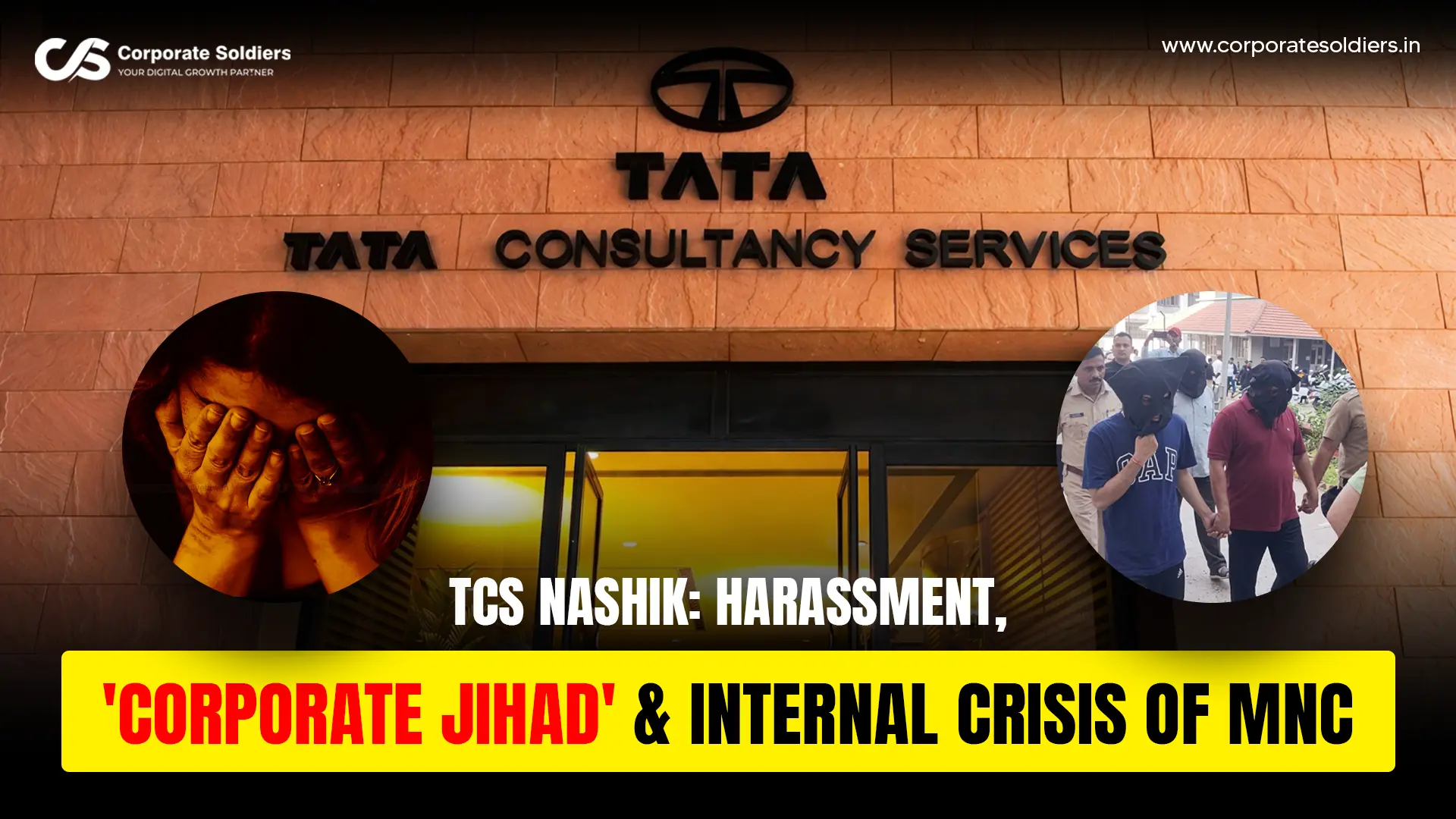
In the recent discourse of the IT and BPO industry in India, certain allegations have arisen from a Tata Consultancy Services (TCS)-linked operational unit in Nashik, sparking serious concerns. In the reported narratives, across media reports and complaint narratives, the issue is characterized by allegations of harassment and coercion in the workplace and systemic failures in grievance processes.
Media coverage and references to complaints indicate that the law enforcers have begun to take action, and First Information Reports (FIRs) have been filed and investigations like a Special Investigation Team (SIT) have been constituted to investigate the case surrounding the claims.
At the heart of the conflict are allegations of a so-called “predatory ring” within a TCS-linked BPO unit in Nashik, accused of engaging in sexual exploitation and religious coercion—claims that remain under investigation and are yet to be legally proven. Although the specifics of the case are still under investigation, the case has elicited more general issues about corporate governance, workplace safety, and grievance redress systems in the Indian IT industry.
This case extends beyond individual allegations and raises concerns about systemic failures in corporate grievance mechanisms and oversight structures within large IT and BPO environments.
Key Takeaways (TL;DR):
- The Allegations: Reports suggest a “predatory ring” at a TCS-linked BPO in Nashik was involved in sexual exploitation and religious coercion.
- Legal Action: Law enforcement has reportedly registered up to 9 FIRs and made 7 arrests. An SIT has been constituted to oversee the investigation.
- Systemic Failure: Protesters and whistleblowers claim internal safeguards, including HR and the Internal Complaints Committee (ICC), failed to act on dozens of documented complaints.
- The Controversy: The term “Corporate Jihad” has emerged in public discourse to describe the alleged misuse of corporate hierarchies for religious or personal influence though this remains a subjective and legally unverified interpretation.
Anatomy of the Allegations: Beyond Harassment
The TCS Nashik case is a tangle of alleged malpractice that goes beyond a mere interpersonal annoyance. The accusations, according to FIR reports, and complaints of employees, revolve around a trend of unbecoming conduct and a grotesque abuse of power.
Some complaint narratives also refer to allegations of inappropriate physical conduct, coercion, and instances where employees were allegedly misled through personal assurances, including claims of emotional manipulation or being “trapped” under false promises within professional or personal contexts. There are also some accounts of religious coercion in complaints, and some mention of employees being compelled to engage in certain practices like offering namaz, reading of religious verses or eating foods which did not coincide with their personal faith. Such assertions are still being investigated and not proven in court.
- Abuse of Hierarchy: Complaints are made that those in senior positions of authority, namely team leads, used the fact that they were senior employees to target and manipulate weak employees.
- Coercion and Pressure: The reports specify examples of the so-called emotional and professional coercion. All these assertions indicate that the nature of relationships in the workplace was not necessarily consensual but rather dependent on the hierarchical relations that existed in the office arrangement.
- Hostile Environment: In addition to the individual incidents, the claims convey a culture in which the alleged misconduct was made acceptable as those who had the guts to speak up were intimidated.
By situating these as supposed offenses under investigation, the legal aspect is whether these hierarchical structures were weaponized to circumvent the normal professional lines.
The Failed Safeguards: Why It Persisted
The effectiveness of the redressal mechanisms of internal grievances has become one of the most important issues under discussion in the society. There have been fears about whether complaints were taken up adequately and whether the internal HR procedures were taken care of effectively and promptly.
Reports and stories regarding the case indicate that there might have been several complaints made over some time, which cast doubt on the existence of escalation delays and follow-through.
It has also been reported that on several occasions there have been numerous complaints raised over a long period of time with some reports claiming of a large number of email communications some of which may not have been addressed in a timely manner such as references in some reports where there have been as many as 78 emails sent over a duration of time.
There have also been questions in the public discourse about the role and effectiveness of HR leadership Nida Khan in the management of such complaints. In some reports, specific individuals in HR roles have been referenced in connection with grievance handling processes; however, these mentions remain part of reported narratives and have not been independently verified. Concerns have also been raised regarding whether internal oversight mechanisms functioned with adequate independence and accountability.
Although no final results can be made yet, analysts are looking into the possible role of the organisational accountability structures, especially in the HR leadership structures in charge of workplace safety.
One of the important compliance tools in India is the Internal Complaints Committee (ICC) that is required by the Prevention of Sexual Harassment (PoSH Act, 2013). The usefulness of ICCs in corporate India has been a topic of discussion, especially in the large and multi-layered organisations where transparency and independence may be hampered by reporting lines.
The case has prompted wider debates on the adequacy of ICCs to be empowered, independent and responsive in large scale IT environments.
The Legal and Corporate Response
As per the developments reported, law enforcement agencies have taken the step of registering FIRs and even started to make formal inquiries into the issue. Some of them have mentioned the presence of a Special Investigation Team (SIT), which implies a more formal and enhanced review process.
Some media reports have referred to multiple FIRs being registered and several individuals being taken into custody, with figures such as 9 FIRs and 7 arrests being cited in certain accounts; however, these numbers remain subject to official confirmation.
At the corporate level, such cases typically involve senior leadership oversight. In broader reporting around the matter, references have also been made to the involvement of top leadership within the Tata Group, including Chairman N. Chandrasekaran and senior executives such as COO Aarthi Subramanian, in reviewing internal processes and compliance frameworks. Such mentions, including expressions of concern or oversight at the highest levels, remain based on reported narratives and are subject to official confirmation.
Law enforcement has been seen to be investigating facts, witness accounts and corporate documents as part of due process. No definitive judicial determinations in this regard have been made public so far.
Tata Consultancy Services has traditionally been highly vigilant on workplace behavior, both on the corporate front, and on the public front, having a zero tolerance policy against harassment and any form of misconduct. In other instances in the industry, organisations usually kick start an internal audit, collaborate with the police and also carry out internal compliance audits.
Although individual disciplinary actions or decisions by people in leadership positions in this instance are not confirmed in the public record, such issues are usually addressed by internal ethics committees, HR investigation, and compliance audit under the Indian labour and safety laws.
Public Narrative and Controversy
The case has brought about a lot of debate in the social and online space, which is indicative of wider issues in the Indian IT sector with respect to safety in the workplace. The responses by the population have been both calls of stringent responsibility and warnings against early verdicts without confirmed facts.
In some instances, public demonstrations and organised protests have also been reported, including references in certain accounts to coordinated public mobilisations and forums raising demands for accountability. Some of these mobilisations have been referred to in public discourse as organised protest movements, including mentions of events such as a “Jan Akrosh Morcha” in Nashik and the involvement of certain community-based groups like Sakal Hindu Samaj. These references remain part of media and public narratives and are not independently verified within official findings.
The word Corporate Jihad is one of the more controversial ones that have been brought up in the popular discourse and has been mentioned in some of the discussions of the case. In sections of public discourse, the term has been used to describe an alleged pattern where corporate hierarchies and employment structures are purportedly misused to influence personal or religious choices. It is important to clarify that such interpretations remain subjective, contested, and are not recognised as established legal or institutional conclusions.
It should be made clear that this term is still a subjective and controversial formulation that is applied in social commentary and is not a proven or valid element of any court ruling.
It is important to emphasise that such interpretations remain part of public discourse and are not validated findings of any official investigation.
The current discourse has two prevailing viewpoints:
- One side focuses on the necessity to combat the supposed abuse of power in the workplace, enhance employee rights and hold people in high-level corporations responsible.
- The other side of the argument points to the dangers of communal or polarised framing and the emphasis on the need not to accept unverified narrative that might shape the view of the populace before the law has found a verdict.
This duality highlights the essence of responsible reporting particularly concerning any sensitive allegation at the workplace and ongoing investigations.
The case has also, in some quarters, led to calls to further regulatory and policy intervention, such as discussions of whether the conduct of the workplace needs to be more strictly regulated or whether legislation is necessary at a state level about the use of coercion or undue influence in personal affairs. These debates are still within the broader socio-political discourse and are not directly related to the court proceedings of the case.
Industry Implications: Lessons for Corporate India
Whatever the eventual conclusion, the case points out various structural problems pertaining to the corporate environment of India, especially in the IT and BPO industries.
First, it is obvious that there should be more thorough internal audits of workplace cultures and ethical compliance systems. Big organisations need to make sure that the grievance systems are not only in place but employees have faith in them.
Second, the redressal mechanisms on grievances should not be dependent on the internal HR. There can be enhanced credibility and responsiveness with independent oversight, external compliance checks, and open-ended escalation channels.
Thirdly, the whistleblower protection systems should be tightened so that employees can raise issues without being reprimanded.
Lastly, accountability of leadership is a key pillar of good corporate governance. The integrity of organisations should be maintained through compliance with labour laws and active reporting of the workplace culture in place, including the PoSH Act.
The larger issue of corporate governance failure in India needs to be dealt with by systemic reforms and not by the reactive reaction to particular offences.
Conclusio The Road Ahead
The case associated with the TCS Nashik case shows how quite a thin line exists between the corporate authority, the rights of the employees, and the responsibility of the institution. Although allegations are still under enquiry, the case has already escalated the questioning on the governance standards in the Indian IT industry concerning the workplace.
It is critical that the conclusions are drawn on the basis of validated results of investigations and court decisions as opposed to speculation of the populace.
Workplaces must remain secular temples of productivity, and any attempt to use professional leverage for religious or sexual exploitation is a threat to the foundation of the Indian economy.