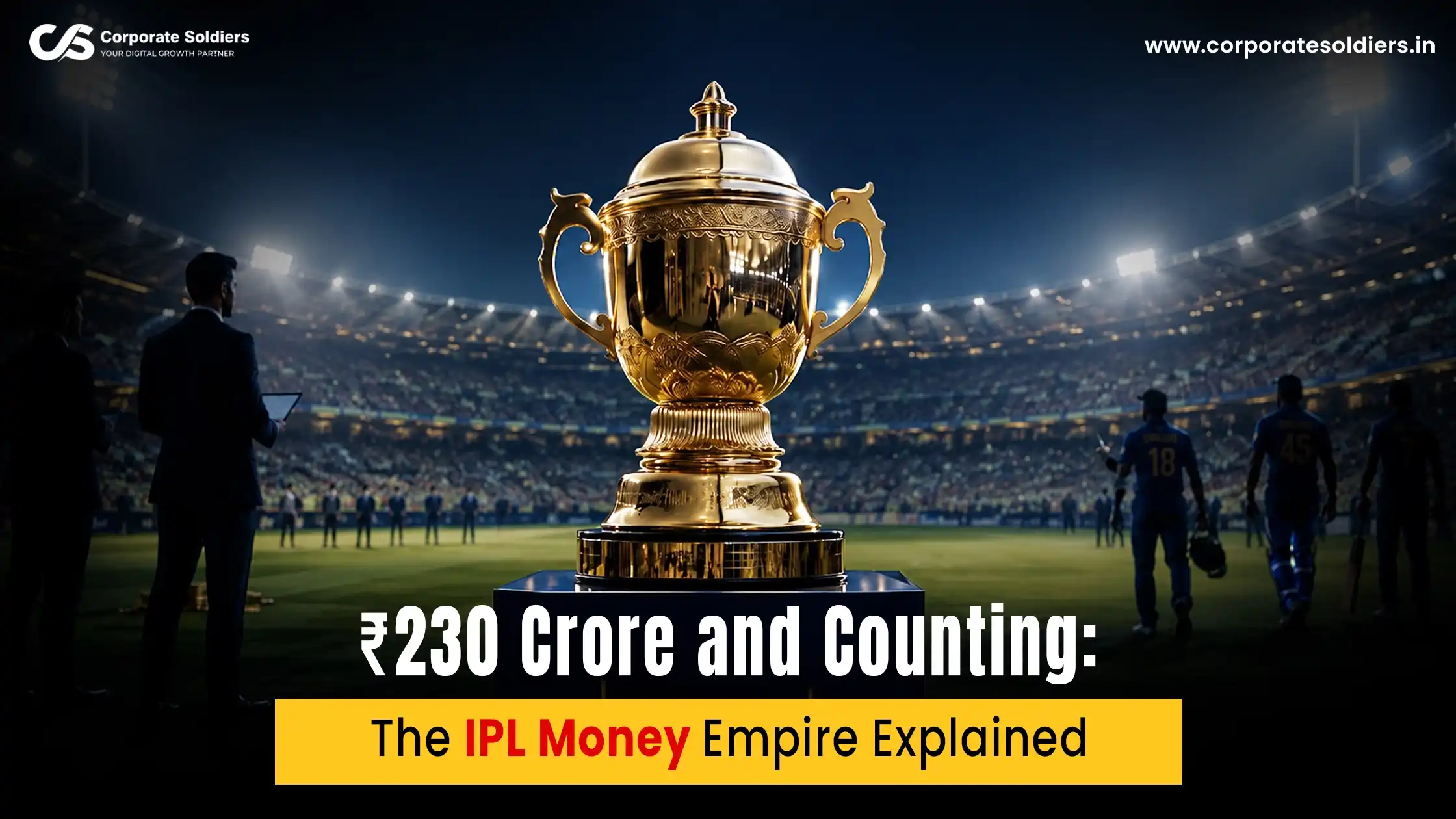
The Indian Premier League is no longer merely a cricket tournament. It has evolved into a multi-billion-dollar sports economy where elite athletes, franchises, broadcasters, and sponsors operate within one of the world’s most commercially influential sports ecosystems.
The Fanatic Sports–Hurun India report released recently says that the total franchise valuation of the IPL has topped 1.63 lakh crore, and the league has also created the first-ever 200 crore cumulative earners in the history of cricket. The icons such as Virat Kohli, Rohit Sharma, MS Dhoni and the soaring Rishabh Pant are at the center of this change as their IPL careers are now models of wealth creation over the long term as opposed to just being successful in their sport.
The ₹200-Crore Elite: IPL’s All-Time Earnings Leaders
The remuneration system that was used at the beginning of the league in 2008 has been transformed by the IPL. Initial agreements with a value of a few crores have now become mega-retention agreements, auctions and long term franchise investments that reflect the global sports leagues like NFL and NBA.
| Rank | Player Name | Cumulative IPL Earnings | Primary Franchise Alignment |
| 1 | Virat Kohli | ₹230.2 Crore | Royal Challengers Bengaluru |
| 2 | Rohit Sharma | ₹227.2 Crore | Mumbai Indians |
| 3 | MS Dhoni | ₹200.3 Crore | Chennai Super Kings |
The most notable data is the fact that the three highest-paid players are all long-term franchise cornerstones. The continuity, brand stability, leadership value and the fan loyalty in addition to the performance on the field has been ever-rewarded by IPL wealth generation.
Virat Kohli: Loyalty as a Financial Strategy
No player embodies franchise loyalty in the IPL era better than Virat Kohli.
Kohli has been playing in Royal Challengers Bengaluru his whole career with the IPL and became the most notable one-franchise player in the league. His total IPL earnings of ₹230.2 crore make him the highest-paid player in IPL history.
The distinction between Kohli in terms of finances is more than retention value; it relates to brand consistency. Nearly twenty years of Kohli enabled RCB to establish a significant part of its business image. His association amplified the strength of merchandising, the exposure of sponsorships, online interactions, and retaining the fans in the long term.
The economics of the IPL has become more encouraging towards players that have been institutionalized, as opposed to those who have been acquired through the auction. The experience of Kohli has shown that loyalty can bring out compounding returns in franchise cricket in terms of financial returns.
It also enhanced bargaining power due to his long life. Though Kohli did not achieve a title in the seasons, the Bengaluru cricketing ecosystem could not have done without him commercially.
Rohit Sharma: Championship Value and Market Power
As Kohli turned into the face of franchise loyalty, Rohit Sharma turned out to be an asset of the IPL in terms of commercial success as a captain.
Mumbai Indians have set one of the most successful eras of championship in the history of the IPL, under the leadership of Rohit. Numerous title wins boosted his remuneration curve and market worth.
He has a cumulative IPL income of ₹227.2 crore.
The strong synergies of consistency in sporting performance, stability in corporate ownership, as well as the management of elite talent played to the advantage of Mumbai Indians. The leadership that was brought by Rohit saw him turn into a star batter and be a franchise equity driver in the long term.
The advertising effect was not just limited to match performances. The winning captains of the championships have much greater influence in sponsorship, retaining the fans and being more relevant in the media indirectly enhancing franchise economics.
MS Dhoni: Legacy-Driven Wealth Creation
In a franchise system, there is hardly an athlete in the world of cricket, who has been able to match the emotional and commercial impact of MS Dhoni.
By playing with Chennai Super Kings since the inaugural season, Dhoni earned ₹200.3 crore in IPL revenues which made him the third Indian to enter the ₹200 crore club in cricket.
The fact that Dhoni is successful in his finance indicates legacy branding worth in the sports business.
The image of CSK was strongly connected with the leadership of Dhoni, his composure and his ability to be competitive over time. The Dhoni brand was commercially strong even when it comes to transitions and rebuilding of squads.
The earning power of Dhoni was constructed due to the long-term relevance, contrary to spikes of auctions in the short term. The volume of ticket sales, ratings in the television, number of merchandised products and the use of digital platforms were always high around CSK due to his presence.
The Dhoni-CSK bond revealed the potential of iconic players to develop into long-lasting franchise players instead of being hired on a contract basis.
Rishabh Pant: The Hyper-Growth Phenomenon
Rishabh Pant is the era of acceleration of the IPL as compared to Kohli, Rohit and Dhoni who are symbols of the legacy wealth era of the IPL.
In only nine IPL seasons, Pant has earned ₹137.8 crore, a phenomenal increase as compared to the past generations.
The breakthrough occurred when LSG offered him a ₹27 crore contract which was among the most valuable contracts in terms of IPL salaries.
This was a change in the IPL economics.
Indian franchises are now ready to go out of their way to invest in the younger multi-dimensional Indian talents who have the potential to be leaders, have batting flair, marketability and long-term commercial potential.
Rishabh Pant’s IPL Salary Escalation
2016–2018 → Emerging young talent phase
↓
2019–2021 → Match-winner and leadership growth
↓
2022–2024 → Premium retention-level valuation
↓
2025–2026 → ₹27 crore mega-contract with LSG
↓
Fastest trajectory toward the IPL’s ultra-elite earning tier
Pant has achieved financial acceleration within a much shorter time frame as compared to Kohli or Dhoni. This indicates a greater inflation in the IPL auction dynamics, higher pay ceiling, increased broadcast incomes and greater competition of star Indian players.
The IPL economy of the present era is a reward to the shortage and the explosive market demand in a faster fashion than ever.
Commercial Backbone: How Franchise Economics Drive Player Wealth
The growth in franchise valuation ultimately drives the player salaries in the IPL.
The total valuation of all 10 IPL franchises is now estimated at about ₹ 1.63 lakh crore, or almost USD 18 billion, according to the Fanatic Sports–Hurun India report.
On the top is Kolkata Knight Riders which is currently worth 19200 crores to 22500 crores.
There are a number of reasons why KKR leads in the commercial aspects:
- Global Franchise Expansion
KKR is a multi-market cricket business network by operating outside of the IPL in affiliated teams of the international T20 leagues.
- Strong Celebrity Ownership
The franchise is advantaged by the huge media and entertainment capacity of Shah Rukh Khan, which assists in ensuring the presence of premium brands among all the demographics.
- Digital Fan Monetization
IPL franchises are becoming more and more profitable by monetizing audiences via:
- Streaming partnerships
- Social media engagement
- Premium content ecosystems
- Licensing and merchandise
- Brand integrations
- Media Rights Explosion
The digital rights structure and broadcasting of the IPL has changed the franchise revenue models. The need to stream on multiple platforms and competition among advertisers has increased league-wide financial capacity exponentially.
- Sponsorship Ecosystem Growth
Corporate sponsorships in IPL have now gone way beyond branding jerseys. Teams are marketing organizations that work all year round with embedded digital campaigns, influencer ecosystems and global joint ventures.
According to the Hurun report, the average IPL franchise values may hit USD 15 billion by 2032 in case of the existing growth rates.
That forecasts IPL franchises on a path that is similar to some of the most renowned sports organizations globally.
IPL’s Real Transformation: Cricket to Capital Ecosystem
The IPL has revolutionized the way that cricket monetizes.
International contracts and endorsements were a major source of income to earlier generations of cricketers. Franchise cricket, itself, has become today one of the main sources of athlete wealth creation.
The rise of the 200 crore club does not only mean the salaries of the players. It reflects:
- The internationalization of cricket entertainment.
- Institutional franchise building
- Media-rights inflation
- Digital audience monetization
- Long-term athlete branding
The IPL in most respects today has become an amalgamation of sport, entertainment, money and online media.
And the next phase may be even bigger.
As franchise valuations rise and salary caps expand, the league could eventually produce cricket’s first ₹300 crore player earnings milestone before the end of the decade.
The central debate now becomes increasingly fascinating for modern cricket economics:
Will long-term franchise loyalty, the Virat Kohli model – remain the most sustainable path to IPL wealth creation?
Or will aggressive market-driven valuation jumps, the Rishabh Pant model, define the future of cricket’s financial elite?