The inclusion of cricket in the Commonwealth Games in Birmingham in 2022 was seen by most as a major milestone towards the international expansion of the sport. The T20 competition between women attracted good crowds, provided good quality competition and assisted in exposing the sport of cricket to a wider multi-sport audience. Many thought that with the success of the tournament, cricket would continue to be included in future Commonwealth Games programmes.
But, after the sporting programme of the Commonwealth Games 2026 of Glasgow was announced, cricket was conspicuously missing. This was met with surprise by the fans, the players and the administrators; especially since the Birmingham event had been considered a successful test on the role of cricket in a major multi-sports set up.
The omission of the sport has raised questions about how sports are selected for the Commonwealth Games, why Glasgow did not include cricket in its 2026 programme, and what the decision means for the sport’s global ambitions.
Cricket Return at Birmingham 2022
Cricket has made two appearances in the history of Commonwealth Games.
It was first played during the Commonwealth Games in Kuala Lumpur in 1998 in which a 50-over men’s tournament was held. Cricket did not feature again in the Games programme until more than two decades later, when it returned at Birmingham 2022.
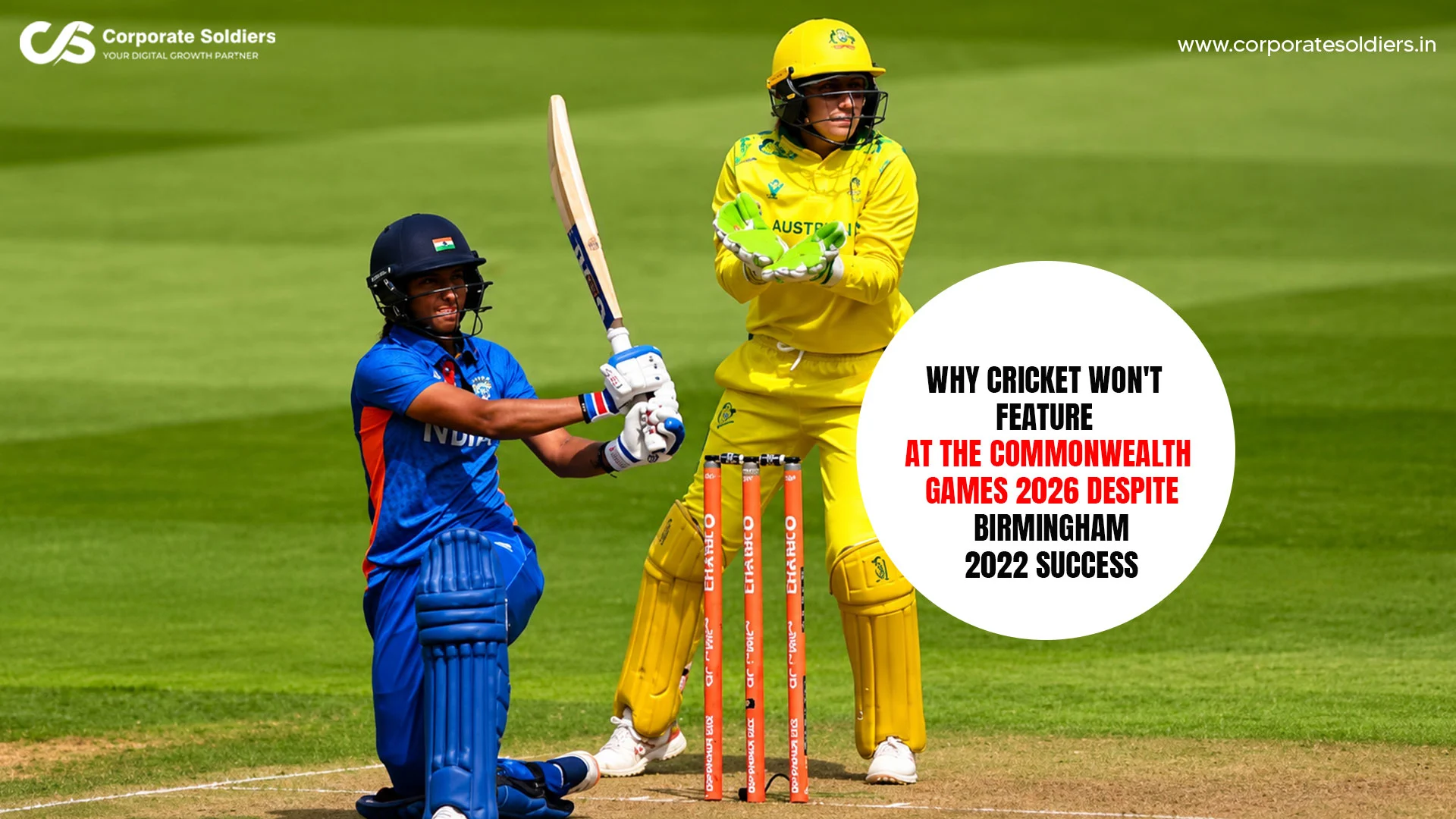
In the Birmingham 2022 Commonwealth Games, the sport was reintroduced in an eight-team women’s T20 competition. The tournament featured eight teams from across the Commonwealth and was aimed at popularizing the women’s game as well as broadening the presence of cricket outside the traditional markets.
The competition was a great success. Australia was the winner of the gold medal after beating India in the final with New Zealand the bronze winner. The incident attracted healthy crowds, caused much media coverage and the increasing popularity of women’s cricket.
To most observers, the fact that cricket can flourish in the Commonwealth Games format was witnessed in Birmingham. Consequently, there was an anticipation that the sport would be incorporated in the future editions as a form of regularity.
Why Cricket Is Missing From the Commonwealth Games 2026
The fact that cricket will not feature in Glasgow 2026 does not mean the sport is not popular or uninteresting to people.
Rather, it is mainly a result of the drastically smaller size of the 2026 Games.
Hosting rights were initially granted to Victoria, Australia by the Commonwealth Games. Nevertheless, Victoria pulled out of the project as estimated expenses soared up, casting doubt on the future of the event. Glasgow then intervened to host the Games in a new and more economically viable format.
Creating a leaner programme, which included existing venues and minimised operational expenses, was a decision that organisers needed to make in order to guarantee that the Games could be held with a tightening of the financial belt. The updated model was designed by focusing on sustainability, reduced spending and reduced environmental footprint. According to the Commonwealth Sport authorities, Glasgow 2026 was a strategy in a wider initiative to develop a more cost-effective and adaptable hosting system to future Games.
This led to a drastic cut in the sporting programme.
Only ten sports were retained for Glasgow 2026:
- Athletics and Para Athletics
- Swimming and Para Swimming.
- Track Cycling and Para Track Cycling.
- Weightlifting and Para Powerlifting.
- 3×3 Basketball and Wheelchair 3×3 Basketball
- Lawn Bowls and Para Bowls.
- Netball
- Artistic Gymnastics
- Judo
- Boxing
Several sports that were dropped off the programme included cricket, badminton, hockey, squash, table tennis, triathlon, wrestling, beach volleyball and rugby sevens.
This move was thus influenced mainly by economic factors, location and the necessity to host a small event as opposed to an evaluation of the sport value of cricket.
How Sports Are Selected for the Commonwealth Games
To know why cricket has been left out, it is necessary to know how the Commonwealth Games programme works.
As opposed to other events in the world, the Commonwealth Games have a mixture of core and optional sports.
Some of the sports such as athletics and swimming are the core of the Games and are usually anticipated to be maintained in the programme. Additions and removals of other sports might be based on the infrastructure of the host city, financial capacity and strategic priorities.
Host nations are allowed a wide leeway in the ultimate choice of the sports programme, subject to Commonwealth Sport regulations and approval procedures. This implies that a sport included in one Games does not necessarily have to be included in the next Games.
Cricket is one of those sports which can be chosen by organisers under the conditions of possibility. With the reduced-cost strategy of Glasgow which focuses on the available facilities and a small number of venues, optional sports that would demand more resources were especially at risk of being left out.
The Official Rationale Behind Glasgow’s Decision
A combination of a number of interconnected factors led to the omission of cricket:
Financial Constraints
The need to keep costs in check following the withdrawal of the original host was the biggest factor. The rescue plan undertaken in Glasgow emphasised on affordability and sustainability.
Reduced Sports Programme
The entire programme was reduced to the bigger Birmingham programme to only ten sports with not much space to add another sport.
Venue Availability
Glasgow approach is based on the use of the existing facilities instead of building new facilities or large temporary infrastructure. This had an effect on the ultimate selection of sports.
Operational Simplicity
Organisers wanted to have a compact Games that could be fulfilled with an effective operation within a limited operational framework, lowered logistical complexity and total cost.
Impact on Cricket and Participating Nations
The exclusion of cricket in the 2026 Glasgow games has more implications than the event itself.
Reduced International Exposure
The Commonwealth Games is a unique event where cricket is able to access new audiences who might not necessarily be sport enthusiasts. Without the 2026 edition, an international showcase is lost.
Fewer Medal Opportunities
Nations who have a history of high participation in cricket- such as India, Australia, New Zealand, South Africa, England and various Caribbean countries- are denied a possible medal event.
Impact on Women’s Cricket
The Birmingham 2022 women T20 tournament proved that exposure to the women’s game through multi-sports would be beneficial to the game. There is no competition of cricket in Glasgow and this has lost another chance to promote women cricket.
Associate and Emerging Cricket Nations
The emerging cricketing countries can be given visibility and development opportunities through multi-sport events. In the absence of a Commonwealth Games tournament, one avenue of reaching out to the wider population with cricket is not available.
Sporting Diversity
One of the most favored sports in most Commonwealth countries is cricket. Its exclusion diminishes the coverage of a sport which has hundreds of millions of fans all over the world.
Cricket’s Growing Presence in Global Multi-Sport Events
Even though cricket will not be part of the Commonwealth Games 2026 in Glasgow, the overall development of the sport in the world of sports is encouraging.
The inclusion of the game of cricket in the Los Angeles 2028 Olympic Games programme by the International Olympic Committee was a significant breakthrough. T20 competitions by men and women are to be held, and this will be the first time since 1900 that cricket is back in the Olympics.
The Olympic breakthrough is considered to be a breakthrough in the efforts of the International Cricket Council to increase the global presence of the game of cricket.
The ICC has continuously encouraged the development of the sport in new markets and the Olympics will expose many new markets to cricket which was previously only played in its traditional strongholds.
It is in that context that the fact that cricket did not feature in one of the editions of the Commonwealth Games will not halt its long-term global ambitions.
What This Means for Fans
To its proponents, Glasgow 2026 is a lost chance and not a defeat.
The T20 competition between women in Birmingham 2022, was successful, showing that cricket can contribute to the Commonwealth Games programme. Due to the flexibility in the choice of sport, future host cities still have the option to revive cricket in case financial circumstances, venue and organisational interests coincide.
Cricket will also see a welcome in Los Angeles in 2028 with the reintroduction of the Olympic Games and this innovation will likely be used to bolster the case of the sport being included in the multi-sport games in the future.
Final Thoughts
The exclusion of cricket in the Commonwealth Games 2026 is mainly due to financial reality and the downsized format used by Glasgow after it took over to salvage the event following the cancellation of the event as the host by Victoria.
The move was not motivated by the uninterest in cricket. Instead, the women’s T20 event at Birmingham 2022 was widely seen as a success and demonstrated the potential of the sport to succeed in a multi-sport environment.
Cricket was ultimately excluded from the final Glasgow 2026 programme due to budget and venue factors, operational effectiveness and a diminished sports programme. However, with the increased global presence of the sport, as evidenced by its addition to the Los Angeles 2028 Olympics, it is possible that the presence of the sport in major multi-sport events is only going to increase.
Although the fans of cricket will not watch the game at Glasgow 2026, the bigger picture is promising. The hosts of future Commonwealth Games might soon revive the sport and its popularity seems to be heading in the right direction other than the wrong direction.