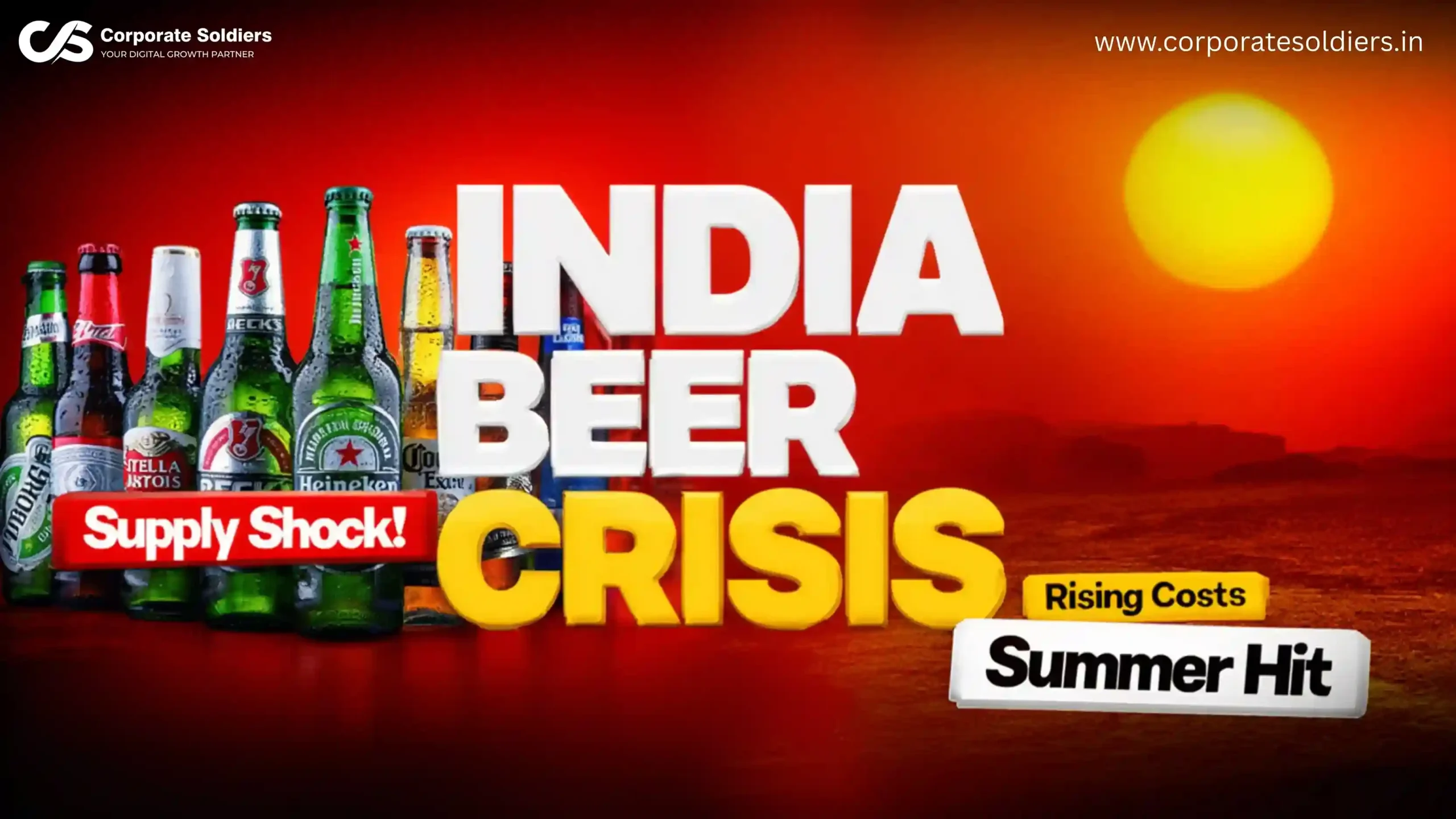
India’s beer market is approaching a potential supply crisis at the most inopportune moment when the demand is the highest during the summer season. According to new reports, the upheavals related to the ongoing geopolitical tussles in Iran are also beginning to trickle down to the international supply chains, which are directly affecting the major raw materials used in making beer and packaging.
The central point in the problem is a supply shock that is cascading down into glass bottle production, aluminium cans and secondary packaging which are non-negotiable to large-scale brewers.
The Supply Chain Disruption: A Structural Shock, Not a Temporary Glitch
The crisis is based on the unrest in the energy market. The Iran conflict has limited the supply of industrial gases that are essential in running glass furnaces. The process of glass production is energy intensive and when there is any interruption in the supply of fuel or gas production is restricted instantly.
As a result:
- Prices of glass bottles have gone up by approximately 20%
- There is a problem with import delays in the production of aluminium cans, which is restricting domestic supply.
- Costs of paper cartons have increased by twofold.
- Other ancillary inputs like labels and adhesive tapes are also experiencing consistent growth in inflation.
This is not a single-point disruption; it is a multi-layered cost escalation throughout the whole packaging value chain.
Industry Response: Brewers Signal Price Corrections
Vinod Giri who is the Director General of the Brewers Association of India says that the brewers are finding the situation operationally unsustainable.
The industry is currently actively requesting a price increase of 12–15% to compensate for the increasing input prices.
The key stakeholders impacted are:
- Heineken
- AB InBev
- Carlsberg
- Bira 91
- Simba Beer
These companies represent a significant share of the organized beer market, and the cost pressures indicate a system-wide strain rather than isolated operational inefficiencies
Regulatory Bottleneck: Price Hikes Are Not Market-Driven
In the alcoholic beverage industry, unlike most of the FMCG industries, the pricing is highly controlled at the state level. Brewers are not able to make changes on their own regarding pricing, they have to consult with state excise authorities.
The result of this is a structural lag:
- Costs rise immediately
- Price approvals take months
- During the interim, margins are squeezed.
The outcome is a crunch in the cash flow, specifically among small and mid-sized brewers, which are not as strong on the balance sheet as the multinational players.
Market Context: High Growth Meets Structural Fragility
The beer market in India has been estimated to reach about $7.8 billion in 2024 and is expected to double by 2030, which is as a result of:
- Rising urban consumption
- Premiumization trends
- Expanding the Tier-2 and Tier-3 markets.
But global dependency on suppliers and domestic regulatory inflexibility are now challenging this high growth path.
In the present case there is a serious paradox:
The fast growing consumer market is susceptible because it is based on shaky, internationally connected chains of supply and closely monitored price systems.
Broader Implications for the Alcoholic Beverage Ecosystem
The beer is not the only effect:
- Cost pressures will be similar in distilleries and other drink segments that use the same type of packaging.
- There can be a shortage of inventory in logistics and distribution networks at times of peak demand.
- Depending on the approval timelines, retail pricing differences among states might increase.
It is no longer a sector specific problem, it is a system-wide stress test for the entire ecosystem.
The Road Ahead: Strategic Readjustments Required
To overcome this disturbance, several stakeholders will have to take action:
- Brewers need to vary the sourcing strategy and seek packaging options.
- The policymakers might have to expedite the process of approval or bring some temporary flexibility in the pricing norms.
- Supply chain players should invest into resilience, especially domestic manufacturing capacity on key inputs.
Forward-Looking Insights
If state governments do not act swiftly on price revisions, consumers should expect visible shortages on shelves this summer. Beyond the immediate “pint-pinch,” this crisis highlights the vulnerability of India’s alcoholic beverage ecosystem to global energy volatility.
For a sector that contributes significantly to state excise revenues, a supply-side collapse would be a lose-lose scenario for both the industry and the exchequer.