Introduction
A peculiar administrative incident of a certain group of people called the Cockroach Janta Party has attracted much attention in Delhi and other parts of India. The incident highlights the bureaucratic processes and potential pitfalls involved in granting protest permits in the national capital, Jantar Mantar, and problems that emerged later in the verification procedures and administrative control.
The case attracted attention in the press because of the provocative name of the group and the haste with which the group supposedly received approval and the broader ramifications that are implicit in the case about how the authorities are to vet applications of a publicly held gathering. The process of the permission itself turned out to be a narrative even though the protest itself centered on so-called irregularities in examination and accountability.
Much of this coverage was occasioned by the fact that an official permission form had included the name Cockroach Janta Party and the protest license had become more of a general discussion on the issue of administrative validation and the bureaucracy. The document subsequently attracted significant attention online, bringing the approval process under public scrutiny.
The episode has led to the debate regarding the process of governance, institutional checks, and the issue of handling mass protests in the digital era.
What Happened?
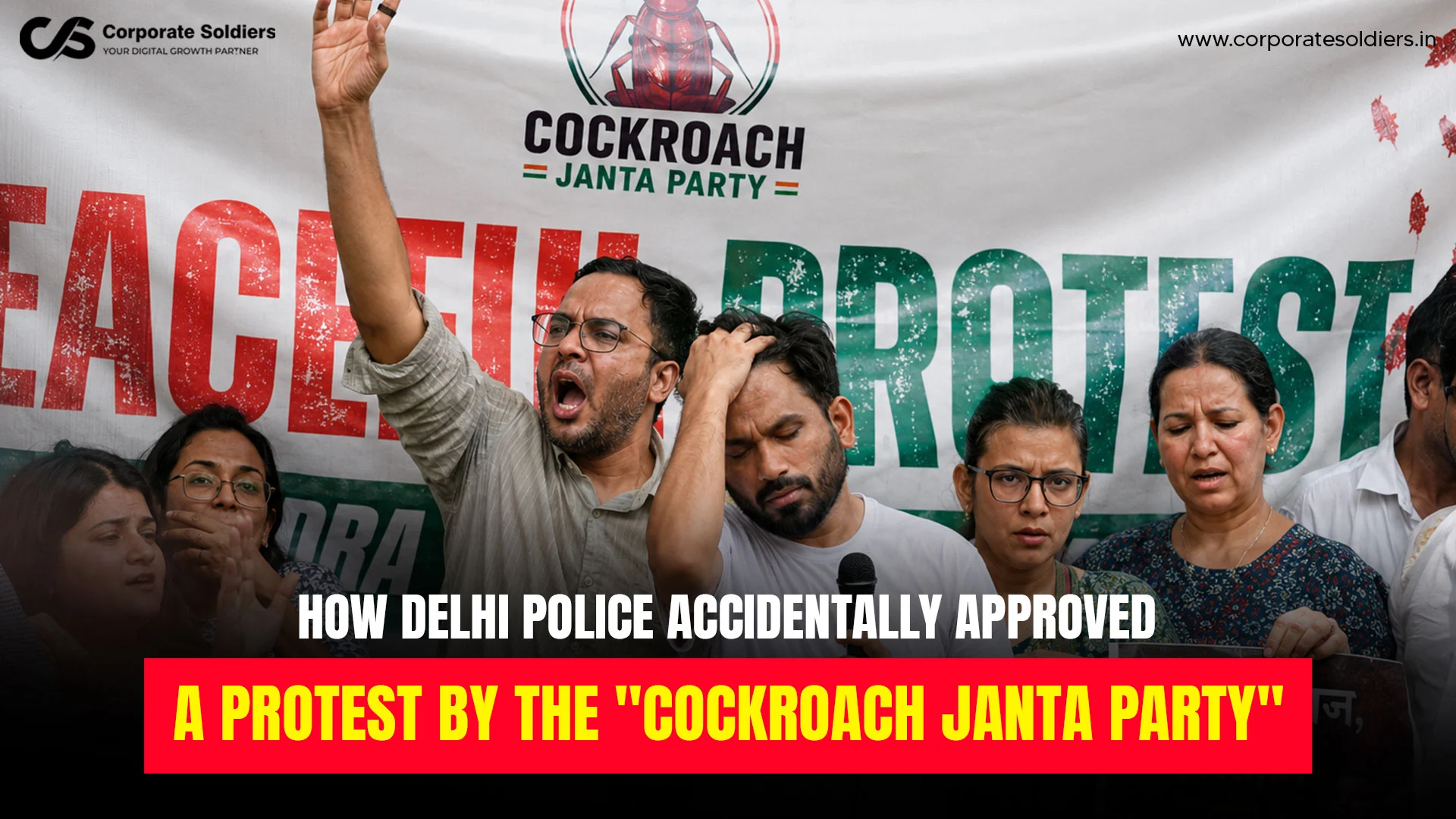
The incident occurred in the run-up to a scheduled protest at Jantar Mantar by the Cockroach Janta Party (CJP), a youth movement online which was able to gain prominence through social media campaigns.
The demonstration was associated with the NEET-UG exams scandal and the claims about the abnormalities in the process of the test. The issue of accountability and transparency in the education system was also brought up by protesters.
Though initially Delhi Police said that they had not received any formal request, an application was later filed by CJP founder Abhijeet Dipke, which allegedly led to the permission being granted to hold the protest. The authorization, which was given in the odd name of the group, then raised an issue of verification processes and administrative control.
The debate that followed was more on the legality of the protest itself than the procedures that are followed to examine and grant approval to applications of open demonstrations.
The Role of Delhi Police
Delhi Police was in the middle of the episode as it has the responsibility of controlling demonstrations at specific protest points in the national capital.
Before the event, police officials said that the Cockroach Janta Party had not requested the event. It was also indicated that any further application will be reviewed should it be submitted.
After the permission was given, police arranged the demonstration and sent security officers to uphold law and order. It was reported that there was a lot of security that was deployed around the protest venue and other sensitive areas within the city.
Delhi Police personnel also monitored crowd movement and ensured that the demonstration remained within the designated protest area.
The reports available do not reveal that the authorities questioned the right of the group to conduct a peaceful demonstration after permission had been granted to the group.
Why the Incident Is Being Discussed
The case was a topic of conversation due to the fact that it showed more general issues of administrative checking mechanisms.
Several questions emerged:
- What is the process of protest application verification prior to approval?
- What are the checks done on applicant details?
- Are existing procedures sufficient to identify unusual or unconventional applications?
- What should authorities do to be efficient and do proper verification?
Much of the discussion has been on the processes of governance, not on the political aims of the protest.
To most viewers, the episode was a demonstration of how administrative procedures can, in some cases, handle applications by following the rules more than by looking at the contextual details.
Understanding Jantar Mantar’s Protest Framework
Jantar Mantar has been one of the designated places in Delhi where the people hold their demonstrations and peaceful protests.
The location holds a special position in the Indian democratic scene as it enables individuals, associations and interest groups to air their opinions and at the same time authorities can control such large-scale crowds in a regulated setting.
In most cases, the organizers who want to conduct a protest at Jantar Mantar must seek permission with the relevant authorities. Applications usually contain information concerning:
- The organizing group
- Object of the protest.
- Expected attendance
- Date and timing
- Adherence to the requirements of public safety.
These requests are evaluated by Delhi Police and other authorities and a decision whether these should be given authority or not under the conditions is taken.
The system is supposed to reconcile the constitutional rights and the considerations of order in the populace.
Administrative Lessons from the Incident
The episode has brought to light a number of administrative considerations applicable in the governance of the people.
Importance of Verification
When handling requests concerning public gatherings, proper verification procedures are required. The authorities should be able to verify the authenticity of applications and ensure they meet the regulating requirements.
Managing Large Volumes of Requests
Numerous requests and permissions are processed by government agencies on a regular basis. It may be difficult to be efficient and do proper verification.
Need for Procedural Checks
The incident has rekindled the debate of whether the current systems of approval ought to have more checks and balances to detect atypical or possibly suspicious submissions before approvals are made.
Digital Governance Challenges
With the increasing movements of social media and the organization of events over the internet, authorities have new challenges in evaluating the newly emerging groups that may not fit into the conventional organizational frameworks.
Public and Political Reactions
The incident caused a lot of social media and news coverage.
Much of the popular response was focused on the peculiar name of the organization and the administrative situation in which the approval was granted.
The episode was also used by commentators to ask general questions regarding the process of bureaucracy, the responsibility of institutions and the efficiency of verification procedures.
Simultaneously, the advocates of the protest also stressed the necessity to uphold the right to assemble and express themselves peacefully under pre-established legal frameworks.
It was not just the incident under discussion but more a broader issue of governance.
Broader Implications
Although the protest was a legal demonstration of people, the context of the approval process has extended consequences on the administration of people.
Public Trust
Administrative systems work best when the citizens believe that procedures are being conducted in an evenly and meticulously manner.
Transparency
Effective communication on the manner in which approvals are provided can minimize confusion and enhance credibility of the institutions.
Accountability
When an incident comes to the attention of the public, it may offer agencies an opportunity to revise current procedures and make them better.
Future Permit Approvals
This episode can prompt officials to look into the possibility of further checks when handling applications on holding public events and demonstrations.
Conclusion
The protest approval by the Cockroach Janta Party attracted attention not due to the protest per se, but rather due to the administrative issues that it brought up.
The series of events, where the first reports of non-received permission requests were reported and then the permission was finally granted, became a point of discussion regarding the practices of verification and the safeguards of the process and the standards of governance.
Although authorities ultimately allowed the peaceful demonstration within the required parameters at Jantar Mantar, the incident highlighted the need to have strong administrative mechanisms and proper scrutiny.
With government agencies becoming even more reliant on a fast-paced digital and social environment, the incident is a reminder that transparency, verification and accountability continue to be critical elements of an effective administration of the people.