The household budget of Indian consumers is confronting new pressure as retail inflation is becoming critical.
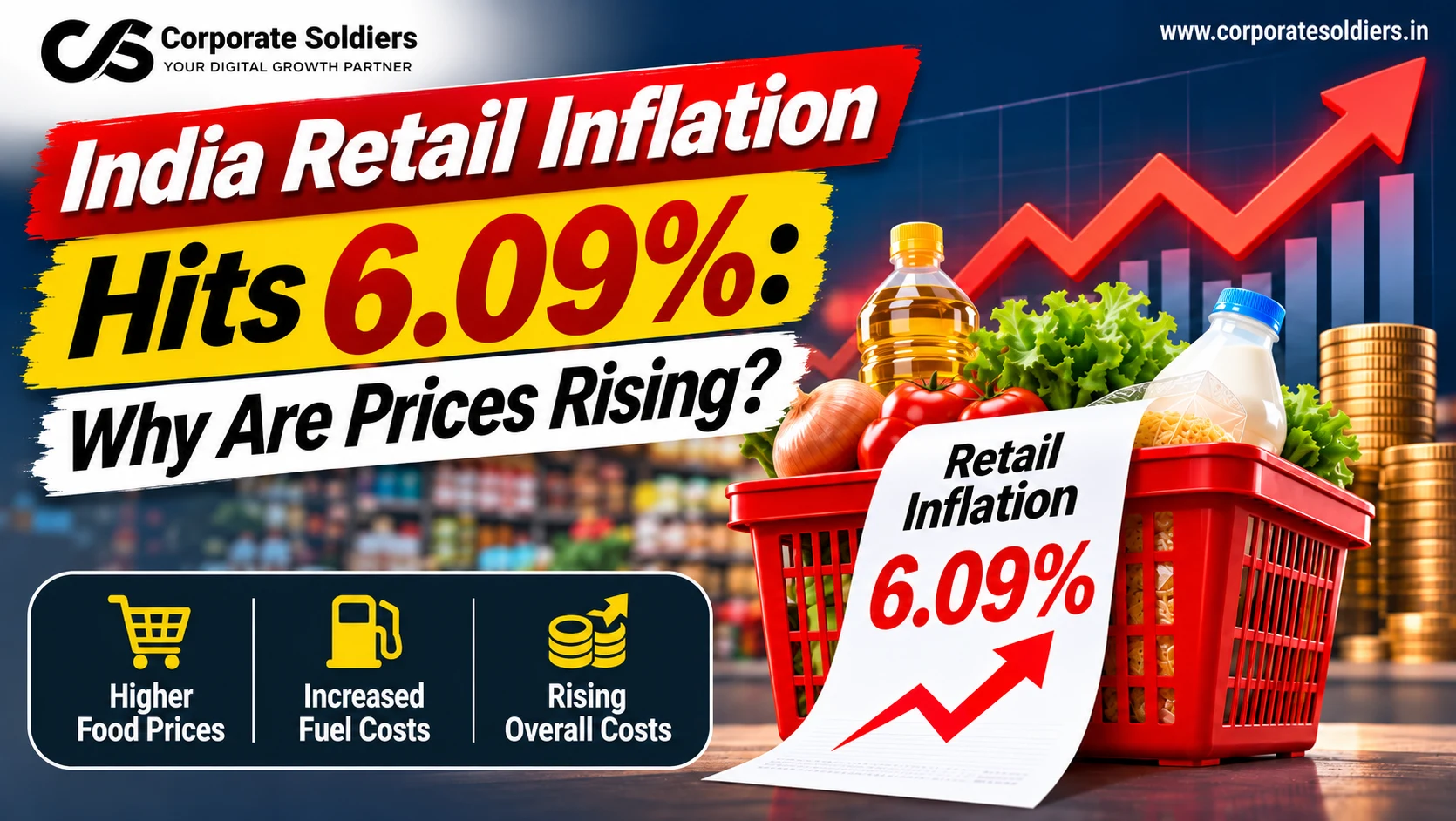
From daily consumption food items like onions or garlic to packaged items, the rising prices are getting harder to manage. This October saw prices climb to 6.09%, which resulted in exceeding the Reserve Bank of India’s (RBI) upper tolerance limit of 6%. This is happening for the first time in two years. But what is driving this sudden rise in inflation? Will it affect consumers and their budget?
As per the latest government data, the case of rising food prices and the adverse base effect is driving higher costs and contributing to inflation.
Key Highlights
- Retail inflation: 6.09% (Compared with 5.54% last month)
- Food inflation: Increased from 7.74% to 8.94%
- Rural situation: 6.63%.
- Urban situation: 5.41%.
- RBI’s upper tolerance limit: 6%.
- RBI repo rate: 5.50% (Increased in October)
How India’s Retail Inflation Crossed 6%?
The Ministry of Statistics and Programme Implementation (MoSPI) reported that the Consumer Price Index of India reached 6.09% in October 2026.
September saw the percentage at 5.54%, followed by the next month; this data represents the year-on-year change in consumer prices.
One of the major contributors is “Food prices”. The Consumer Food Price Index (CFPI)-based inflation is recorded to rise from 7.74% to 8.94%.
Among the essential food items, it recorded a very significant price increase as mentioned below (this data is based on the national inflation list):
| Item (Rising Prices) | September Data | October Data |
| Onion | 108.13% | 116.22% |
| Garlic | 54.62% | 60.74% |
| Ginger | 62.85% | 48.32% |
| Lemon | 36.41% | 47.30% |
If we talk about the decreasing factor in inflation, then potato prices saw a decline of 14.24%, which clearly indicates that the October inflation rate is affecting each item differently.
| Item (Falling Prices) | September Data | October Data |
| Potato | -11.52% | -14.24% |
| Cauliflower | -2.88% | -10.57% |
| Coconut | -3.99% | -5.60% |
| Brinjal | 2.21% | -3.34% |
| Cabbage | 5.58% | -1.92% |
Alongside rising food prices, unfavourable base effects following GST changes and higher energy and input costs also contributed to the increase in retail inflation.
Thus, food prices are not the sole reason behind the latest inflation rise.
Rural vs Urban: Which area is affected more?
This inflation data report highlights a very substantial difference in both rural and urban price pressures.
| Rising Prices | Rural Area Inflation | Urban Area Inflation |
| Overall Inflation Data | 6.63% | 5.41% |
| Food Inflation Data | 9.09% | 8.68% |
The difference is quite visible as food purchases account for a considerable share of household expenditure, which is especially true in rural India. Increasing grocery prices might put additional pressure on purchasing power.
The national capital, Delhi, recorded urban inflation of 3.77%, which is quite lower than the national urban average.
What Does This Mean for the RBI and Consumers?
The RBI aims to maintain medium-term inflation at 4%, allowing a tolerance range of 2% to 6%. However, October’s retail inflation of 6.09% has exceeded the central bank’s upper limit.
The central bank had already increased its policy repo rate by 25 basis points to 5.50% in October 2026, adopting a calibrated tightening stance.
Higher borrowing costs could affect home loans, personal loans and EMIs if banks pass on future rate increases. Meanwhile, households may need to allocate more money towards groceries and other essentials.
One monthly reading above 6% does not automatically constitute a formal failure of the RBI’s inflation-targeting framework, which assesses average inflation over three consecutive quarters.
However, it does not automatically mean the RBI has failed its inflation-targeting mandate.
What Lies Ahead for India’s Inflation?
According to current global commodity trends, agricultural conditions, and rising energy and input costs, the inflation situation is likely to face pressure in upcoming months as well. So, it means the next CPI inflation report might record another increase if food prices continue to rise.
The next report will cover the month of November 2026, which is scheduled to be released on 14 December 2026.
Now, the question is: Will India’s inflation see relief in the next phase, or will increasing food and energy rates continue to shrink household budgets? The next few months will be significant in determining India’s economic outlook for both consumers and the RBI.