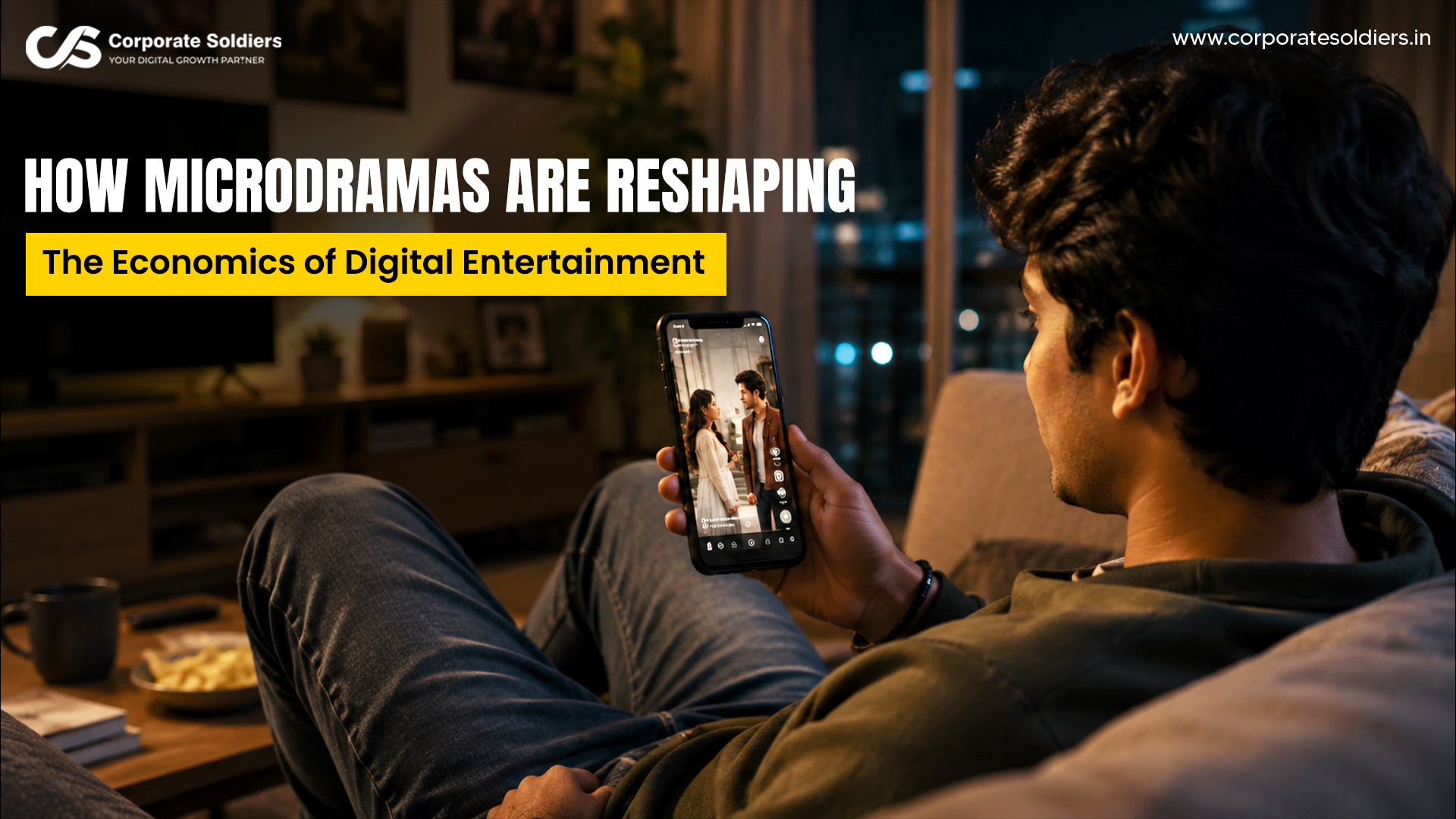
A structural change that fits in the palm of a hand is taking place in the digital entertainment world. Long considered the bread and butter of traditional over-the-top (OTT) platforms, high-budget “lean-back” marquee originals have for long been the focus of these platforms, but another type of content, microdramas, is beginning to shake up existing cost structures and content economics.
Insights from industry recently published by Exchange4Media indicate that microdramas aren’t just a shorter version of the media products that already exist, but that they are a “parallel content economy” that is changing the way attention is valued, created and monetized.
Introduction: The Rise of the Vertical Epic
Microdramas are ultra short, serialized stories (usually 60 to 120 seconds each) which are designed to be viewed vertically on smartphones. Microdramas provide emotional hooks every minute or so as opposed to prestige TV which has big emotional beats at the end of each 50-minute episode.
Media companies and advertisers are turning to this format since it is an answer to the “attention crisis” in the scrolling era. Streaming platforms, telecom operators, and social video companies are increasingly building dedicated strategies around microdramas as mobile-native storytelling gains momentum.
Microdramas are finding success in bringing high quality storytelling to a level that is also accessible to creators and viewers, at a pace once unimaginable in the professional media world.
What Are Microdramas?
Microdramas, which are reflected by their mobile-first design, are high engagement narratives that are defined by:
- Micro-Moment Viewing: The episodes of Extreme Brevity are meant to be enjoyed in “micro-moments” between tasks, coffee breaks or commuting.
- Binge/Cliffhanger Design: They’re short, but are very serialized, sometimes cliffhangers to get people to click on the next episode.
- Vertical-First Production: Framed for the 9:16 aspect ratio, for markets such as India which have 750 million – 800 million smartphone users.
- Demographic Push: The audience is made up of a predominantly Gen Z and mobile-native group that demands “snackable” entertainment as compared to broadcast style content.
How Microdramas Are Changing Content Economics
The difference between the cost of the traditional OTT and microdramas is very great. Microdramas operate at a fraction of the budget of a modest OTT episode which ranges from ₹25 lakh to more than ₹1 crore.
Key Economic Drivers:
- Ultra-Low Production Costs: Microdramas do not require the traditional set-up and long form equipment to create a “premium” look.
- Velocity over Volume: Platforms release dozens of low-risk titles simultaneously instead of relying on a single high-budget production. Then data determines which stories will be further invested in marketing – a “fail fast” approach.
- Portfolio Business Model in Entertainment: Industry experts also describe microdramas as transforming entertainment from a “one-hit gamble” into a “portfolio business,” where platforms launch multiple low-risk titles simultaneously and use audience data to decide which stories deserve further investment.
- ROI Optimization: With such an insignificant upfront investment and viewing through rates (often close to 75%), it’s possible for a much quicker route to profitability as opposed to traditional streaming.
The New Cost Structure Model
So, the microdrama production line is a textbook example of lean manufacturing – and creativity.
- Compressed Cycles: Production cycles can be sped up to complete the production for an entire series within three days.
- By having smaller crews, less locations and shorter shooting schedules, the burn rate is drastically reduced from day to day in Minimalist Logistics.
- Scalable Frameworks: Storytelling typically follows the same structure – like the ’00’s daily soaps, but done in a new way, with the speed so that the scripts are highly replicable and can easily be scaled.
Why Brands and Advertisers Are Interested
Advertisers are no longer going for “interruption-based” ads but rather “integration-based” storytelling. Microdramas have a special offer:
- Stopping Power: Microdramas get “micro-moments” of emotional connection in an infinite-scrolling world.
- Contextual Commerce: Brands are able to add products in the story line. The message in a product that’s part of the story is more impactful than a random banner ad.
- Higher Premium: Microdrama inventory already has a higher CPM (Cost Per Mille) compared to traditional social video as it pays for quality and not quantity of attention.
Impact on OTT and Digital Platforms
Microdramas have already been “munching on OTT screen time”. Now, traditional platforms are all faced with the dilemma of either getting on board or losing the fight for the fragmenting attention.
- Two Screen Reality: Connected TV (CTV) is doing well in affluent urban households, microdramas are climbing the vernacular storytelling ladder in Tier II and Tier III markets.
- Redesigned Strategies: The move from ‘lean-back’ viewing to ‘lean-forward’ engagement, with monetisation going beyond the traditional route of ‘high frequency of habit formation’ is a trend that is gaining traction.
The format is also expanding rapidly across ad-supported and rural mobile audiences, with a significant share of users coming from non-metro markets.
The Role of AI in Microdrama Production
The microdrama scale can only be achieved with the help of AI as the “invisible operating layer”.
- Scripting & Pre-Production: AI can aid in the process of generating scripts by suggesting tropes and plot points that are more likely to appeal to certain groups of people.
- Post-Production Efficiency: AI-driven workflows enable almost instant turnaround time in dubbing, automated editing and subtitling.
- Predictive Storytelling: AI can shift the trajectory of a story based on real-time viewer feedback loops to maximize engagement.
Challenges and Criticism
However, there are a number of challenges in this booming sector:
- Storytelling Depth: Critics say it’s a format that doesn’t allow a lot of story development; it’s just for quick kicks.
- Oversaturation: The low barrier to entry could result in a flood of mediocre content, leading to viewer fatigue.
- Monetization Friction: The market is expanding, but some 53% of users are worried about auto-renewals, an indication that “pay-per-episode” and ad-supported plans still require some work.
Future of Microdramas in the Global Content Industry
The microdrama market is expected to be a huge business model mainly in Asia.
- India’s Microdrama Boom: India’s microdrama segment has already emerged as a nearly $300 million market within its first year, signaling a major shift in mobile-first entertainment consumption.
- Creator Economy Integration: As this format grows and evolves, it is likely that it will become a more professional platform from UGC to “pro-quality” serial dramas.
Final Thoughts
Microdramas are not a fad, but are a reset of the media industry trends. With the use of AI in content production and the focus on short-form content economic viability, this format has resulted in a change in the structure of the OTT industry. The message is clear: In the age of the smartphone, the most important stories are now being told in the smallest of time periods.