Report: Operational Expressways in India
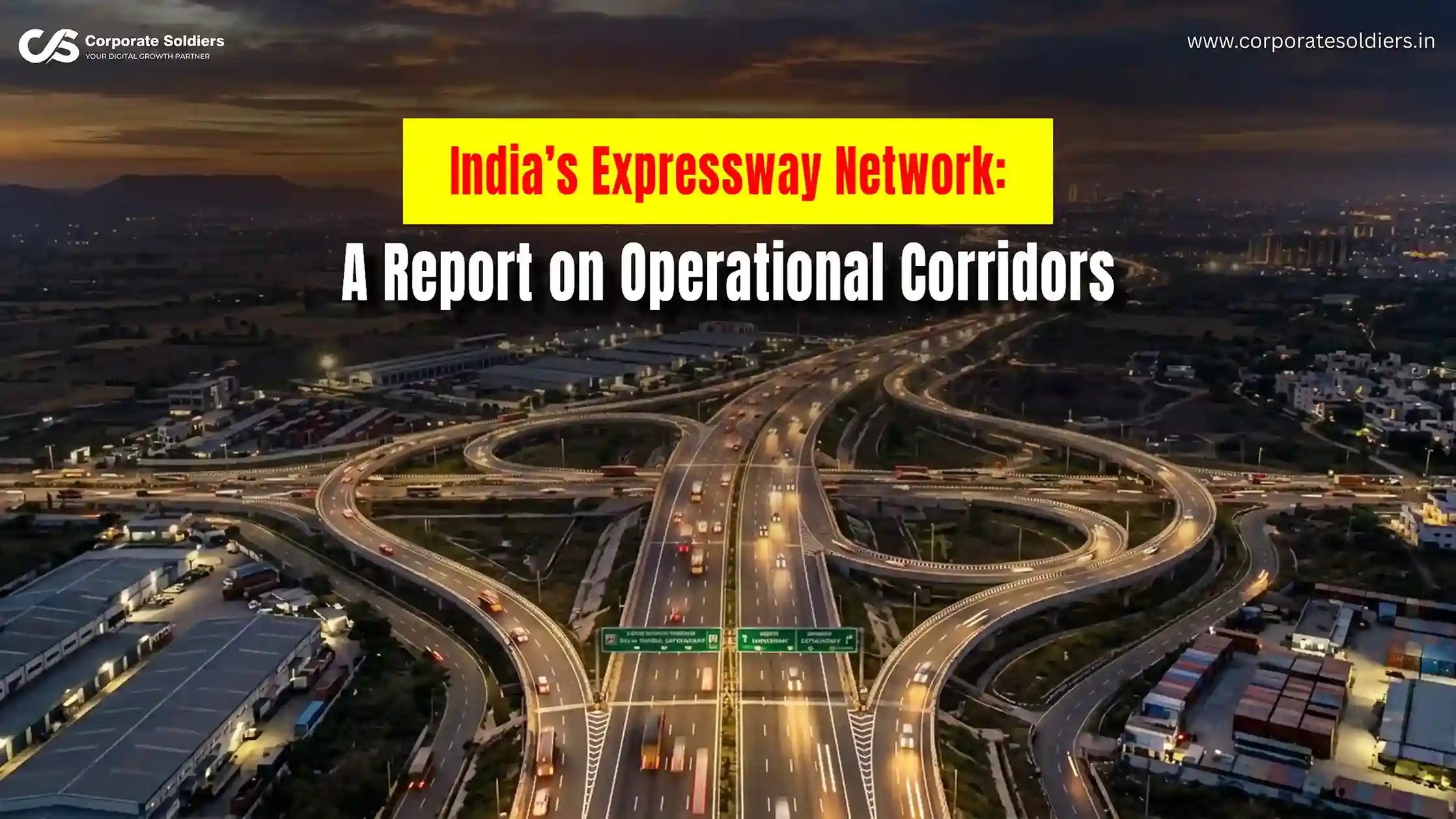
India’s high-speed corridor network is now approximately 3,644 km in operation, representing one of the most ambitious and extensive programs in the nation’s history to modernize highway infrastructure in one of the world’s largest economies of the past few decades. As the country’s express highway network is becoming more and more integrated across different regions and evolving into a connected high-speed road corridor network, it is now no longer limited to regional corridors but is beginning to become the national highway network for the country’s industrial development, freight efficiency, logistics modernization and high-speed passenger transportation.
Currently, Uttar Pradesh has the highest number of operational expressways and the largest state-level expressway network in the country, driven by sustained emphasis on greenfield corridor development over the past decade. At the same time, the operational length of the national high-speed corridors in Rajasthan is emerging as the leading in the country based on the data of the Ministry of Road Transport and Highways (MoRTH), mainly due to the alignment of the Delhi-Mumbai Expressway and the development of the corridor.
The report also covers strategic projects that were recently opened and are in the process of being implemented, which are also reshaping regional connectivity across India, including:
- The Ganga Expressway in Uttar Pradesh.
- The Shaktipeeth Marg in Nagpur-Goa in Maharashtra,
- Corridors which connect Delhi-Mumbai Expressway in Rajasthan, Haryana and Gujarat.
In the context of these projects, it is clear that there is a paradigm shift toward the development of wider access-controlled, high-speed transport corridors, which can meet India’s future infrastructure and logistics requirements.
Operational Overview
- Total Operational Expressways: 9
- Approximate Total Length: ~2,021 km.
Uttar Pradesh has the largest expressway network in India. The state has significantly reduced reliance on traditional national highways through large-scale investment in integrated expressway infrastructure and an interdependent, coordinated corridor planning process as the primary mode of transportation.
The state has a number of national significance corridors including:
These corridors are integrated to connect western, central, and eastern Uttar Pradesh, industrial clusters, logistics centres, agricultural belts and urban centres.
Ganga Expressway: India’s New Strategic Artery
Ganga Expressway is the most important addition to the State’s infrastructure portfolio in recent times.
The project’s key information is:
- Length: 594 km
- Route: Meerut to Prayagraj.
- Strategic Function: East-west high-speed corridor across Uttar Pradesh
- Travel Time Reduction: From approximately 12–13 hours to 6–7 hours
The expressway is expected to significantly improve connectivity of the Prayagraj region with the western part of UP and will also lessen the reliance on the old highways by the western part of UP.
A major strategic feature of the project is the 3.2 km emergency airstrip located close to town Shahjahanpur for the Indian Air Force use for emergency operations and deployment of military logistics. This is in line with the increasing demand for integration of dual use transport infrastructure in the expressway planning model in India.
How Uttar Pradesh Became India’s Expressway Powerhouse
The journey adopted by Uttar Pradesh to emerge as a leader in the field of Expressways in the country has been a consistent approach of building infrastructure, which has involved:
- Large-scale greenfield expressway development
- Land-linked industrial development
- Multi-city economic integration
- Faster east-west mobility
- Agricultural freight efficiency
- Industrial corridor expansion
The Uttar Pradesh’s Highway Projects, in contrast to the previous project approach of incremental widening of highways, adopted a corridor-first highway design approach that would allow for long-distance travel without any detours.
The state’s expressways are also gradually being integrated with logistics parks, warehouses and food processing centers and nodes of defense industry. This all-encompassing development plan has helped to make transportation investments more economically viable than just the transportation services themselves.
Uttar Pradesh has emerged as India’s most significant expressway-led infrastructure model of how the development of an expressway would affect the economic landscape of the region in India.
- Maharashtra: opening up Nagpur-Goa Corridor
Operational Overview
- Total Operational Expressways: 3
- Approximate Total Length: ~813 km
Strategic highways in Maharashtra are still expanding focusing on connectivity to industries, transportation of goods and regional economic integration. The state’s expressway scheme is very commercial, geared towards long-distance transport and industry.
It is running its flagship project in Mumbai-Nagpur Samruddhi Mahamarg which is one of the most developed expressways in India.
Samruddhi Mahamarg and High-Speed Design Standards
The Samruddhi Mahamarg was the first to introduce a new benchmark in the Indian expressway engineering with:
- High-speed access-controlled alignment
- Advanced pavement engineering
- Large-scale greenfield execution
- Standards for geometric design to be future ready.
The corridor has been designed for significantly higher travel speeds than conventional highways and will be able to allow long haul freight movement between Mumbai and Nagpur.
India’s capability to design up to 150 kmph signifies the steady progress towards the development of high speed road infrastructure in the country that is globally competitive.
Revised Shaktipeeth Mahamarg Project
The other big strategic project is the revamped Nagpur-Goa Shaktipeeth Mahamarg.
Key developments include:
- Revised Distance: The length of distance was initially 802 km but now changed to 856.7 km.
- Estimated Cost: This has been increased to about Rs 1 lakh crore.
- The revised corridor alignment spans 13 districts and connects 21 major religious sites.
- With this, the estimated time saved in the whole project is 8 hours (Nagpur to Goa).
The project underwent major realignment following protests by farmers and issues pertaining to land acquisition. The revised alignment aims to balance infrastructure expansion with agricultural, environmental, and socio-economic considerations.
The corridor will offer an additional platform to further strengthen the connectivity of tourism, which will include, among others:
- Agricultural freight movement
- Religious tourism circuits
- Regional logistics integration
- Inland economic development
Maharashtra’s Infrastructure-Driven Economic Strategy
Maharashtra’s strategy for the development of expressways is not just a transportation planning approach, but a vision of urban development. Instead, it has taken an infrastructure-led approach to economic development, non-concentrated.
It has a growing corridor planning which is increasingly linked:
- Industrial belts
- Ports
- Inland logistics hubs
- Agricultural markets
- Tourism economies
The state’s approach recognizes that high-speed transport corridors can make a significant difference in achieving the goal of freight efficiency to improve the competitiveness of manufacturing and exports.
Maharashtra is a financial and industrial hub of India, whose Expressway investments are linked with India’s overall efforts of the modernisation of the supply chain.
- Rajasthan: Operational Leader
Operational Overview
- Total Operational Expressways: 3
- State-Level Data: ~665 km.
- The length of the National High-Speed Corridor is 1,176 km.
Currently, Rajasthan leads in operational national high-speed corridor length under MoRTH classification, while Uttar Pradesh continues to lead in total state-specific expressway length and expressway count.
This apparent discrepancy is because the national data is based on corridors and a portion of the major national expressway system and access controlled economic corridors which run across the State.
Why Rajasthan Leads Operational Corridor Rankings
The state of Rajasthan has been closely associated with the Delhi-Mumbai Expressway through the state, which has been the primary factor behind its preeminence.
A substantial portion of Rajasthan’s corridor network falls under the national high-speed corridor classification, giving Rajasthan one of the largest operational high-speed corridor footprints in India.
The state is located at the border area of north and west India and thus plays an important role in the long haul transport of goods between:
- Delhi-NCR
- Gujarat industrial regions
- Western ports
- Maharashtra manufacturing clusters
Paniyala-Barodamev Expressway
One of the largest projects is the Paniyala-Barodamev Expressway which is being carried out in Rajasthan.
Key details include:
- Length: 86 km
- Progress: (approximately) 40% complete
- Target Completion: September 2026
The corridor is likely to make a big difference in the area traffic flow and boost the connectivity between Rajasthan and NCR.
Delhi-Jaipur Travel Transformation
The expressways will be linked with the corridor to connect with the city of Jaipur, and the same would help the Delhi-NCR region drastically reduce the travel time between Delhi and Jaipur.
Projected improvements include:
- The Gurugram–Jaipur travel time is projected to reduce to nearly 90 minutes under free-flow traffic conditions
The corridor incorporates:
- Intelligent Transport Systems (ITS).
- Use of automated speed monitoring systems.
- Access-controlled traffic management
- Advanced surveillance infrastructure
The systems are gradually being mainstreamed in the next generation Expressways network in India.
Rajasthan as a Strategic Logistics Corridor
Rajasthan is closely associated with its role in the industrial and freight corridor between Delhi and Mumbai as it develops as a logistics hub.
It has an expanding corridor network which facilitates:
- Long-distance freight movement
- Industrial supply-chain integration
- Inter-state trucking efficiency
- Inland logistics expansion
The state is also benefiting from planning for ‘greenfield connectivity’ which stops congestion in cities and improves connectivity and flow of heavy commercial vehicles in the west of India.
The state of Rajasthan is expected to be an important player in the Indian freight transport system in the future due to the expansion of integration along corridors.
- Haryana: Closing the Gaps
Operational Overview
- Total Operational Expressways: 6
- State-Level Data: ~640 km
- National High-Speed Corridor Length: 689 km.
Haryana has been a central part in the northern expressway corridor in India. It is a hub connecting various economic hubs owing to its proximity with Delhi-NCR, Punjab, Rajasthan and corridors which are directly linked with Himachal.
Delhi-Mumbai Expressway Impact
Delhi-Mumbai Expressway has contributed a lot towards Haryana’s contribution in the national transport system of India.
The corridor improves:
- Delhi-NCR freight evacuation
- North-west industrial connectivity
- Long-haul trucking efficiency
- Inter-state passenger movement
It has enhanced Haryana’s role as a pivotal transport transit state with its connectivity to other national corridors.
Ambala-Shamli Expressway
The Ambala-Shamli Expressway is one of the significant on-going developments.
Project details include:
- Length: 121 km
- Expected Completion: End of 2026
- Strategic Connectivity: Integration with the Dehradun-Delhi Expressway network
By distributing traffic more effectively out of the way of traffic congested urban highway systems, the corridor will help to alleviate traffic congestion along key transport corridors to the north to a significant degree.
Key beneficiaries will be:
- Chandigarh
- Mohali
- Ambala
- Western Uttar Pradesh transit traffic
Haryana’s Role in North Indian Connectivity
The significance of Haryana’s infrastructure lies not in corridor length alone, but based on integration density on infrastructure corridors.
The State provides a link between the:
- Delhi-NCR
- Punjab industrial regions
- Rajasthan freight corridors
- Uttar Pradesh expressway systems
- Himalayan tourism routes
Even though the state is one of the smallest in India, it assumes great importance because of its strategic location as one amongst the most important transit and logistic states in the country.
Its value will likely further increase when the connector roads between the National Expressways are opened.
- Gujarat: Completing the Delhi-Mumbai Link
Operational Overview
- Total Operational Expressways: 3
- State-Level Data: ~350 km
- National Corridor Data: 508 km
Gujarat remains the most strategic freight and industrial state of India. Infrastructure on the expressway is an important facilitator of export logistics, port connections, movement of industry and industrial supply chains.
Godhra-Vadodara Stretch Opening
One of the major developments in recent times has been, trial operations of the Godhra–Vadodara stretch.
Key characteristics include:
- 8-lane access-controlled design
- Operational speed limit: 100–120 km/h
- Integration into the larger Delhi-Mumbai corridor system
The opening is another significant step towards the plug-and-play seamless, high-speed connectivity between Delhi and western India.
Delhi-Gujarat-Mumbai Connectivity Targets
Existing infrastructure targets are:
- Full Delhi-Gujarat expressway connectivity by the end of 2026
- Complete Mumbai connectivity expected during the following phase
With its full operation, the corridor is expected to revolutionize the freight movement between the northern and western part of India.
Gujarat’s Freight and Industrial Importance
Gujarat’s strategic importance within India’s expressway network is driven by its role as:
- One of India’s leading export-oriented manufacturing states
- A major logistics and warehousing hub.
- A port-led industrial economy.
- A production plant for the production of petrochemical and engineering products.
The quality of expressway facilities will be expected to further improve the connectivity aspects between:
- Industrial clusters
- Inland freight terminals
- Dedicated freight corridors
- Major ports
- Manufacturing ecosystems
Gujarat will remain in the mainstream of efficiency in industrial transport in India with the integration of the high speed corridors.
Analysis & Conclusion
India’s expressway ecosystem is undergoing a major structural transformation. The focus is no longer limited to constructing isolated high-speed corridors between cities, but today’s cycle of development is about making a network of connections. Instead, efforts have shifted to building a single national transport network which will enable economic mobility on a scale for long-distance transport.
As of May 2026:
- Uttar Pradesh leads in operational expressway count and total state-specific expressway length.
- Rajasthan leads in operational national high-speed corridor length under MoRTH corridor classification.
This divide also uncovers the evolving complexity of India’s infrastructure, where some of the state-level infrastructure corridors and national economic corridors have different roles to play in influencing India’s mobility potential.
One of the main changes in the process is the development of connections among key corridors and their development is being intensified. Regional expressways, when joined with long distance corridors such as Delhi-Mumbai Expressway, are forming continuous long distance corridors from one state to another.
The integrated structure should result in a number of long term structural consequences:
- An improvement of freight transport times.
- Lower logistics costs
- Faster industrial distribution
- Improved tourism mobility
- Higher regional investment attractiveness
- Improved access to markets for agriculture products
The newer expressways in India are also adapting to the newer trends and are planning on implementing engineering standards for high speeds – many of the expressways are planned for speeds of up to 120 km/h. Another proof of India’s engineering excellence to match the international standard of high-speed roadways is the design of Mumbai-Nagpur Samruddhi Mahamarg which is capable of running at the speed of 150 km per hour.
The economic impact is substantial. The increased speed of road travel has started to change the largely rail-dominated freight movement pattern, and is also impacting the short to medium distance passenger movement, which overwhelmingly used to rely on air and rail transport.
In some places the expressways are already remodelling:
- Inter-city commuting behavior
- Industrial investment patterns
- Warehouse location strategies
- Tourism circuits
- Real estate development
- Regional labor mobility
The seamless incorporation of these corridors with logistics parks, industrial corridors, Multimodal Freight systems, ports and urban transport systems will be crucial for the next leg of the metamorphosis of India’s transportation system.
If the current growth trend persists in the expressway network, the country could emerge as one of the most significant enablers of India’s next-generation economic growth model which would reduce the geographic friction, create better industrial competitiveness and redefine the long-distance mobility scenario in the country altogether.