Delhi-NCR’s transport ecosystem is heavily dependent on compressed natural gas (CNG). CNG has been the most affordable fuel source in the city’s green public transport programme, for more than two decades now. It fuels a large ecosystem of over 1.5 lakh auto-rickshaws, kala-peela taxis and app based cabs.
For the daily existence of thousands of transport workers, CNG is nothing less than a factor of daily consumption; it is both a lifeline and a volatile cost factor in the urban economy. This dependency was put under great stress on 18th May 2026 on the back of a historic, multi-stage pricing adjustment by Indraprastha Gas Limited (IGL).
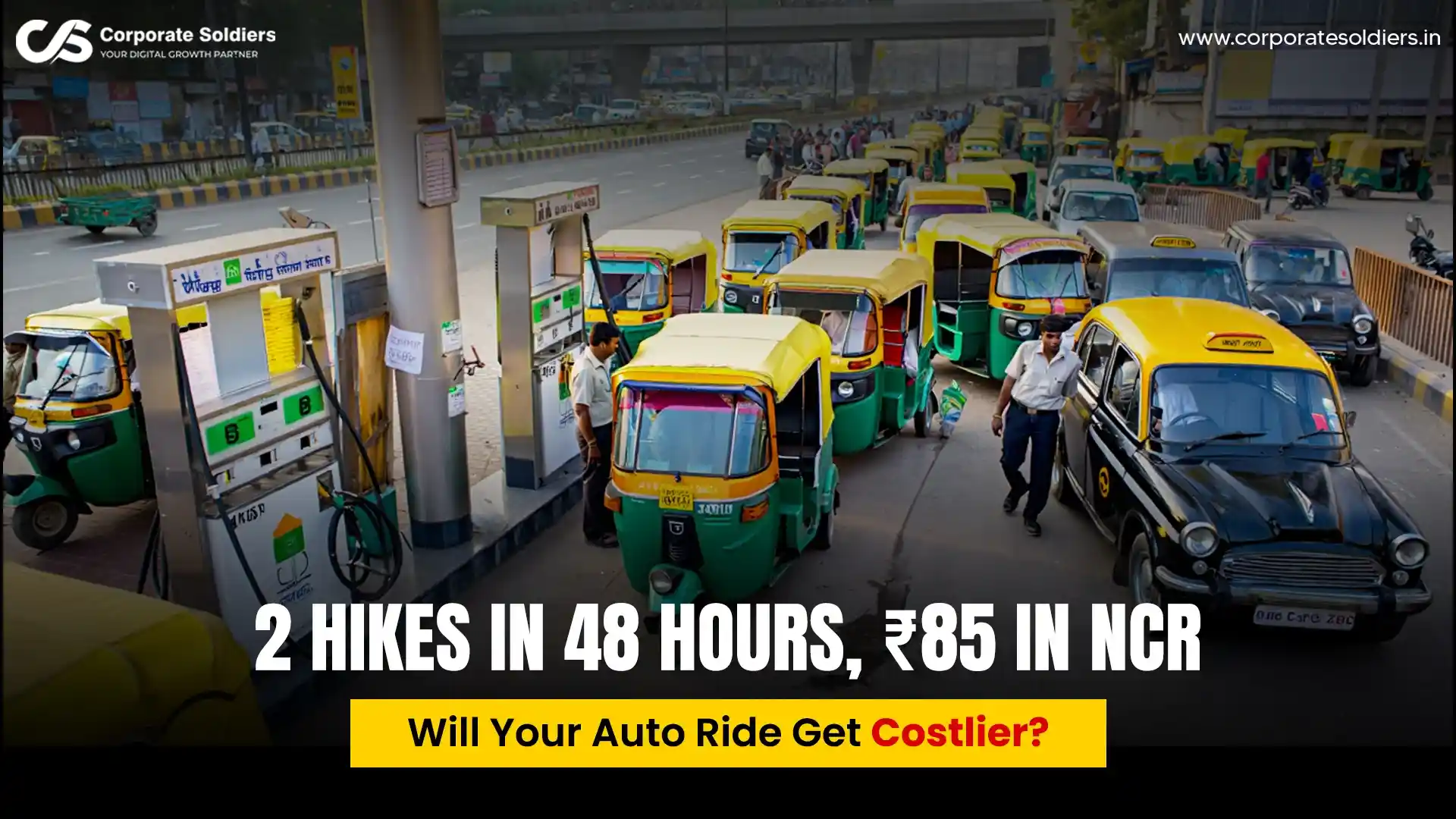
CNG prices saw a cumulative rise of ₹3/kg in a mere 48 hours. The disruption started on Friday when prices jumped by Rs. 2 per kg, and was followed by another Rs. 1 per kg on Sunday. This two-stage escalation drove up the pump price of fuel to record high in regional jurisdictions:
- NCT of Delhi: ₹80.09/kg (the first time over the psychological price of ₹80)
- Noida, Ghaziabad and Gurugram: ₹85.12/kg.
The math of a career driver who uses a regular commercial auto-rickshaw with an average daily running distance of around 150 km is cruel. For drivers consuming around 6–7 kg of CNG daily, the ₹3/kg hike translates into an additional monthly fuel burden of roughly ₹540–₹630 per vehicle.
As Delhi-NCR’s transport network absorbs this macroeconomic shock, key questions are emerging around the aggressive pricing revisions introduced by utility providers – what is the reason behind this? Most significantly, how will this be distributed between the transit unions, a price-sensitive commuter base and the regulatory bodies overseeing the government-owned public transport sector in Delhi?
CNG Crosses ₹80 in Delhi-NCR: Unpacking the ‘Unbearable’ Financial Burden on Auto-Taxi Drivers
The operating economics of commercial transport vehicles in NCR have changed overnight. The ₹80 threshold already hit in the capital is a sore point for the unorganized transportation which is already facing ongoing inflation in spare parts and maintenance costs.
The Numbers that Hurt: Current CNG Prices as Compared to Last Month
The rapid tariff escalation becomes clearer through a comparative analysis of CNG prices across major NCR transport hubs.
| City region | CNG Price (May 18, 2026) | Increase in 48 Hours | Effective Monthly Impact |
| Delhi | ₹80.09/kg | ₹3/kg | ₹540–₹630 |
| Noida | ₹85.12/kg | ₹3/kg | ₹540–₹630 |
| Ghaziabad | ₹85.12/kg | ₹3/kg | ₹540–₹630 |
| Gurugram | ₹85.12/kg | ₹3/kg | ₹540–₹630 |
Average of 6-7 kg of CNG/day (about 150 km a day running). Please note that actual impact is dependent upon vehicle use.
Why NCR Prices Differ From Delhi
The price gap exists mainly because of varying state tax regimes, along with:
- State-level VAT variations
- Entry taxes, transportation charges.
- Variations in infrastructure costs at the local level.
- Differences in distribution and input costs
Retail price of CNG is calculated by IGL, as per the operational and distribution cost across cities. Delhi has a relatively lower tax regime for cleaner transport fuels; while adjoining NCR regions have additional layers of tax, which push up the pump price. Interestingly, IGL has not made any changes in PNG (piped natural gas) rates for households in this cycle. This disparity has become a bone of contention for commercial transport operators who say they don’t get the same benefit from CNG, even as it is the source of their daily income.
Behind the Price Spike: Why IGL Raised Rates Twice in 48 Hours
The unusually rapid revision cycle has triggered concern across the transport sector. The latest price increases for CNG were due to the current increases in energy and cost pressures caused by currency issues, IGL said.
- Rising Input Gas Cost
India is almost 50% dependent on imports, so CNG prices are at risk of fluctuations in the LNG market.
Pressure has been growing recently on the costs of supply, due to developments abroad:
- The prices for LNG spot trading increased
- Rising energy demand in the summer in Asia
- More purchases by Europeans before the start of the winter season.
- Limiting supply in the world’s gas trading markets
These are the world prices which impact the cost of fuel procurement by the Indian city gas distributors directly.
- USD Appreciation Against INR
The majority of imports are in dollars for natural gas. A lower rupee rate also boosts landed fuel prices even in the absence of a change in international benchmark prices.
If the rupee weakens further against the US dollar, imported gas procurement costs for city gas distributors could rise further.
Expert Analysis: This isn’t “Profit-Taking”
Transport economists and energy analysts say the revisions are not simply a case of corporate profit-taking.
The economics of the city gas distribution (CGD) and expected gross margin are under the oversight of the Petroleum and Natural Gas Regulatory Board (PNGRB). The average marketing margin of CNGs is around ₹8-10 per kg, as per the estimates from the industry analysts.
Hence, two hikes in 48 hours are noteworthy. Typically these changes are quick and tell of near term supply-side cost pressures, and not the result of a long-term pricing adjustment. In plain terms, IGL’s own cost of imported gas has surged, forcing the company to pass part of the burden onto consumers.
‘Unbearable Financial Burden’ — Inside the Auto Unions’ Demands
Delhi’s transport unions have strongly opposed the two successive hikes, saying that incomes of the drivers are already in great distress.
Union Leaders Speak Out
Rajender Soni
(General Secretary – Delhi Auto Rickshaw Sangh/ Delhi Pradesh Taxi Union)
“Drivers are already having to cope with inflation and rising maintenance costs and repeated fuel price hikes are an unbearable financial burden.”
Kishan Verma
(President, All Delhi Auto Taxi Transport Congress)
The government should either hike the rates or remove the CNG price hike “with public interest in mind.”
The Real Economics Behind the Protest
The concerns become clearer when daily earnings are examined in practical terms.
| Component | Before Hike | After Hike |
| CNG price/kg | ₹77.09 | ₹80.09 |
| Daily CNG usage | 6 kg | 6 kg |
| Daily fuel expense | ₹462 | ₹480 |
| Additional daily cost | — | ₹18 |
| Estimated monthly increase | — | ₹540 |
Even if it is an additional expenditure of ₹18 per day, it becomes a big issue for many drivers earning ₹700 to ₹900 a day and they have to think about:
- Vehicle EMIs
- Garage expenses
- Parking fees
- Traffic penalties
- Family expenditures
The pressure is being intensified further by the broader inflationary environment. Maintenance costs, such as tyres, spares and engine oil reportedly have increased by about 15% on the previous year.
The extra money that households must pay for the fuel, around ₹540–₹630 per month, directly affects their ability to save and repay loans, besides the reduction in disposable income. That is how the issue has grown onto become a major talking point in Delhi with regard to driver betterment and transportation sustainability.
Fare Revision Reality Check: When Were Auto & Taxi Fares Last Hiked?
The current fare structure in Delhi was revised in 2023 after nearly a decade-long gap.
2023 Fare Revision
| Fare Component | Earlier rate | Revised rate (2023) |
| First 1.5 km | ₹25 | ₹30 |
| Per km thereafter | ₹9.50 | ₹11 |
The last revision was conducted in 2013 which was done prior to 2023.
That time period is a critical one as fuel economy has been transformed in that time too.
| Year | Approximate Delhi CNG Price |
| 2013 | ₹38–40/kg |
| 2026 | ₹80/kg |
Auto unions argue that operating costs have nearly doubled over the past 10 years, while fare hikes have failed to keep up with inflation, and gas prices. This incongruence is the very crux of the current need for a new CNG fare revision Delhi conversation.
What a Potential Fare Hike Could Mean for Commuters
Meanwhile, more price increases by the Delhi government, of Delhi auto rides – if it grants permission – could lead to a substantial increase in travelling cost in the city, if it is short-distance journeys.
Projected Fare Comparison
| Fare Component | Current (2023) | Projected 2026 Estimate |
| Minimum fare | ₹30 | ₹38–42 |
Waiting charge | ₹1.50/min | ₹1.5–2/min (estimated) |
5 km typical ride is used
| Ride Type | Estimated Cost |
| Current fare structure | ₹68.50 |
| Projected revised fare | ₹85–92 |
The projections are made based on the trends in fare revision in the past and the rate of increase in fuel costs and are not a part of any formal proposal of the Delhi government.
Likely Commuter Response
If the taxi fare and auto fare is to be increased in Delhi, it could change the commuters’ behaviour in a number of ways:
- More utilising Delhi Metro for medium distance travels
- Ride-sharing growth
- Less discretionary driving of cars
- Increase use of app-based modes of collective transport.
However, transport planners are also concerned about the indefinite fare suppression policy which may ultimately cause a drop in participation of drivers, refusal and decline of the availability of last-mile transport in Delhi-NCR.
Beyond CNG: Petrol-Diesel Also Hiked by ₹3/Litre
The broader energy pricing environment has also turned bullish.
Fuel Price Adjustment by Fuel Segment
The price of petrol and diesel was jacked up by about ₹3 per litre by oil companies on May 16.
This development affects:
- Private car owners
- Taxi aggregators
- Diesel fleet operators
- Hybrid commercial vehicles
- Logistics providers
The surge in CNG, petrol and diesel prices is a signal of a general correction in the energy market.
Looking at the macro-economic level, it is observed that the international price of crude and gas have been trending upwards, impacting on several transport fuels, and therefore mobility costs in the city.
Practical Survival Guide for Auto & Taxi Drivers Right Now
This can be a long term process for policy intervention, but at the ground level, drivers are already taking cost control measures.
Practical Measures Being Discussed Across Driver Networks
In regions like Keshavpuram and Lajpat Nagar, drivers have reportedly started deliberating on joint efforts towards fuel conservation and changes in their schedules.
Some of the more popular measures are:
- Driver Co-ops/Shared Refilling Strategies
Commercial fleet partnerships may offer the opportunity for negotiating some informal ‘pooling’ for small refill benefits or cashback incentives.
- Fleet cashback/fuel cards
A few payment platforms have started offering commercial fuel cashback programmes in response to the rising costs of daily life which can help offset these costs to a greater extent.
- Fuel-Efficient Route Optimisation
Using tools like:
- Google Maps
- Chalo
- Live traffic routing of traffic systems
can help to save idle time and fuel consumption.
- Tyre Pressure Maintenance
When the tires do not have the correct amount of air, it will create more drag and cause higher fuel usage. Mileage efficiency can be measurably increased over the monthly operation by regular maintenance.
- Night Refill Discounts
According to some motorists, there are unofficial late-night refill discounts at some stations. IGL, however, hasn’t declared any special night discount plan and so drivers must check with their local pump.
- Collective Lobbying
Unions are also pushing for joint representation in front of the State agencies and claiming:
- Temporary tax relief
- Fare rationalisation
- Emergency support measures
Long-term outlook — Will the CNG prices come down soon?
Going forward, in NCR, the variation of other fuels, depending on demand seasonality and future regulatory reviews will depend a lot on the global energy situation.
Market Pressures over time:
Peak Summer Demand ──> Elevated Cooling & Grid Load May – June
July – August: Monsoon Logistics ──> Less Marine Transshipment.
October 2026: APM Price Review ──> Possibility of Structural relief.
- Summer Demand Peak (May–June)
The electricity demand in Asia and Europe for cooling will be high over the coming two months, due to hot summer weather. This is exerting pressure on gas-fired power plants and is keeping global spot LNG prices high, and access to cheaper imports in short term low.
- Monsoon Logistics Challenges (July–August)
Usually, the next monsoon season poses difficulties in maritime logistics. Marine transshipments and offloading schedules can be reduced by rough seas or by disruptions in the port, thus maintaining a tight domestic supply situation during the summer months.
- Domestic Gas Revision timetable (October 2026)
The next big relief for domestic structures will be in October 2026 when the government is to review the Administered Price Mechanism (APM). City distributors may experience reduced input cost if the central government changes the formulas used to allocate domestic gas baselines and/or alters the ceiling prices for domestic gas fields.
The most feasible way to reduce retail prices in the short term is state tax policy. There is currently a campaign by transport unions for a temporary, partial, relief on state VAT on commercial transport fuels.
A coordinated tax cut by governments of Delhi, Uttar Pradesh and Haryana could instantly bring relief to the petrol pump price to drivers as the global energy market gets back to normalcy.
Frequently asked questions (FAQs):
Q1. What is the price of CNG in Delhi in May 2026?
A: As of May 18, 2026, CNG in Delhi costs ₹80.09 per kg. In the other cities, it is ₹85.12 per kg in Noida, Ghaziabad, and Gurugram.
Q2: Why were CNG prices hiked twice within 48 hours?
A: IGL blamed the increases on higher prices for input gas and on currency pressures due to natural gas import procurement.
Q3: Will there be an Auto rickshaw hike in Delhi now?
A: Unions have officially called for a fare hike. The Delhi Transport Department has yet to make any decision. Depending on previous times, a decision could be made 4-8 weeks after union submission.
Q4: What will be the additional amount that an auto commuter pays a day due to this CNG hike?
A: The driver absorbs the costs if fares are not adjusted, there is no impact on you. Once the fare rates are revised, a ₹15 to ₹20 will be added to the cost of a 5-km ride. You might be denied short trips or be unofficially charged additional ₹10–20 if they do not provide a discount.
Q5: Does PNG (household cooking gas) constitute a problem as well?
A: No. The article clearly states: “The price of piped natural gas (PNG) supplied to households remains unchanged.” Increase in price has been for vehicle CNG only.
Final Thoughts – A Tipping Point for Delhi’s Public Transport
The latest ₹3/kg spike in CNG prices has exposed how vulnerable Delhi’s public transport ecosystem remains to global energy volatility. The financial strain on auto and taxi drivers across the region has intensified as fuel prices continue rising while fare structures remain relatively stagnant.
With fuel prices rising, and fares remaining mostly unchanged, drivers are now operating under increasing financial strains. Policymakers face an age-old dilemma of balancing the critical need to keep transportation workers from suffering from financial hardship while also preserving the affordable prices that commuters pay.
To correct the imbalance in structure, there are some policy options to think about:
- Making an intermediate fare change of 10% to 15% to assist drivers in coping with their immediate higher cost.
- Establishing clearly written fare-indexing policy that occurs on a quarterly basis and mirrors trends in retail prices of CNG.
- Implementing temporary state-level VAT relief on commercial transport fuels across Delhi-NCR.
For the immediate future, the capital will be looking at more driver protests, union talks and policy discussions before a moderate, regulated fare hike in the rest of 2026. In the absence of those structural options, the people who power Delhi on the road will remain to traverse the city’s streets, juggling with low family incomes and high-energy prices that can swing in a heartbeat.